
Plan the investigation
What students will do
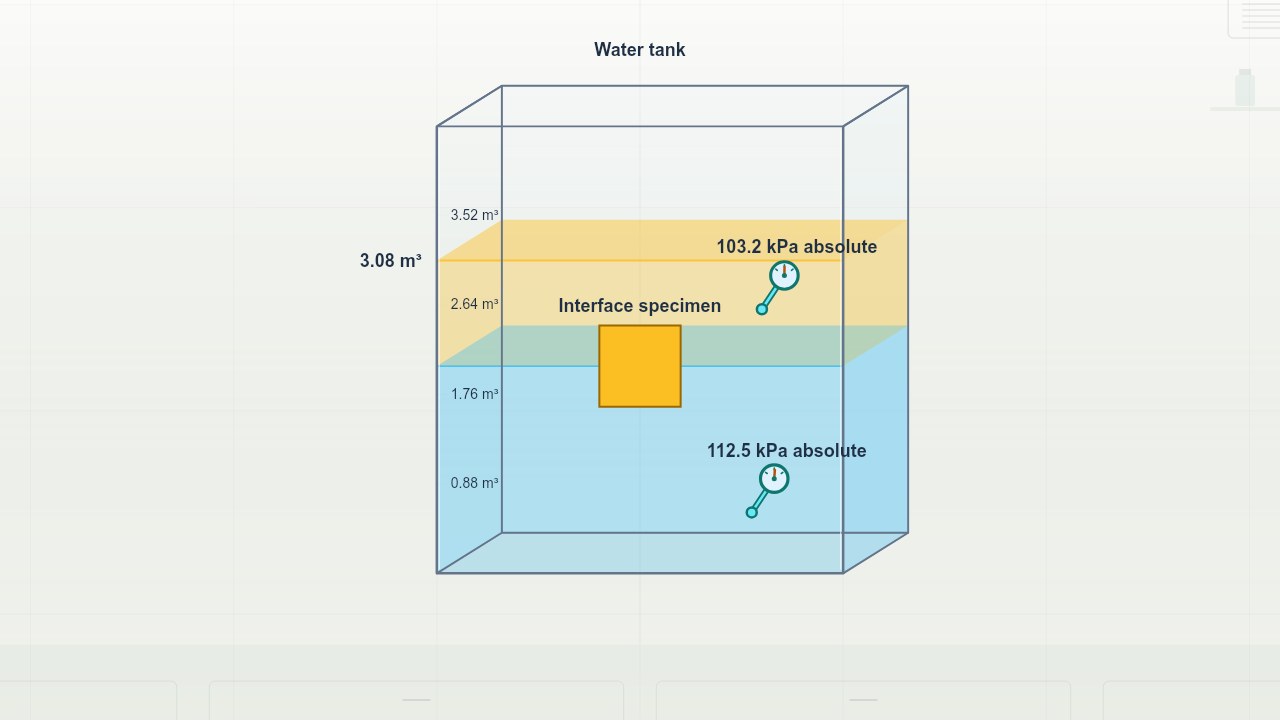
Predict the specimen’s location, observe each mass, and explain the interface force balance.
- Predict and observe. Calculate density for three specimen masses and compare the predicted and observed locations.
- Check the force balance. Compare weight and buoyant force for a specimen floating at the boundary.
- Change the oil density. Predict and observe how the specimen’s position changes.
What students will learn
- Compare specimen density with both liquid densities.
- Explain floating at an oil–water boundary.
- Use buoyant force and weight to explain a change in position.
Common misconception
Must a fully submerged object sink to the bottom?
An object can remain at rest across two liquid layers when their buoyant forces balance its weight.