Unit 1 · Kinematics
64 prepared experiments · Introductory Physics · AP Physics 1
Free Online Physics Experiments and Virtual Labs
Choose a ready-made experiment, change variables, collect measurements, analyze graphs, and test your prediction. The labs are designed for high school physics, introductory college physics, and AP Physics 1.
Included with every experiment
Ready to investigate, measure, and explain
- Ready-made interactive simulation
- Variables students can control
- Measurements and graphs
- Focused investigation question
- Downloadable documents for most labs
- No account or installation required
Unit 1
Kinematics
Unit 1 · Kinematics
Constant Acceleration Simulation and Virtual Lab
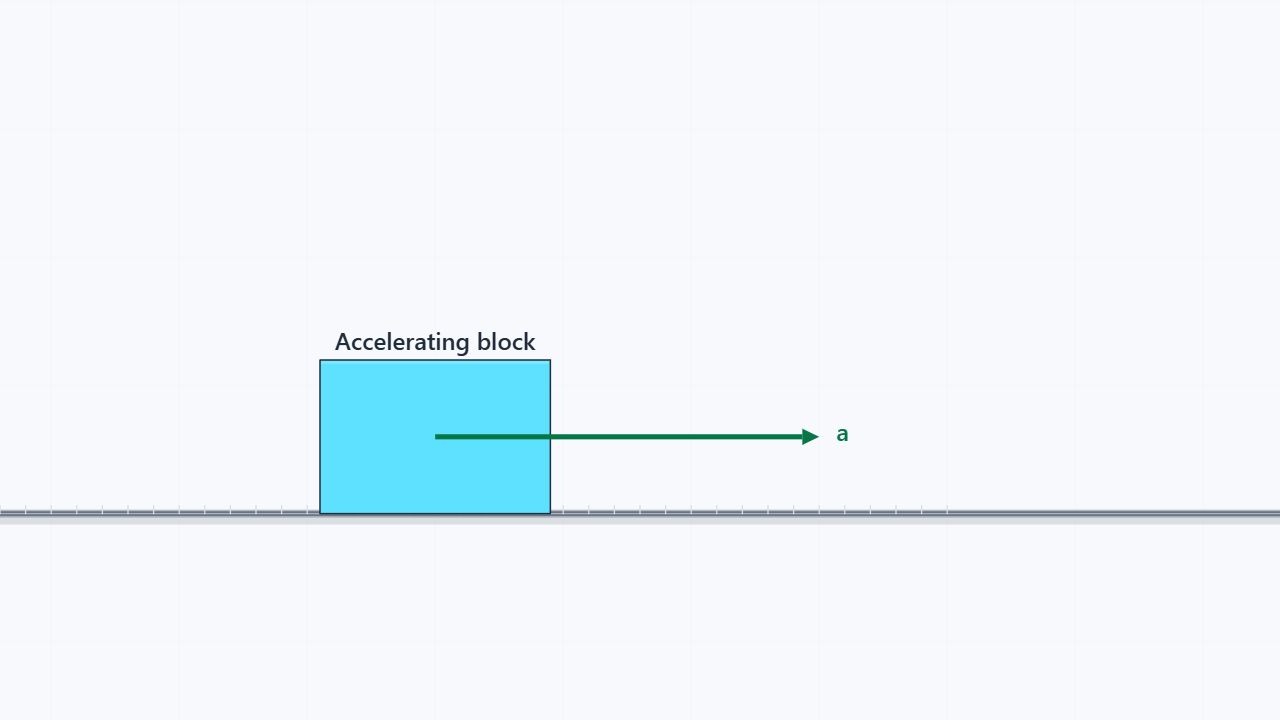
Compare motion over equal time intervals, then use a velocity–time graph to determine acceleration and initial velocity.Unit 1 · Kinematics
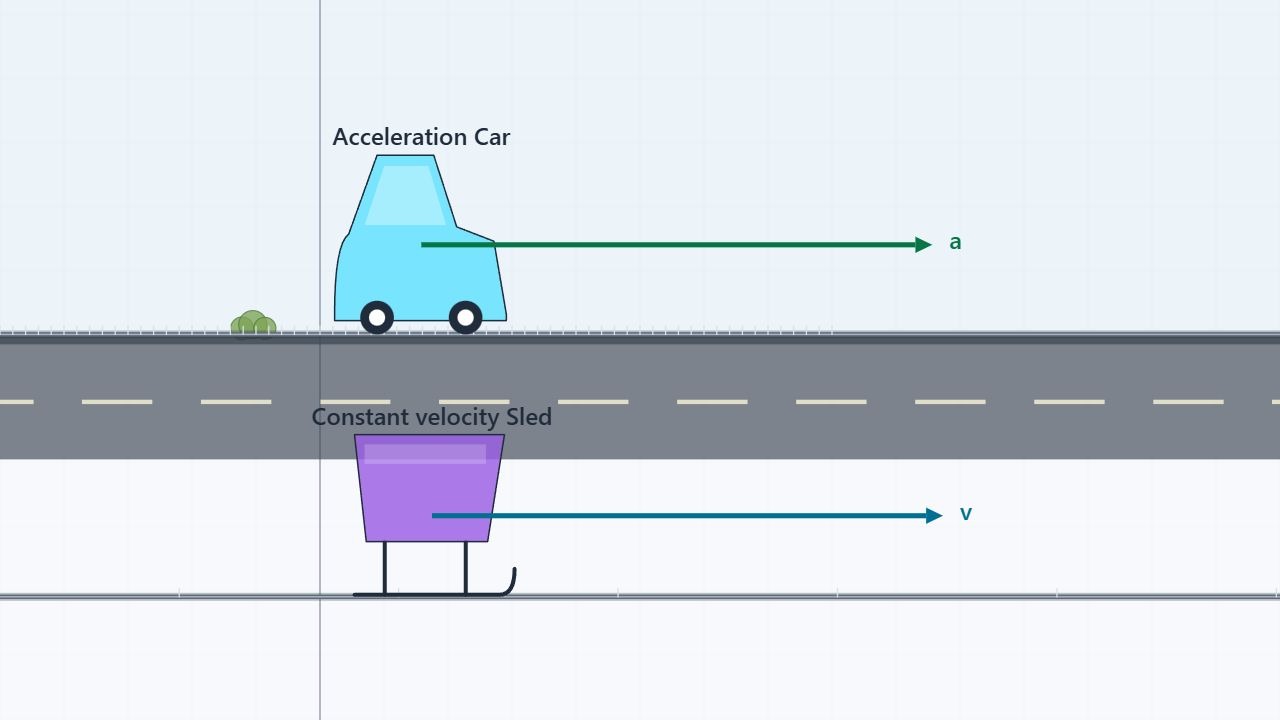
Constant Motion Graphing Simulation and Lab
Compare a constant-velocity sled with an accelerating car using ticker tape, motion graphs, graph slopes, and signed areas.Unit 1 · Kinematics
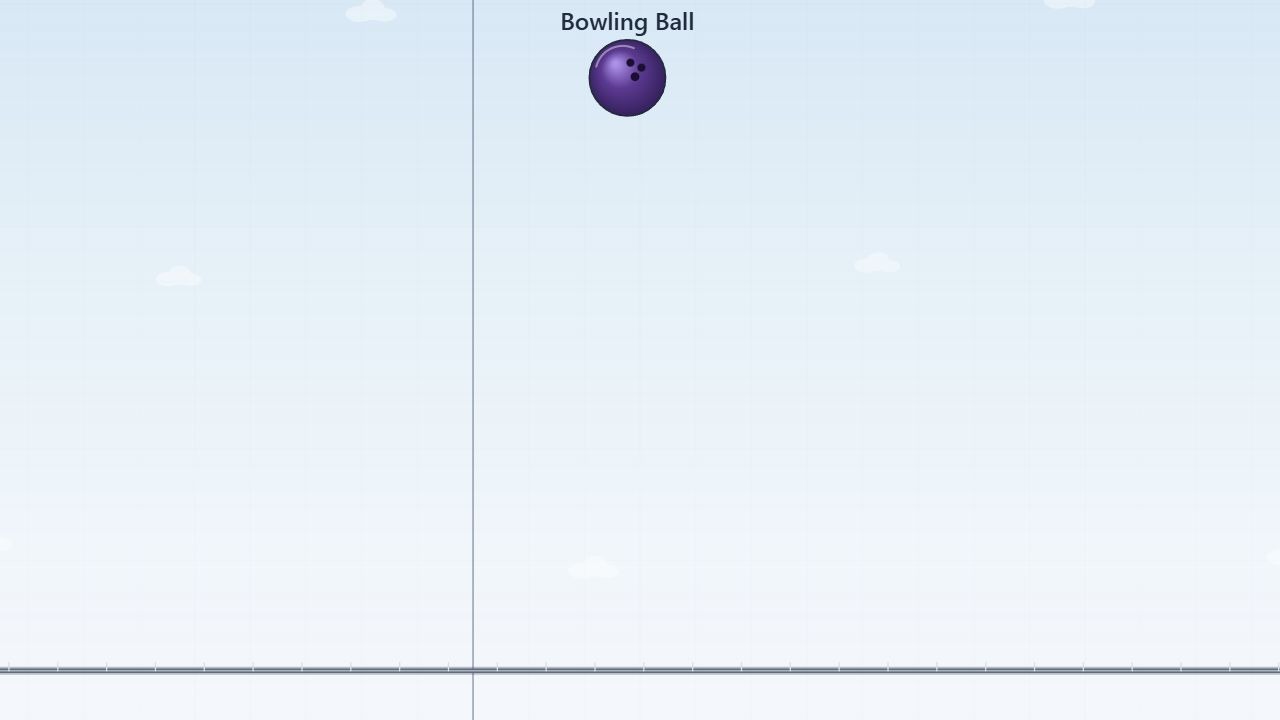
Free Fall Simulation and Virtual Experiment
Compare falling objects of different masses, then use distance–time measurements and a linearized graph to determine gravitational acceleration.Unit 1 · Kinematics
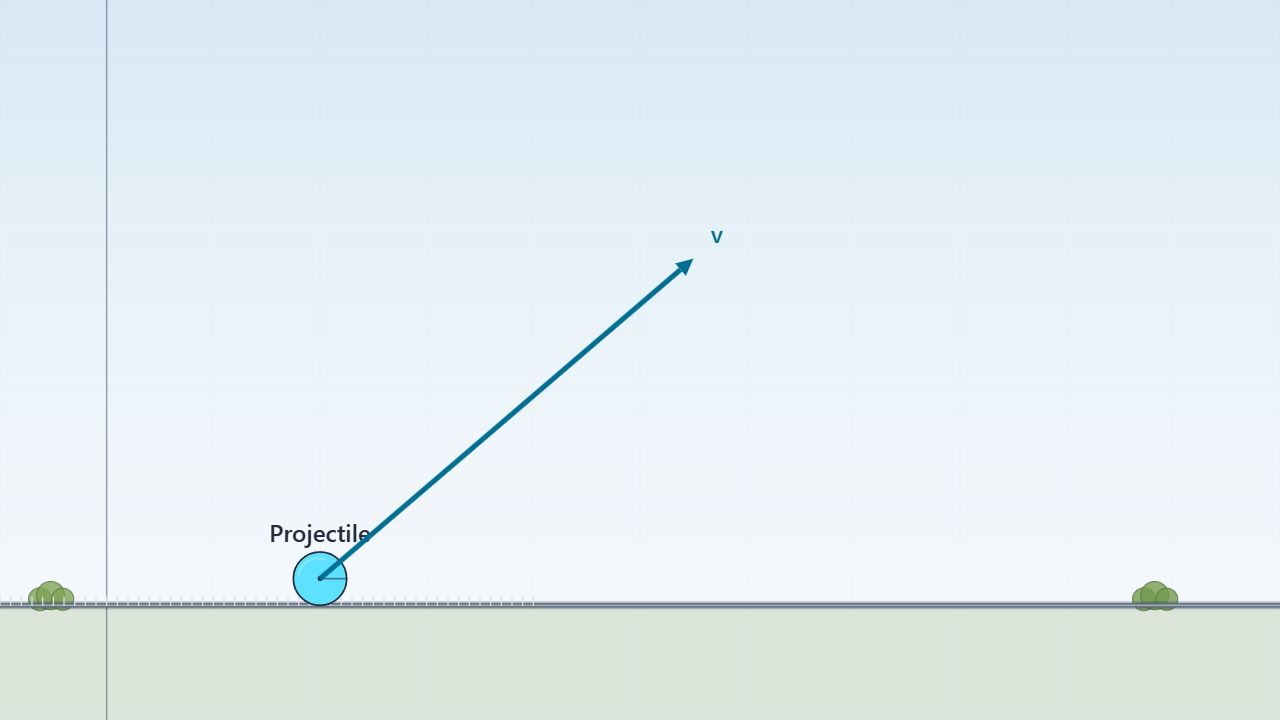
Projectile Motion Simulation and Virtual Lab
Compare horizontal and vertical projectile motion, then investigate how vertical launch velocity determines maximum rise.Unit 1 · Kinematics
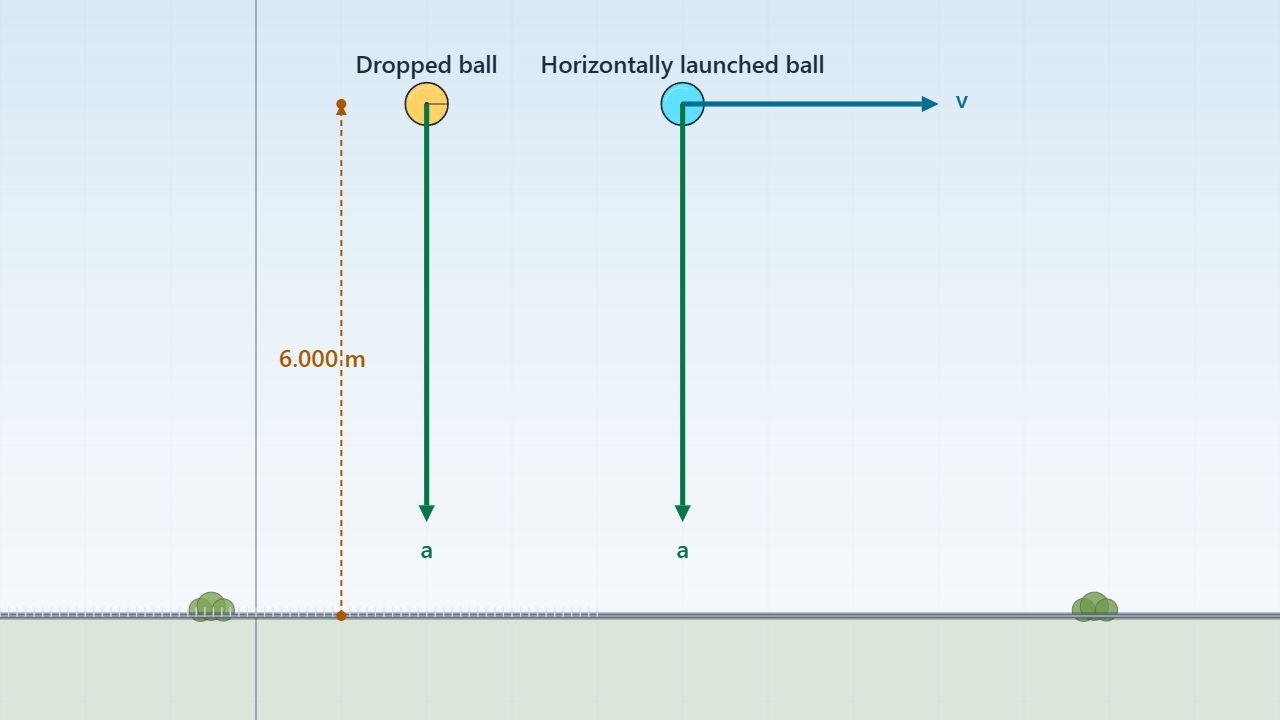
Projectile Motion Independence Simulation
Compare a dropped ball with a horizontally launched ball to test whether horizontal launch speed changes vertical motion.Unit 1 · Kinematics
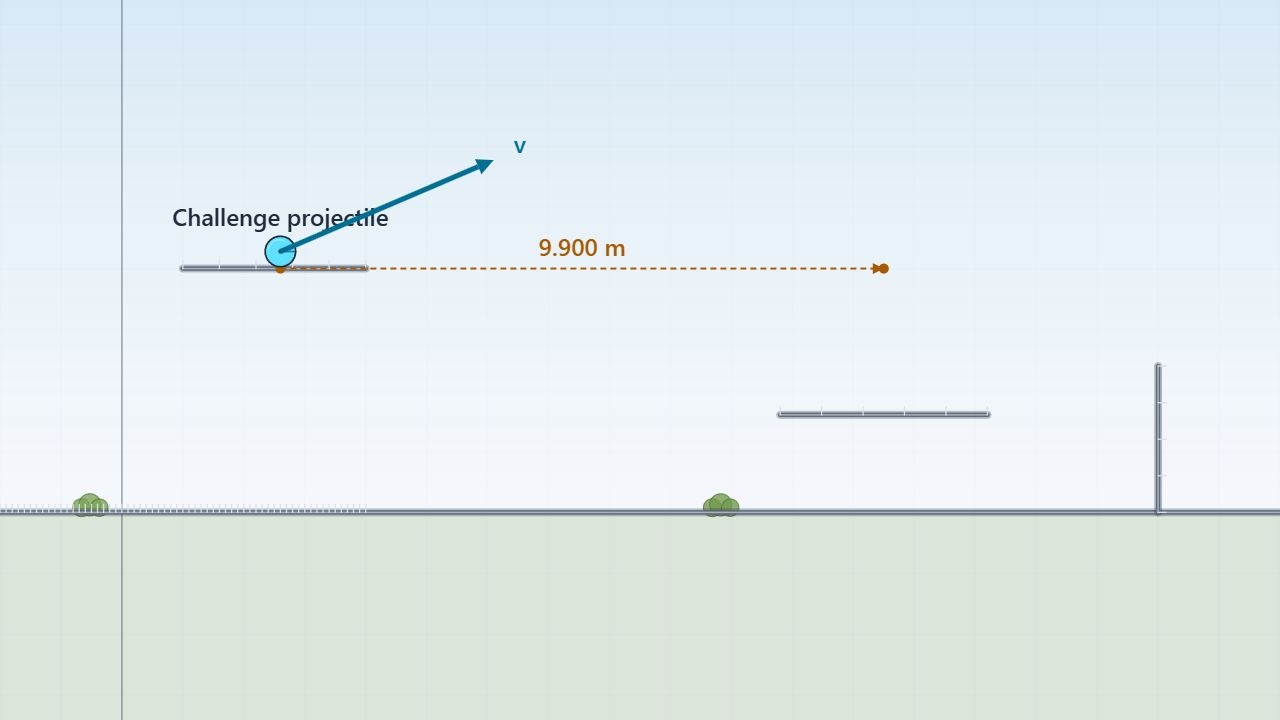
Projectile Motion Target Challenge Simulation
Calculate launch velocity components that land a projectile on a raised platform, then test a second solution to the same target.Unit 1 · Kinematics
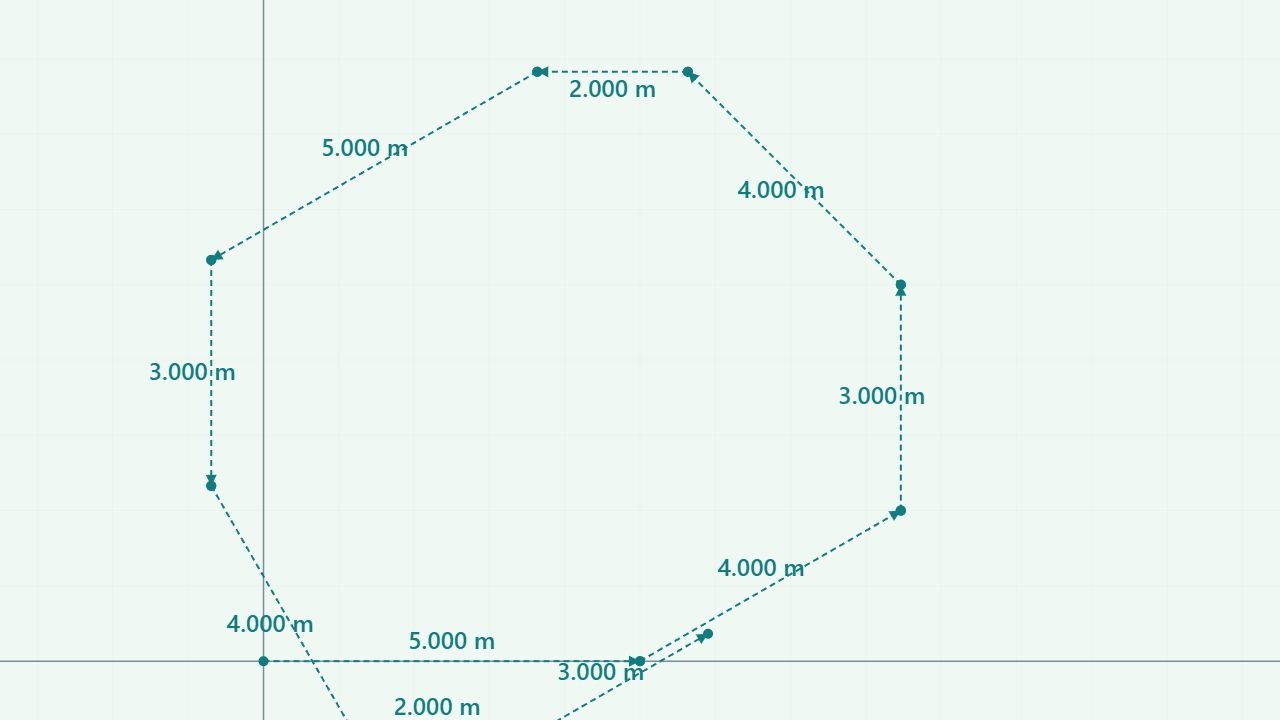
2D Vector Displacement Simulation and Lab
Follow ten displacement clues, construct a route tip to tail, and use vector components to locate the treasure.Unit 2, Part 1
Force and Translational Dynamics
Unit 2, Part 1 · Force and Translational Dynamics
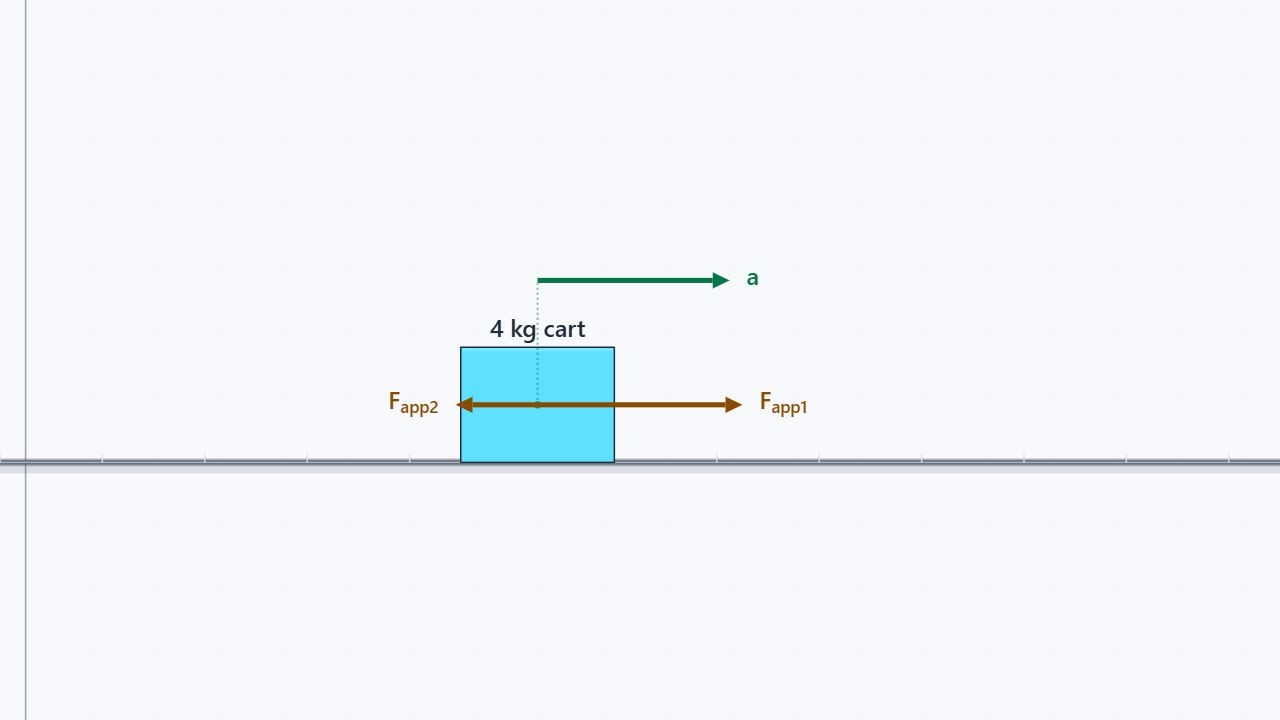
Opposing Forces and Acceleration Simulation and Lab
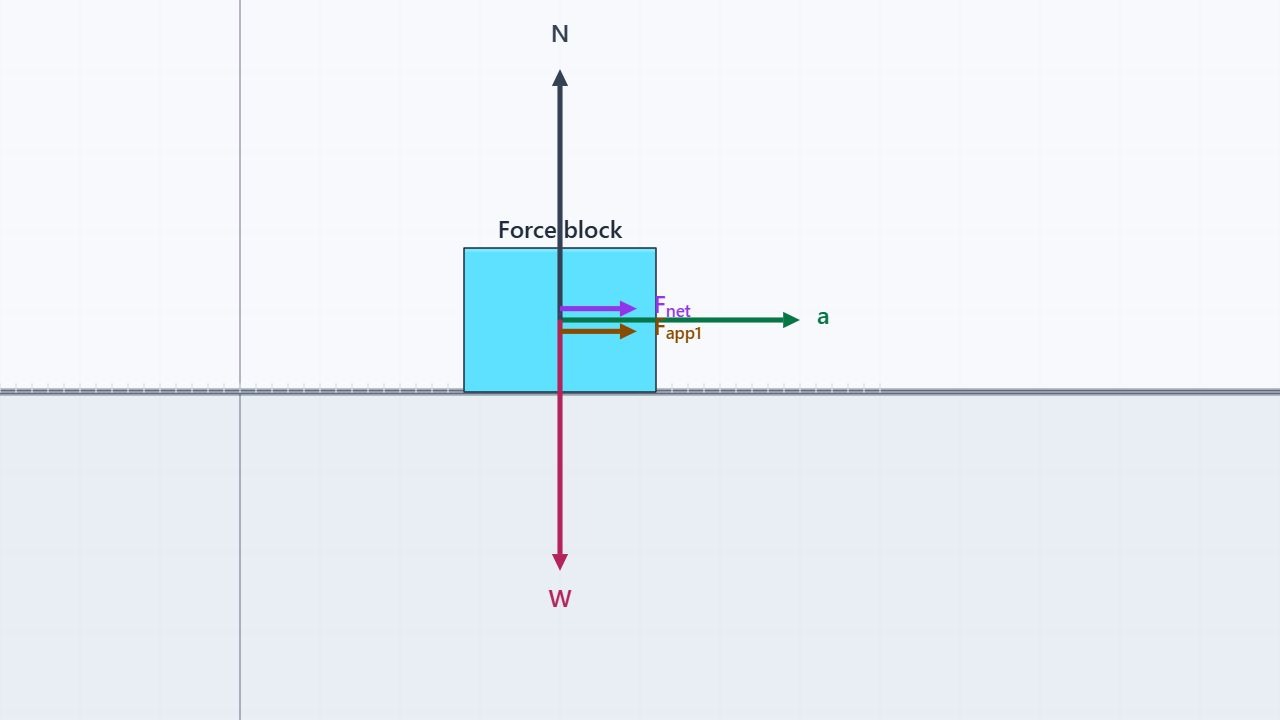
Calculate a cart’s acceleration and velocity from opposing forces, then test a different force pair with the same net force.Unit 2, Part 1 · Force and Translational Dynamics
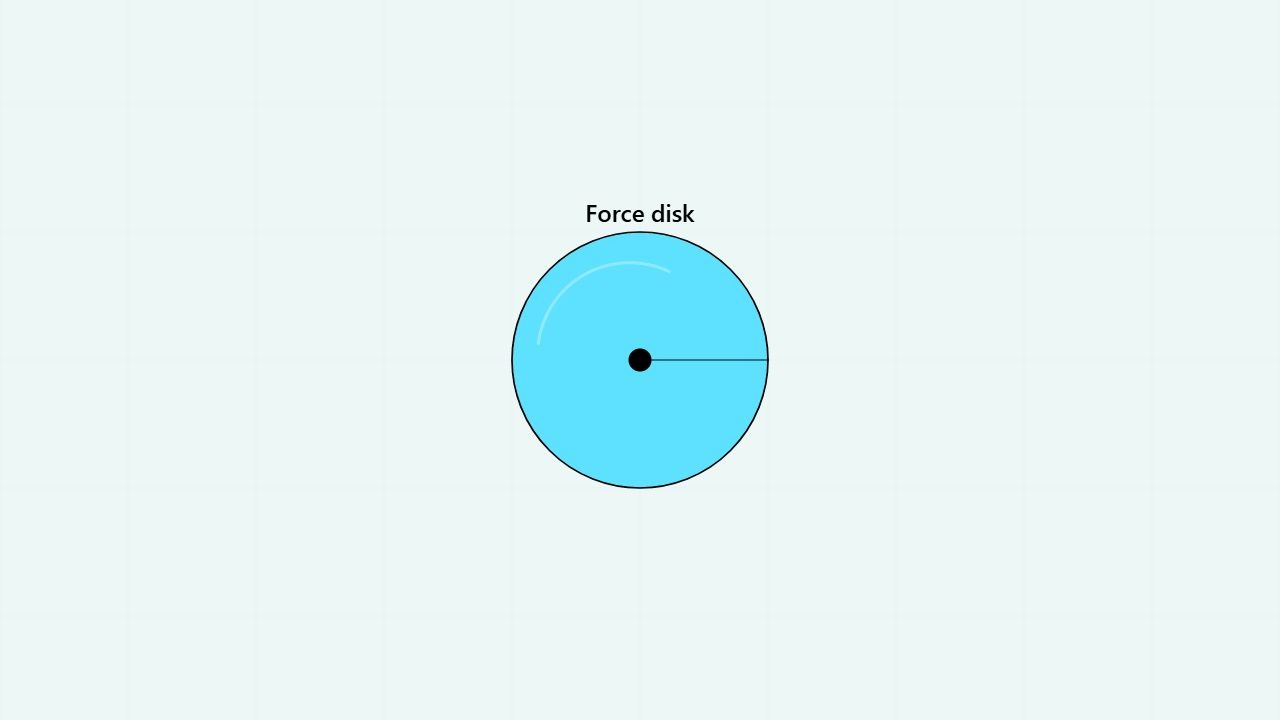
Net Force and Acceleration Simulation
Use force components to predict acceleration in two dimensions, then compare the direction of force with a moving disk’s velocity.Unit 2, Part 1 · Force and Translational Dynamics
Newton’s First Law Two Sleds Simulation and Lab
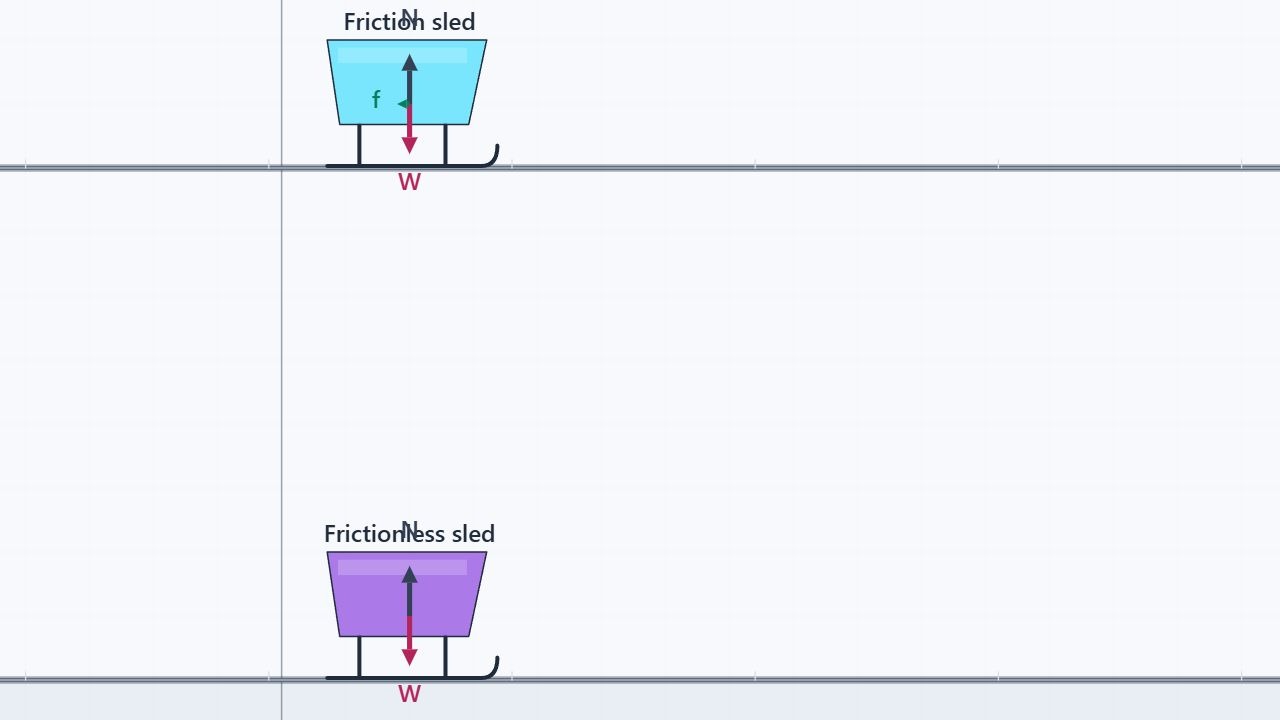
Compare coasting with motion on a rough track, then find the force that makes two sleds maintain the same velocity.Unit 2, Part 1 · Force and Translational Dynamics
Newton’s Second Law Simulation and Lab
Compare changes in force and mass, then investigate acceleration at fixed net force and determine that force from a graph.Unit 2, Part 1 · Force and Translational Dynamics
Newton’s Third Law Simulation and Lab
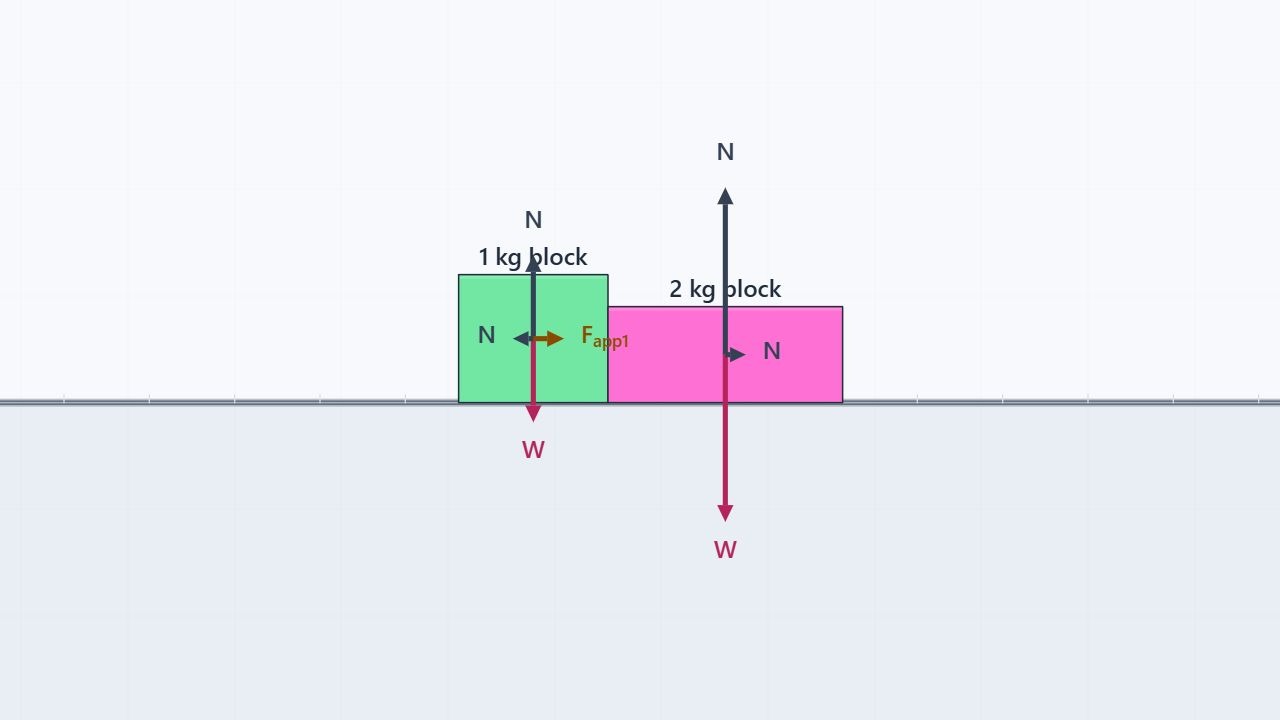
Predict the shared acceleration and contact forces of two touching blocks, then test how changing their mass distribution affects the interaction.Unit 2, Part 1 · Force and Translational Dynamics
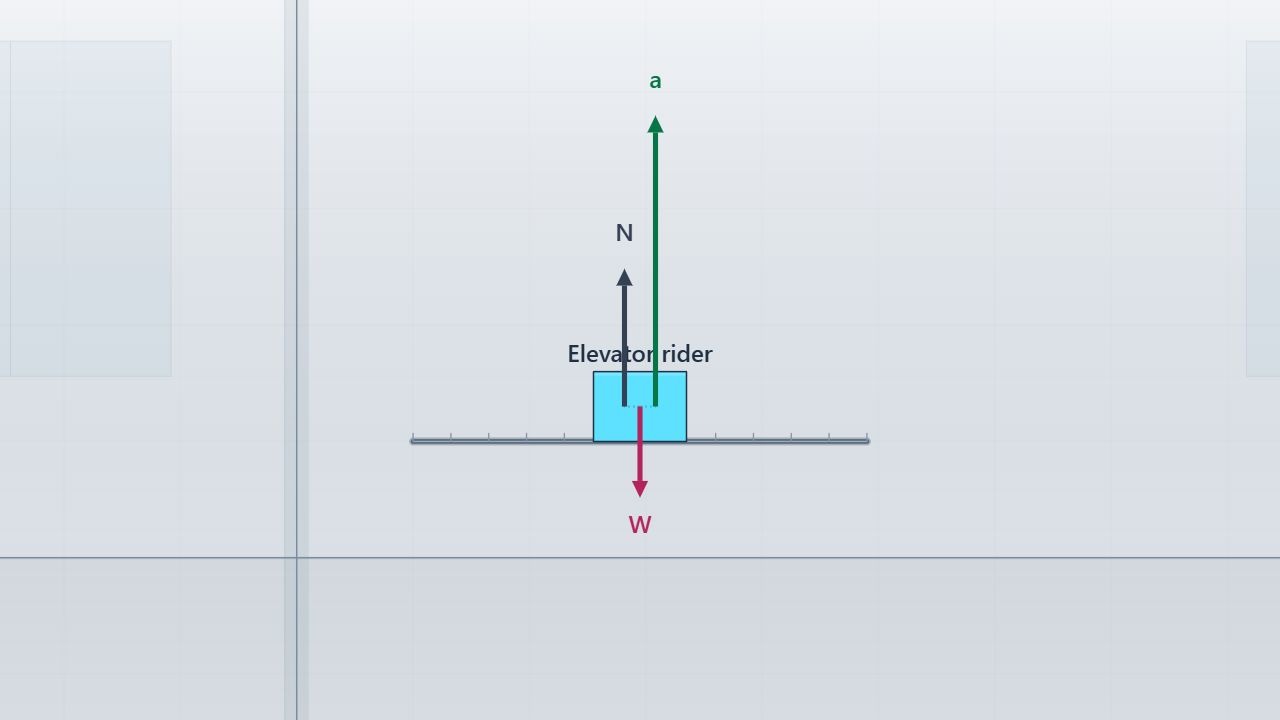
Elevator Forces Simulation and Virtual Lab
Investigate apparent weight in an accelerating elevator and use a normal-force graph to determine the rider’s mass and weight.Unit 2, Part 1 · Force and Translational Dynamics
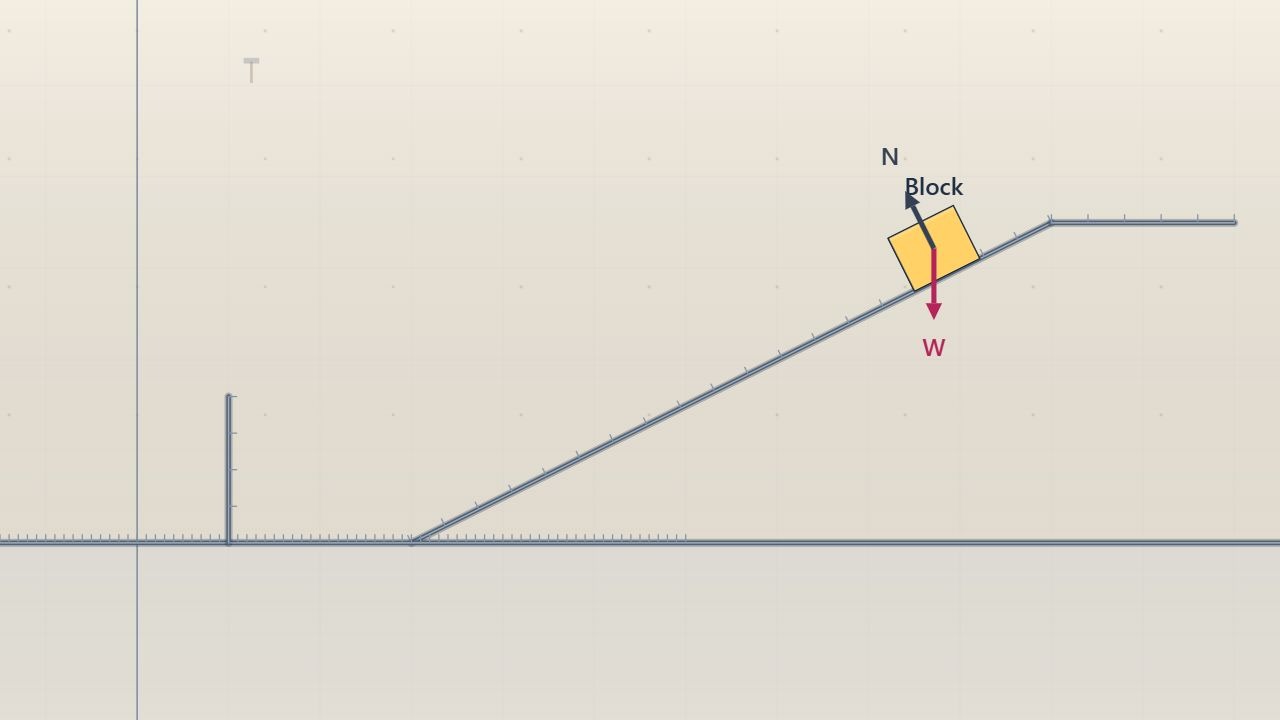
Inclined Plane Simulation with Friction
Compare masses on a frictionless incline, then vary the angle and use a linearized acceleration graph to determine gravity.Unit 2, Part 1 · Force and Translational Dynamics
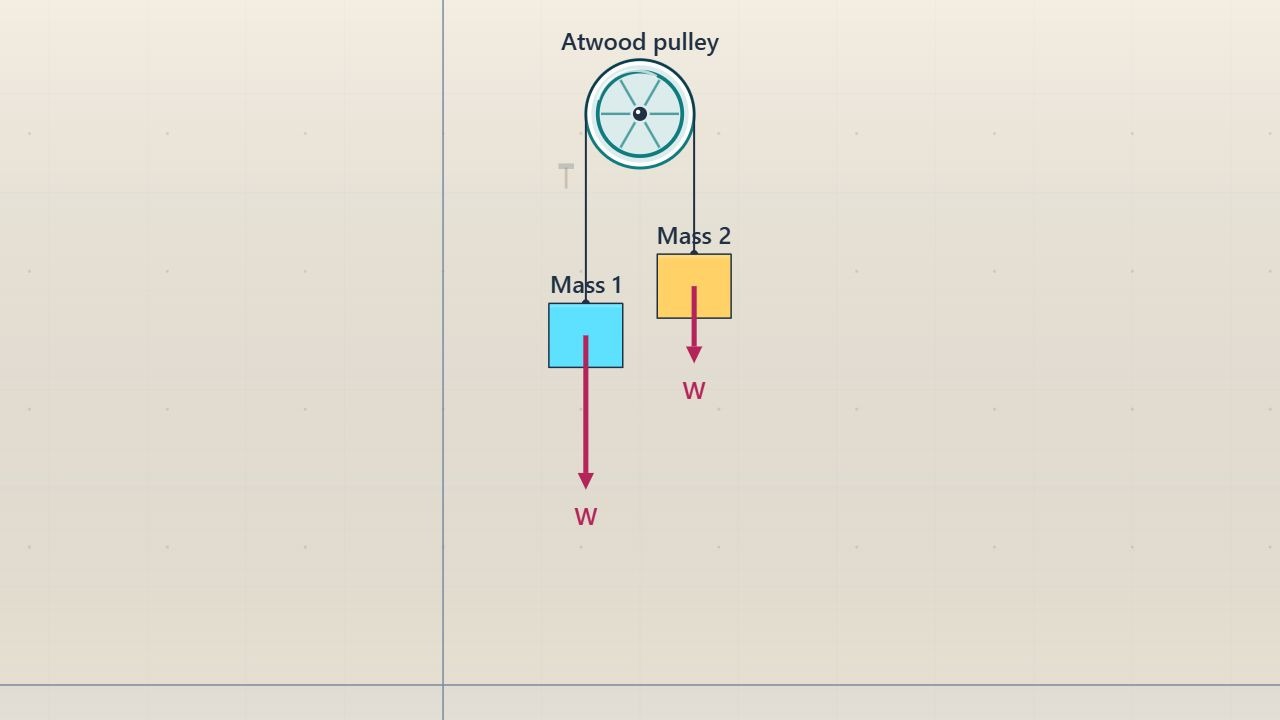
Atwood Machine Simulation and Virtual Lab
Compare connected hanging masses, then vary total mass at a fixed mass difference and use a graph to determine gravity.Unit 2, Part 1 · Force and Translational Dynamics
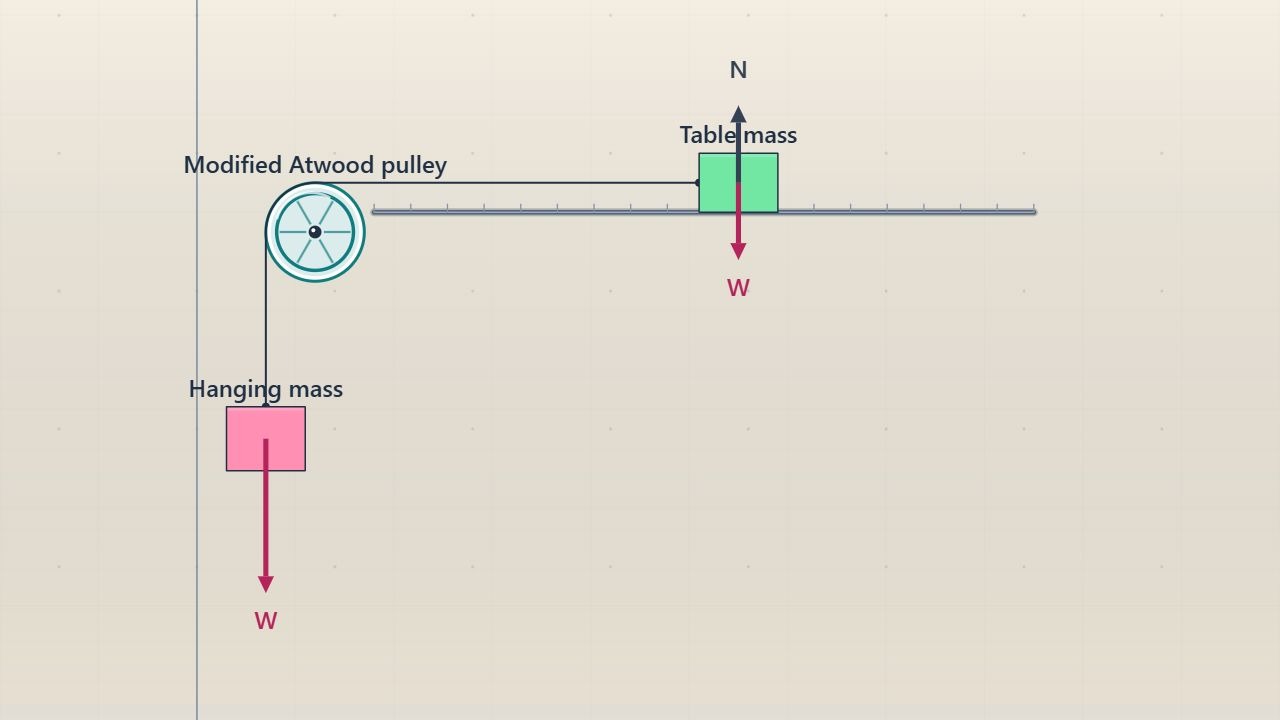
Modified Atwood Machine Simulation and Lab
Compare a table-and-hanging-mass system, then investigate total mass at fixed hanging mass and determine gravity from a graph.Unit 2, Part 1 · Force and Translational Dynamics
Static and Kinetic Friction Simulation
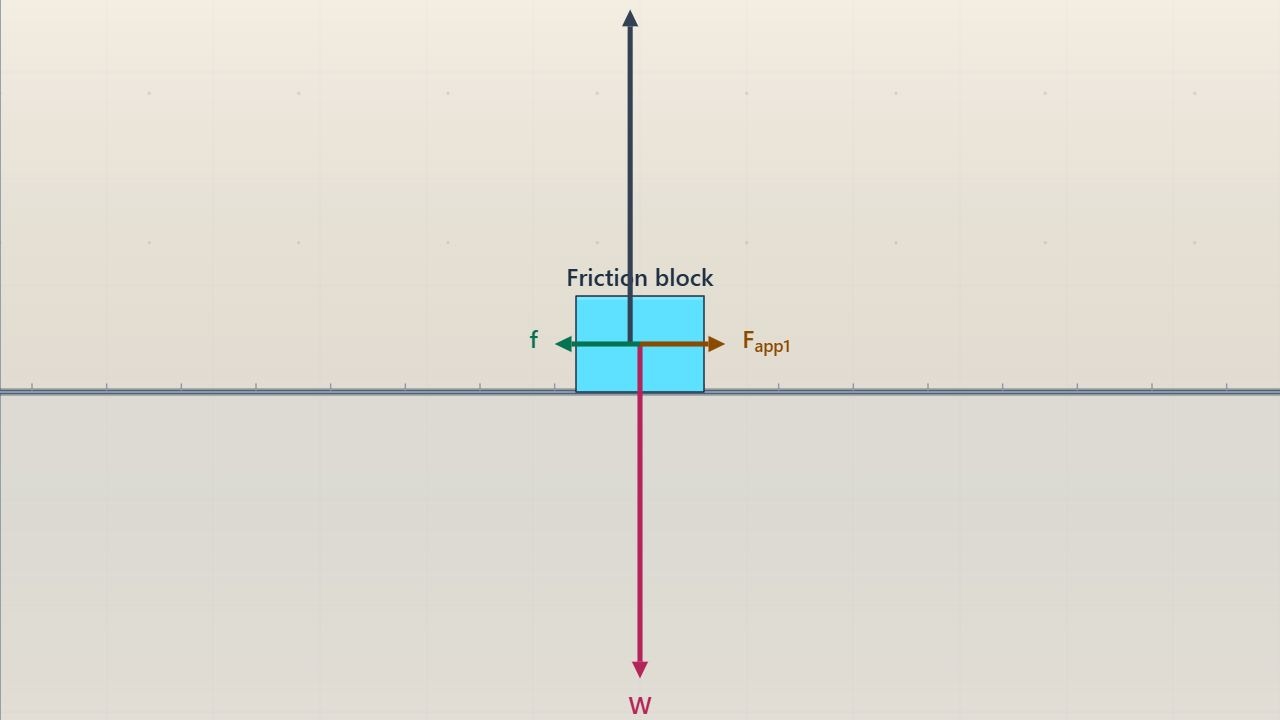
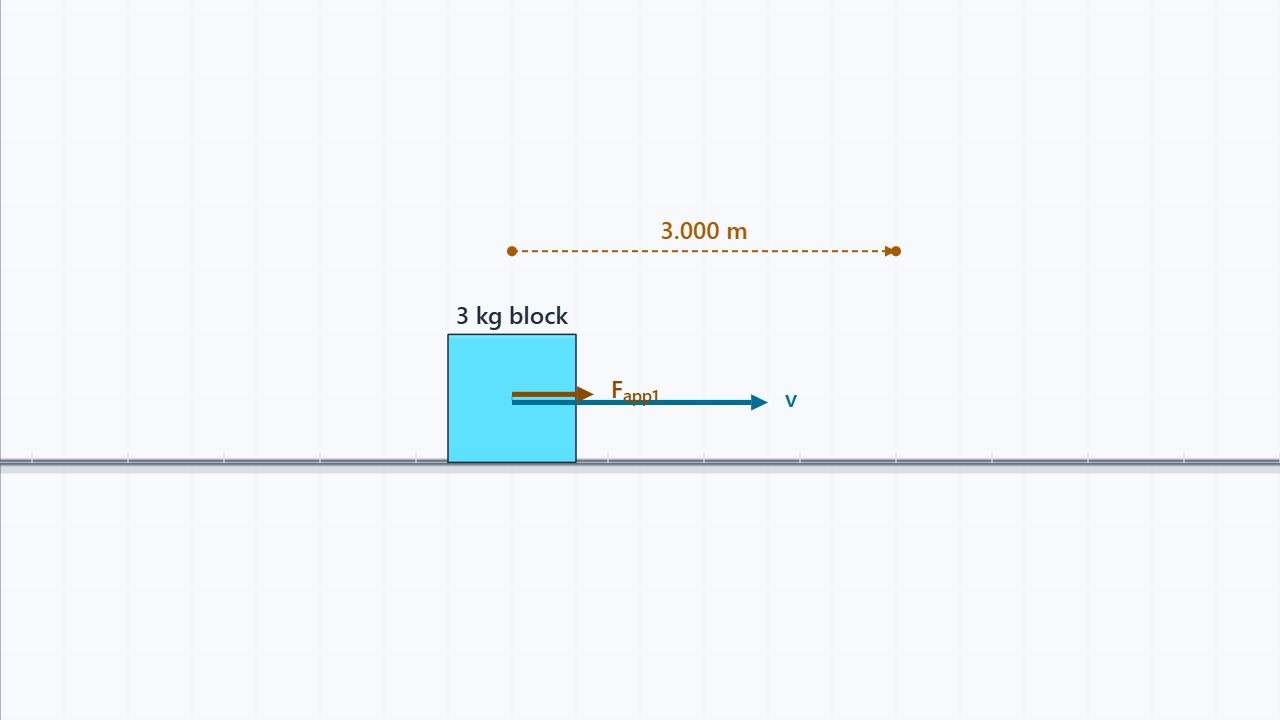
Find the force needed to start a block sliding, then compare the same applied force on a resting block and a moving block.Unit 2, Part 1 · Force and Translational Dynamics
Critical Angle of Friction Simulation
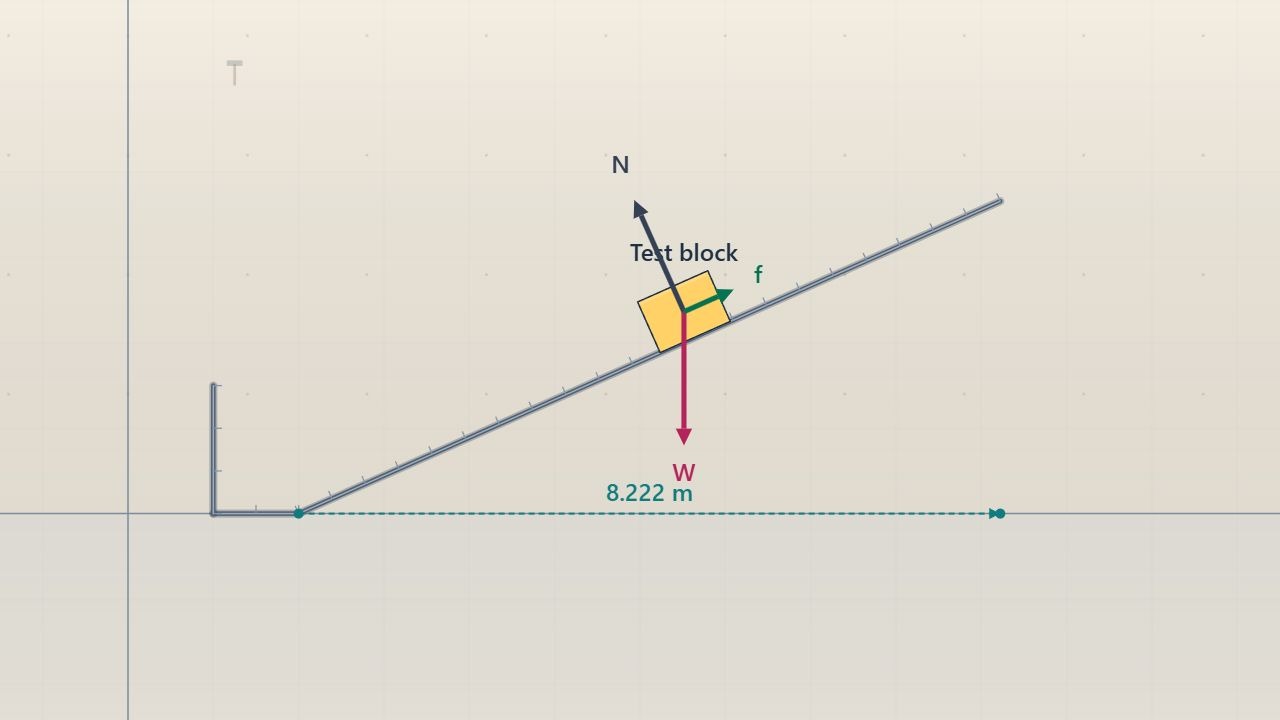
Bracket the angle where a resting block begins to slide, then test how that critical angle depends on static friction.Unit 2, Part 2
Circular Motion and Gravity
Unit 2, Part 2 · Circular Motion and Gravity
Uniform Circular Motion Simulation and Lab
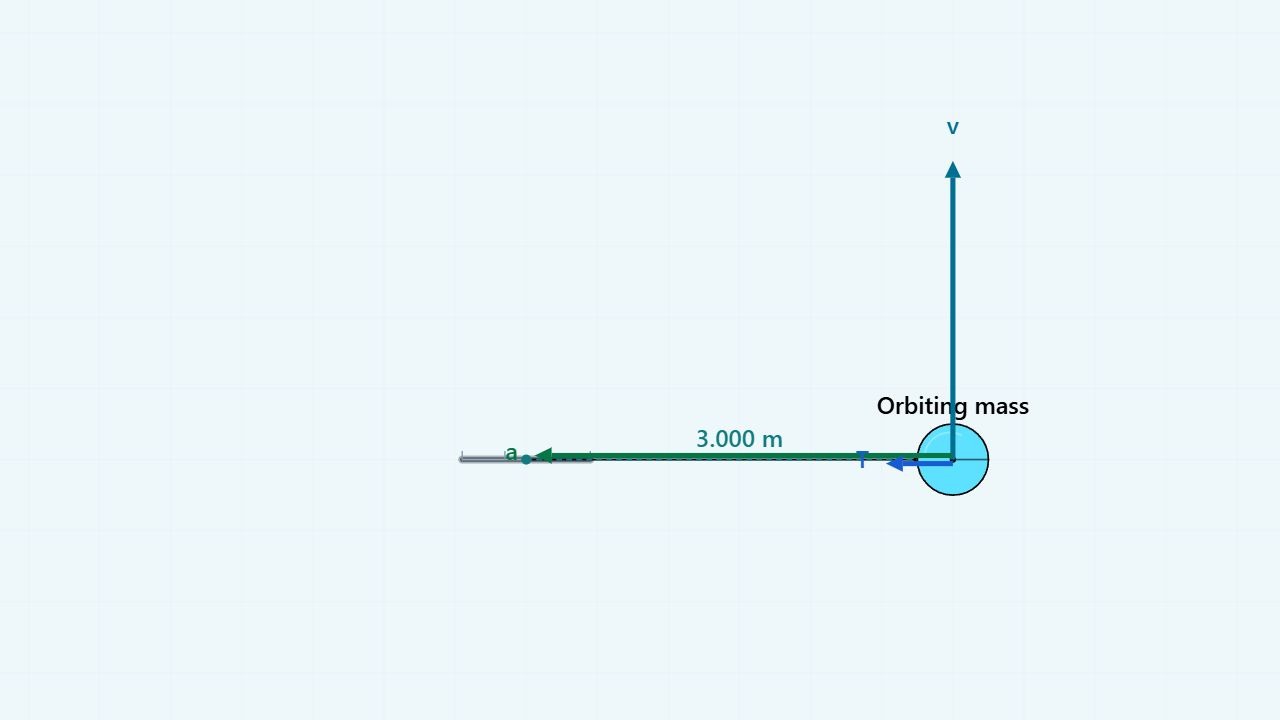
Measure string tension at different speeds and use a linearized graph to investigate the inward force needed for circular motion.Unit 2, Part 2 · Circular Motion and Gravity
Vertical Circular Motion Simulation and Lab
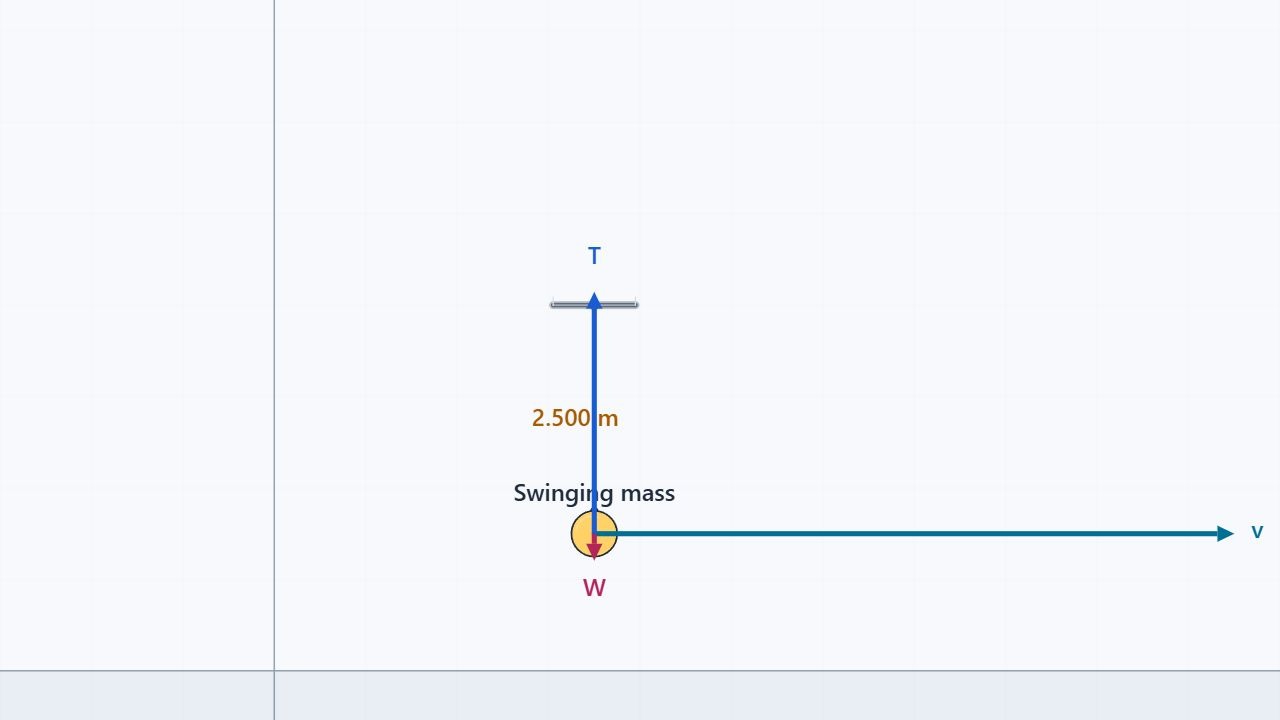
Measure speed and tension at the top of a vertical circle, then connect starting speed with force using energy and radial dynamics.Unit 2, Part 2 · Circular Motion and Gravity
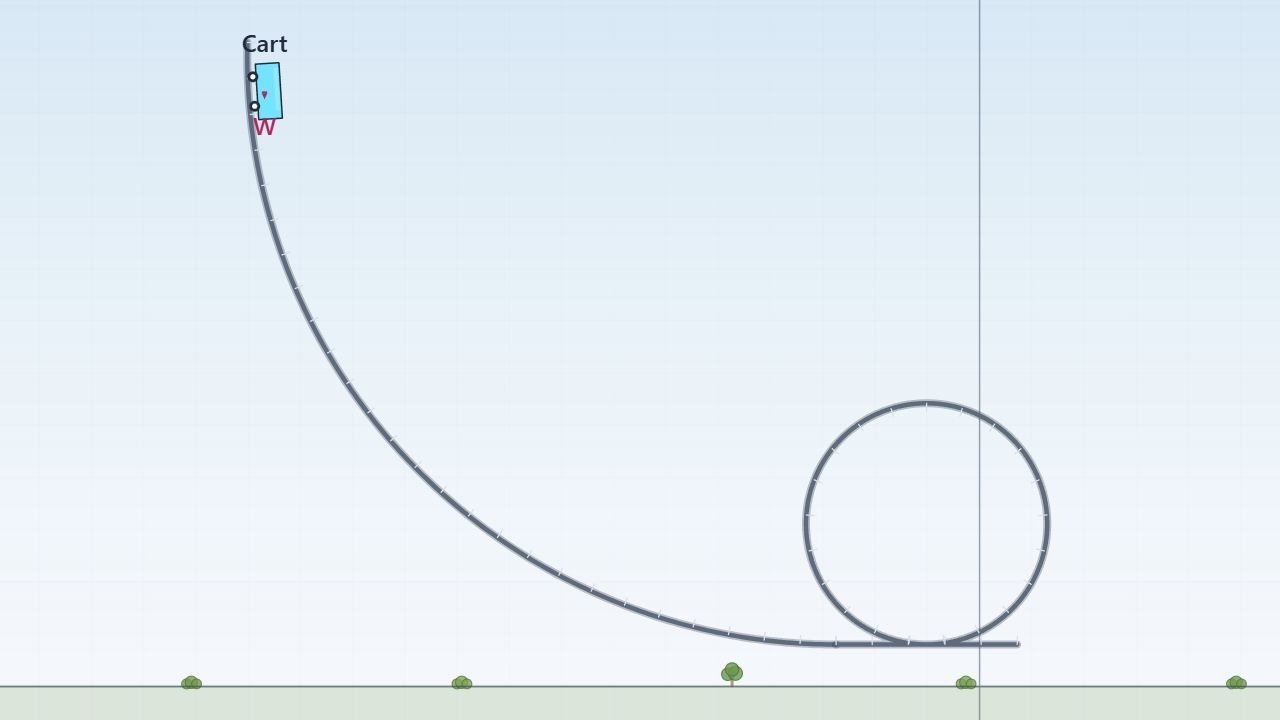
Vertical Circular Motion with a Roller Coaster Loop
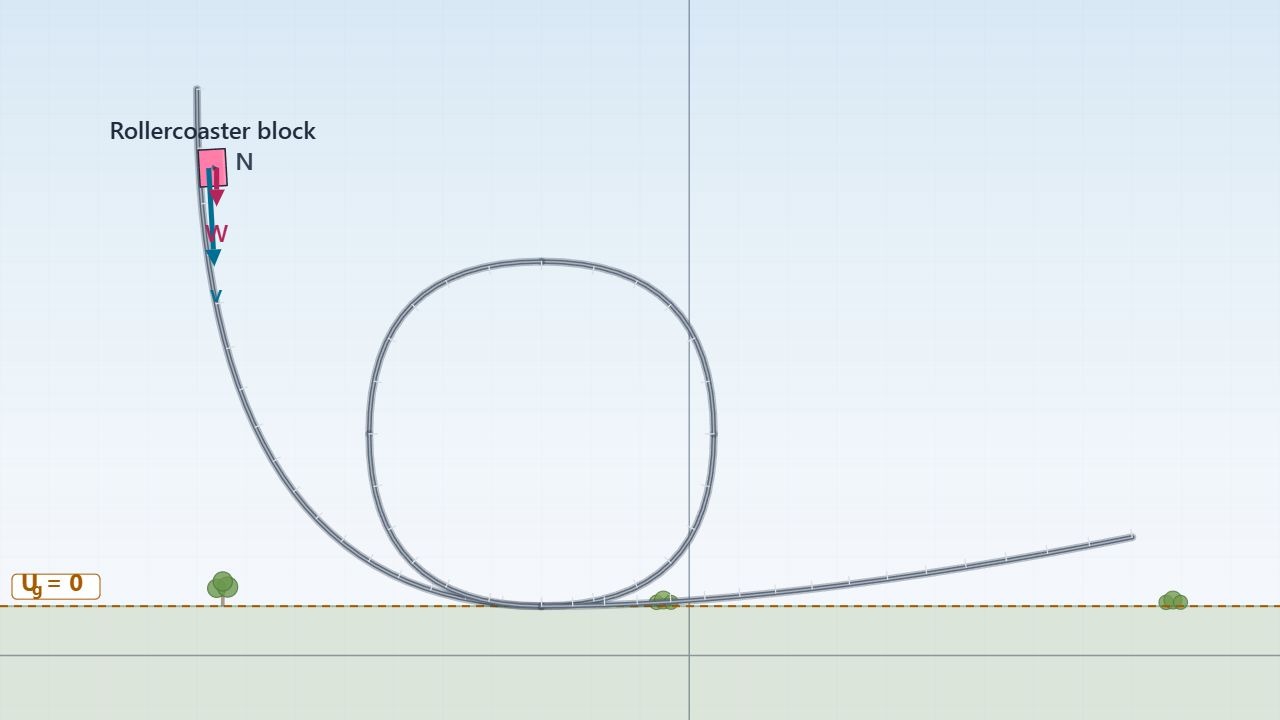
Compare cart masses, then investigate how loop radius changes the normal force at the bottom of a roller coaster loop.Unit 2, Part 2 · Circular Motion and Gravity
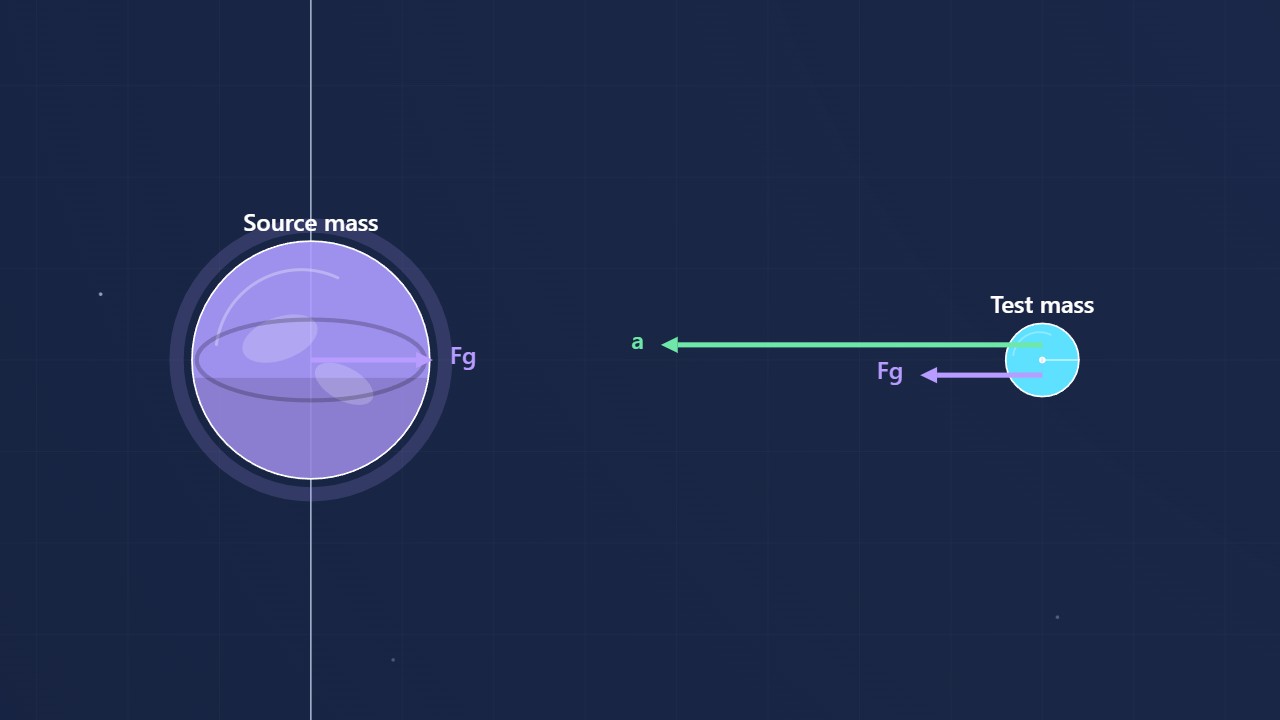
Newton’s Law of Gravitation Simulation
Compare gravitational force and acceleration for different test masses, then vary separation and use a linearized graph to estimate G.Unit 2, Part 2 · Circular Motion and Gravity
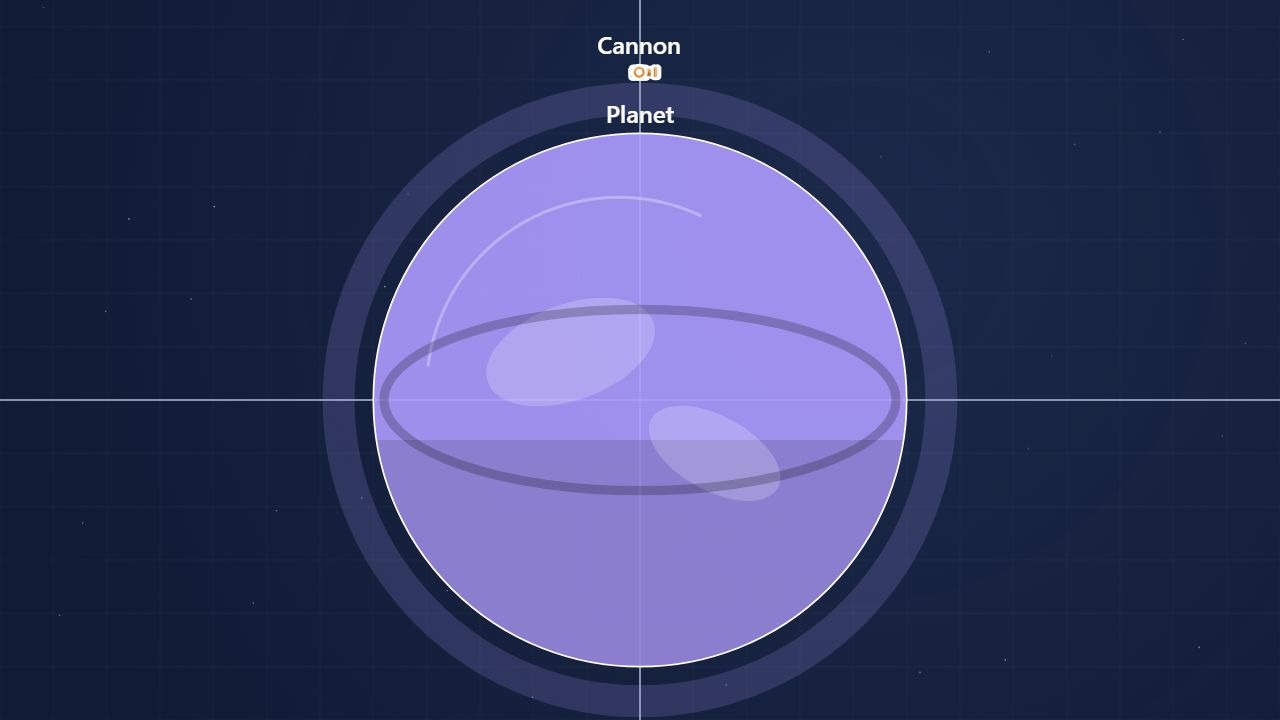
Newton’s Cannon Simulation and Lab
Find a launch speed that sends a cannonball around a planet and explain why an orbiting object is still falling.Unit 2, Part 2 · Circular Motion and Gravity
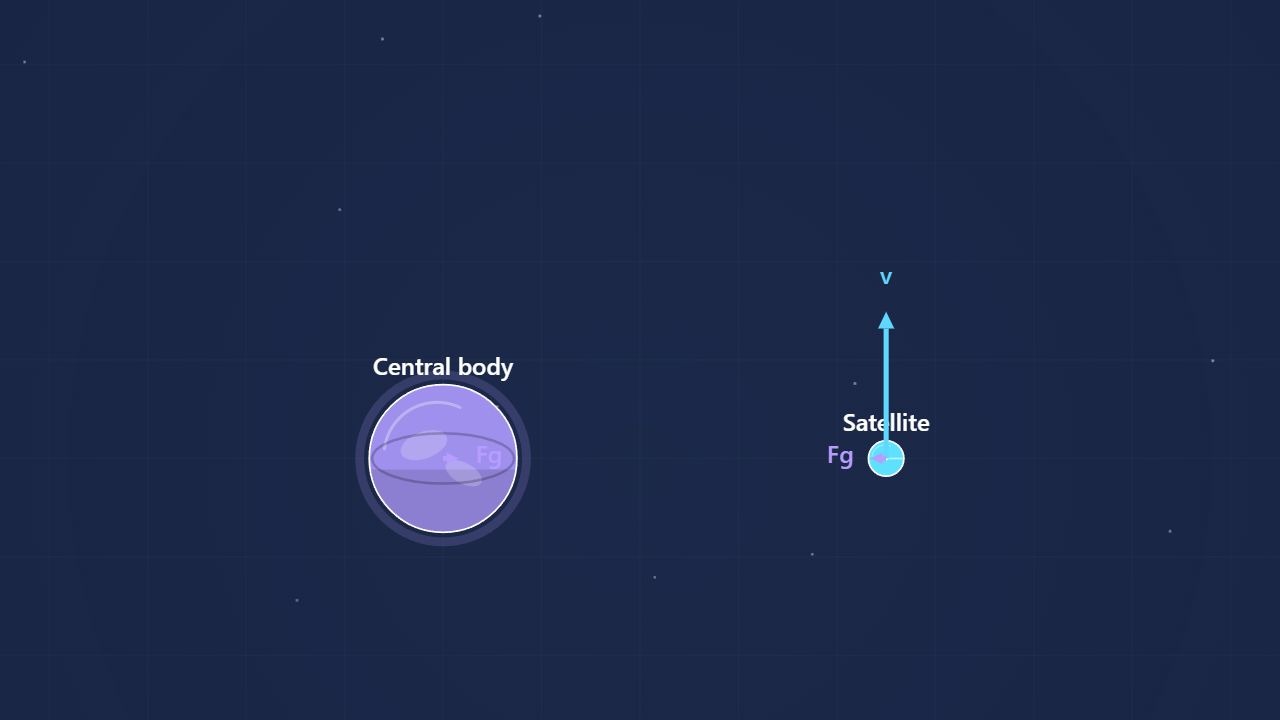
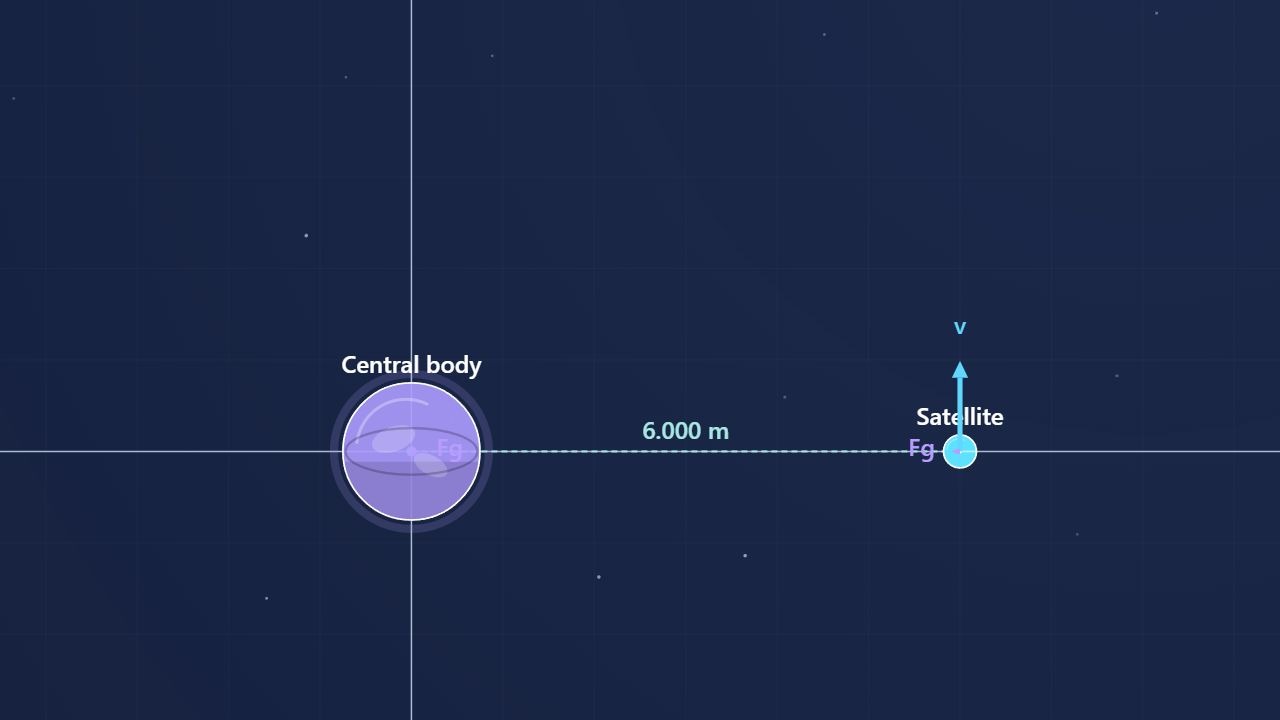
Circular Orbit Simulation and Virtual Lab
Find the speed needed for circular orbits at different radii and use a linearized graph to determine the central mass.Unit 3
Work, Energy, and Power
Unit 3 · Work, Energy, and Power
Work–Kinetic Energy: Constant Force Lab and Simulation
Compare positive and negative work, then vary mass and use final-speed data to determine net work from a graph.Unit 3 · Work, Energy, and Power
Conservation of Mechanical Energy Simulation
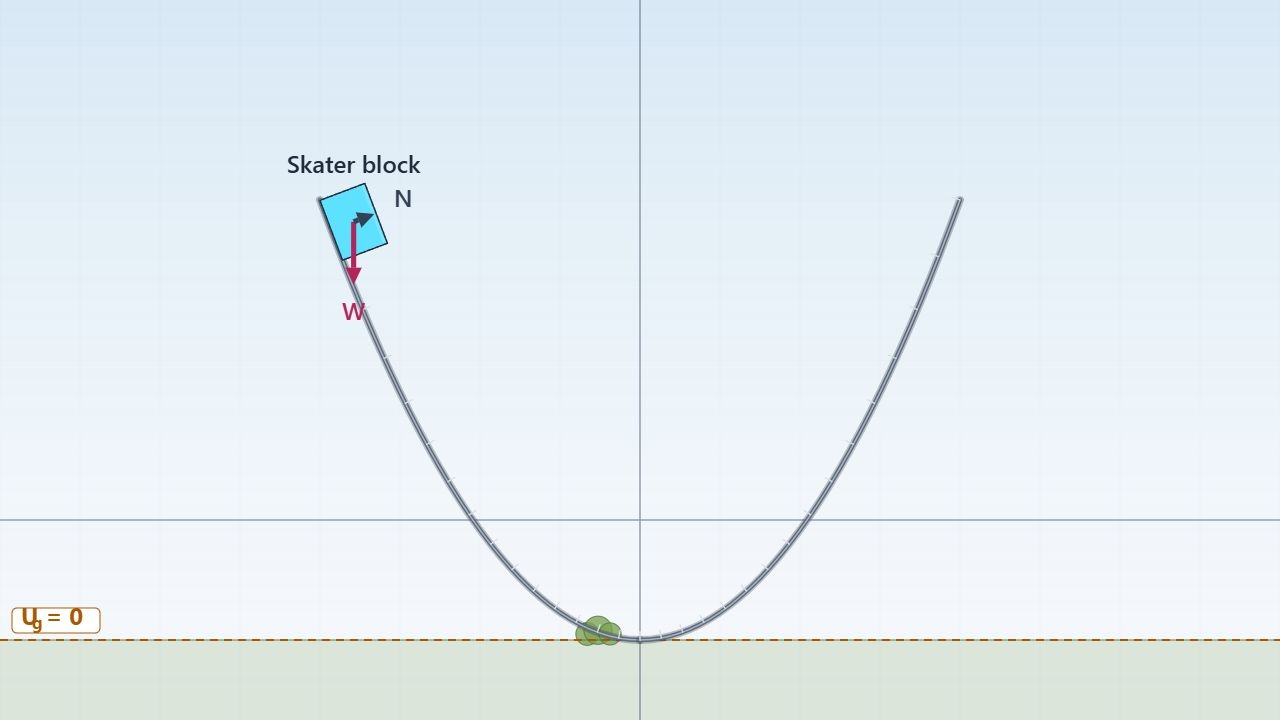
Compare mechanical energy around a frictionless bowl, then investigate release height and use bottom-speed data to determine gravity.Unit 3 · Work, Energy, and Power
Spring Launch and Curved Ramp Simulation
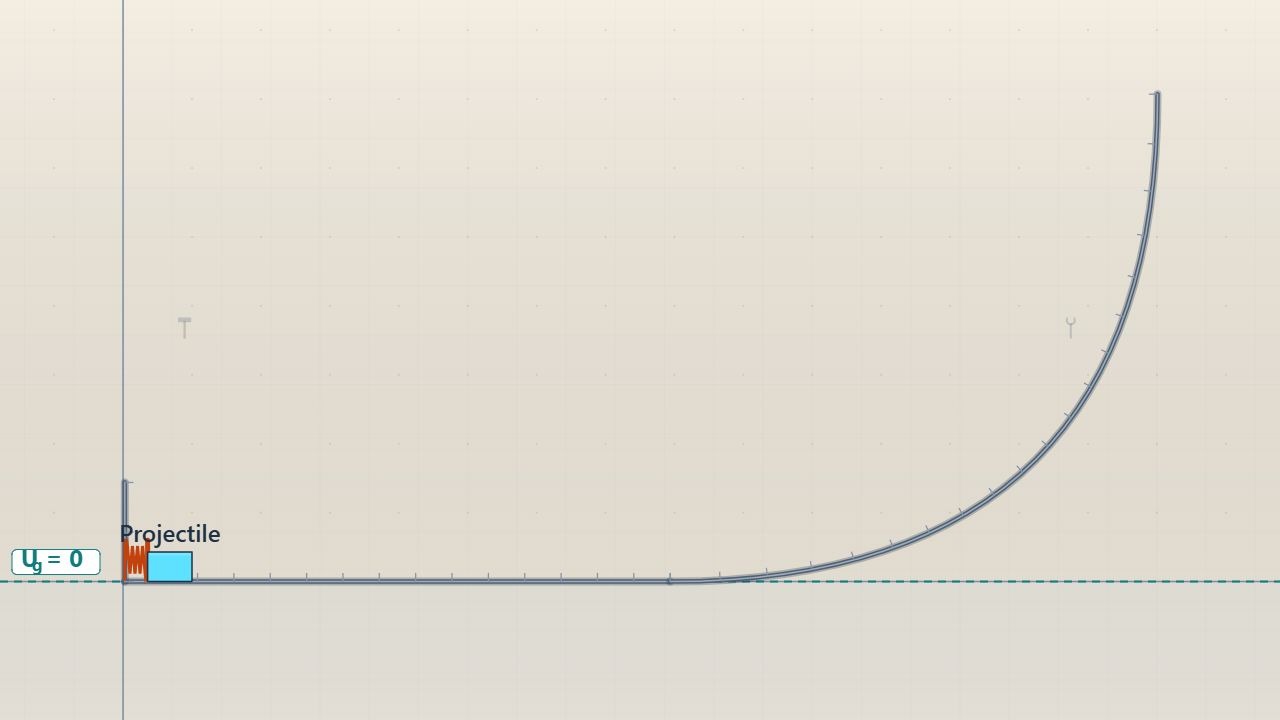
Measure how spring compression changes maximum vertical rise and use a linearized energy graph to determine spring stiffness.Unit 3 · Work, Energy, and Power
Spring-Launched Projectile Simulation
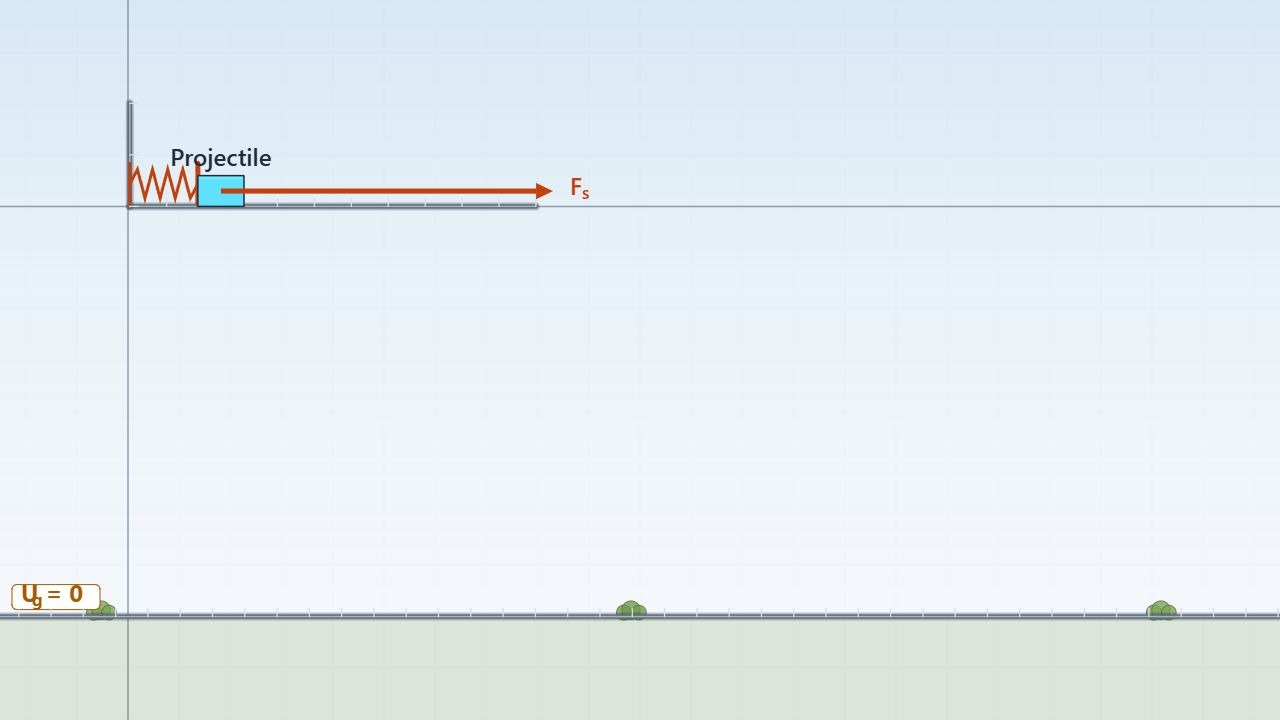
Compare launch and flight speeds, then vary projectile mass and use a linearized energy model to determine spring stiffness.Unit 3 · Work, Energy, and Power
Ramp and Projectile Motion Simulation
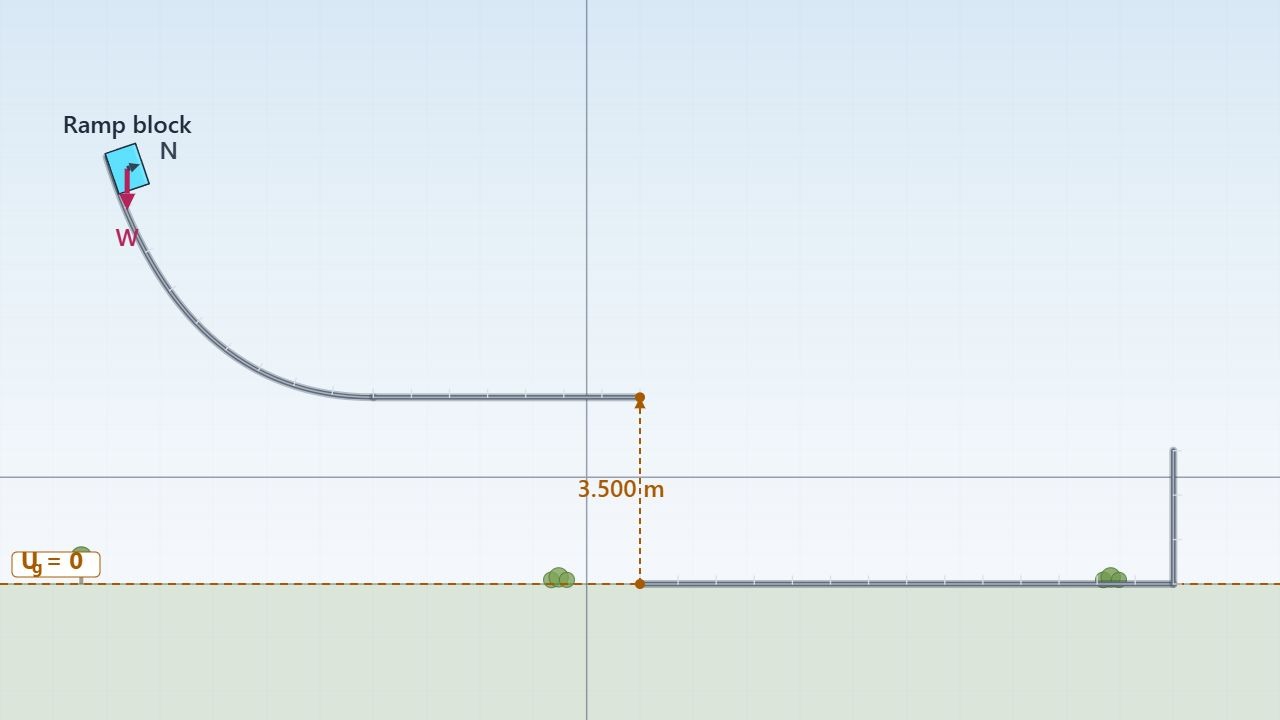
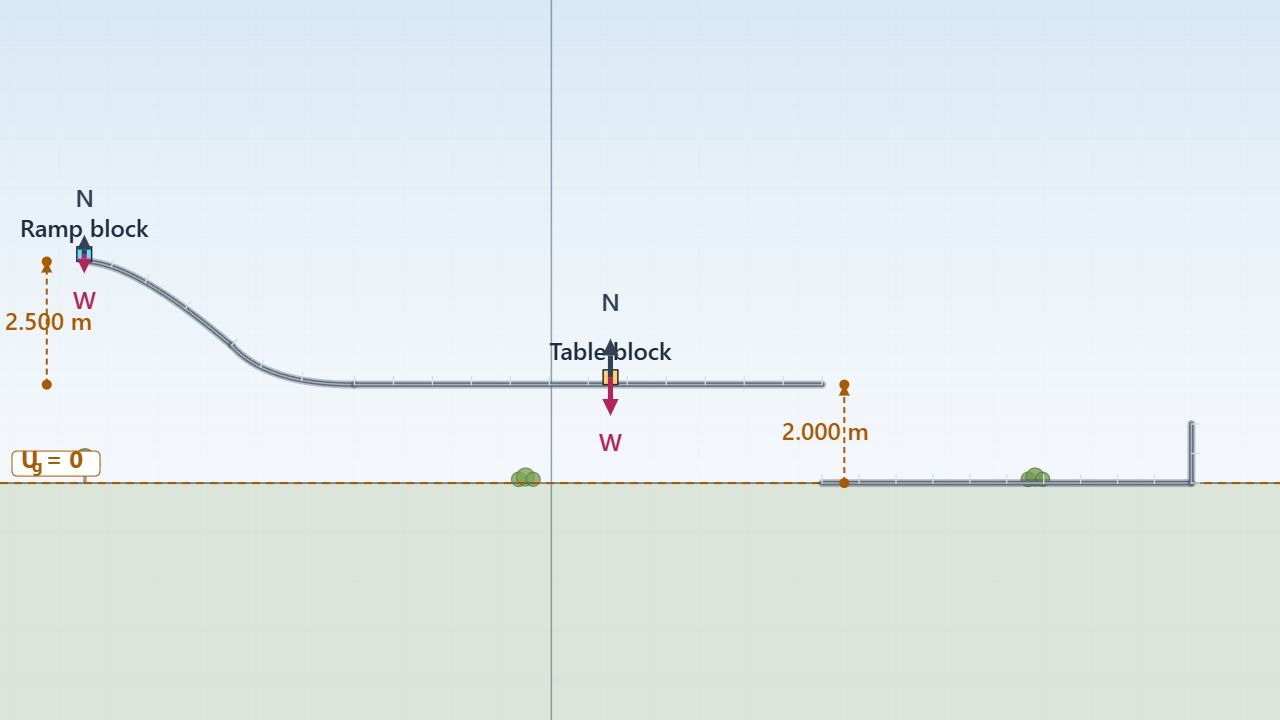
Use energy to predict a block’s launch speed, then use projectile motion to calculate and test its landing point.Unit 3 · Work, Energy, and Power
Roller Coaster Loop Energy Simulation
Compare successful and failed loop runs to explain why enough energy to reach the top does not guarantee contact with the track.Unit 3 · Work, Energy, and Power
External Work Lifting a Block Simulation and Lab
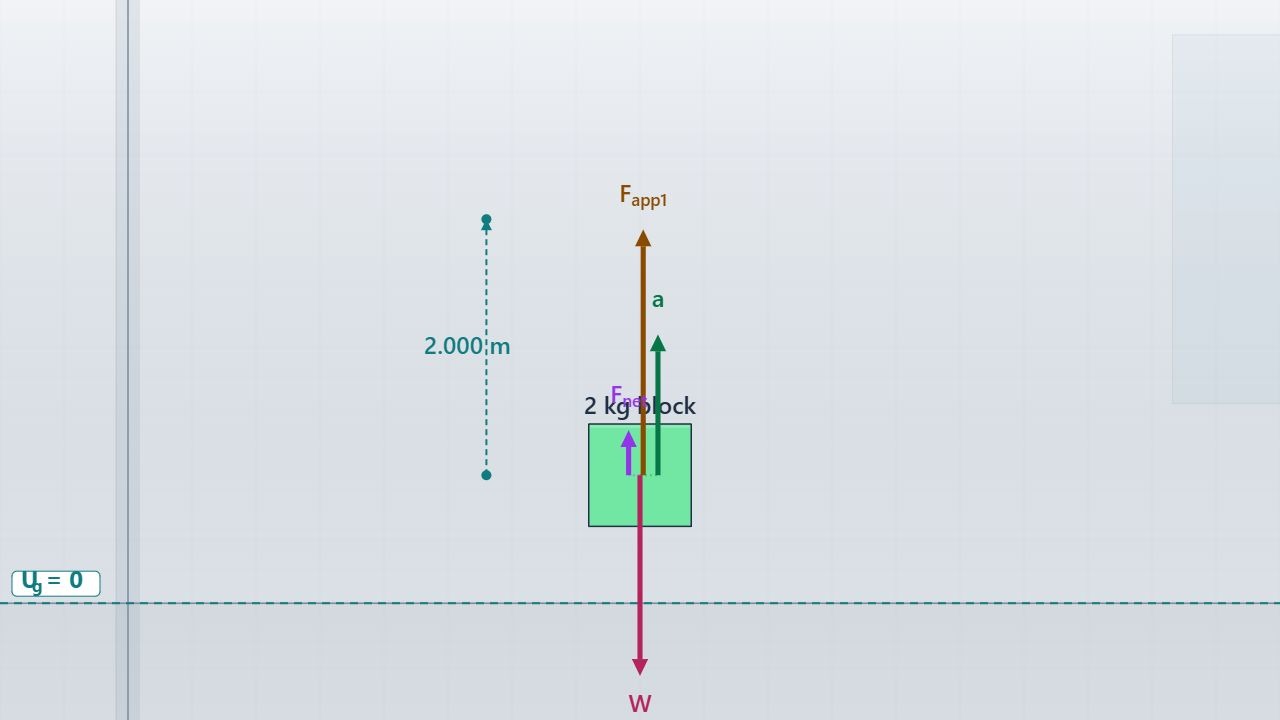
Predict how applied work is shared between lifting a block and increasing its speed, then compare with lifting at constant speed.Unit 4
Linear Momentum
Unit 4 · Linear Momentum
Collision and Momentum Simulator
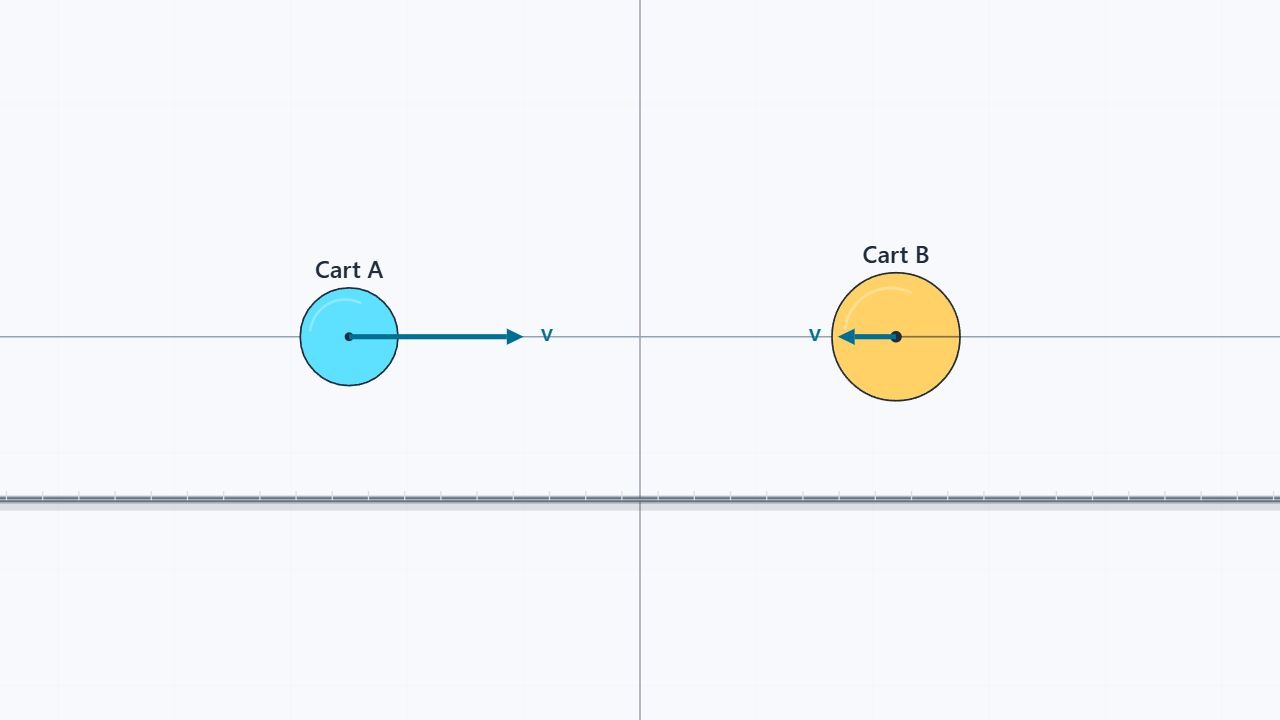
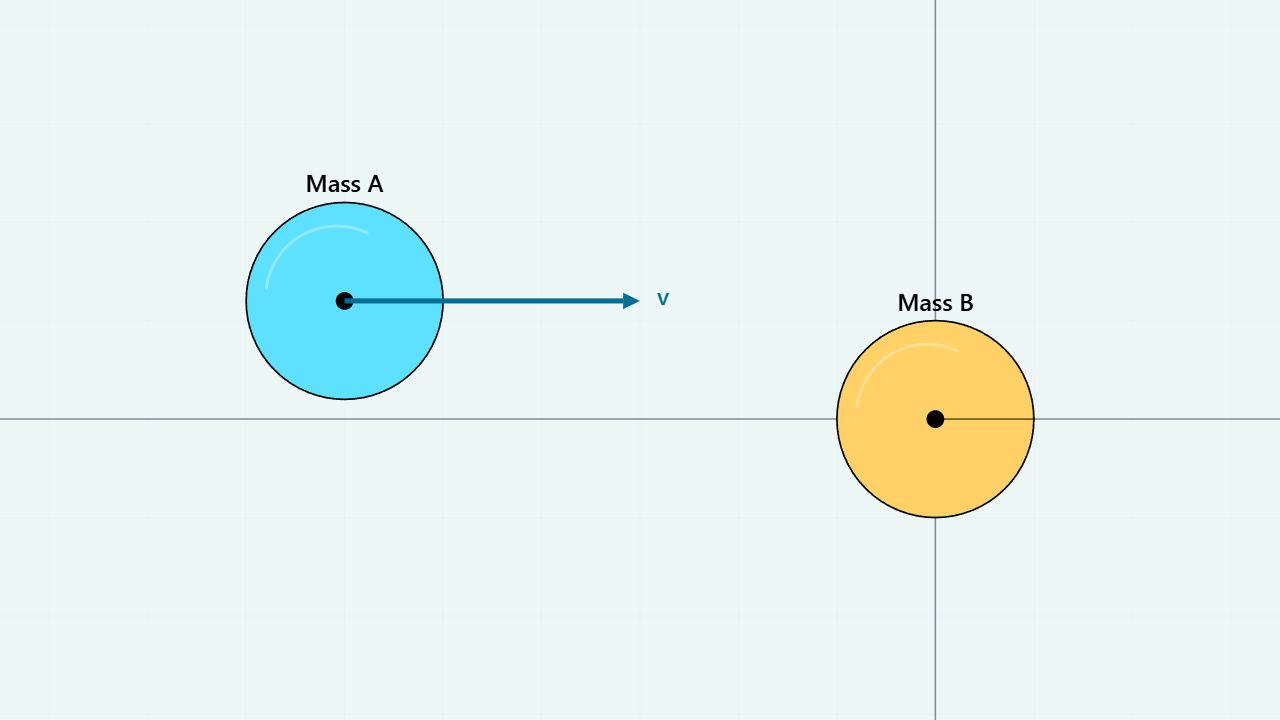
Compare elastic and sticking cart collisions using measured velocities, total momentum, kinetic energy, and impulse.Unit 4 · Linear Momentum
Two-Dimensional Collision Simulation
Use four short trials to check total x and y momentum before and after bouncing and sticking collisions.Unit 4 · Linear Momentum
Fan Cart Impulse Simulation and Lab
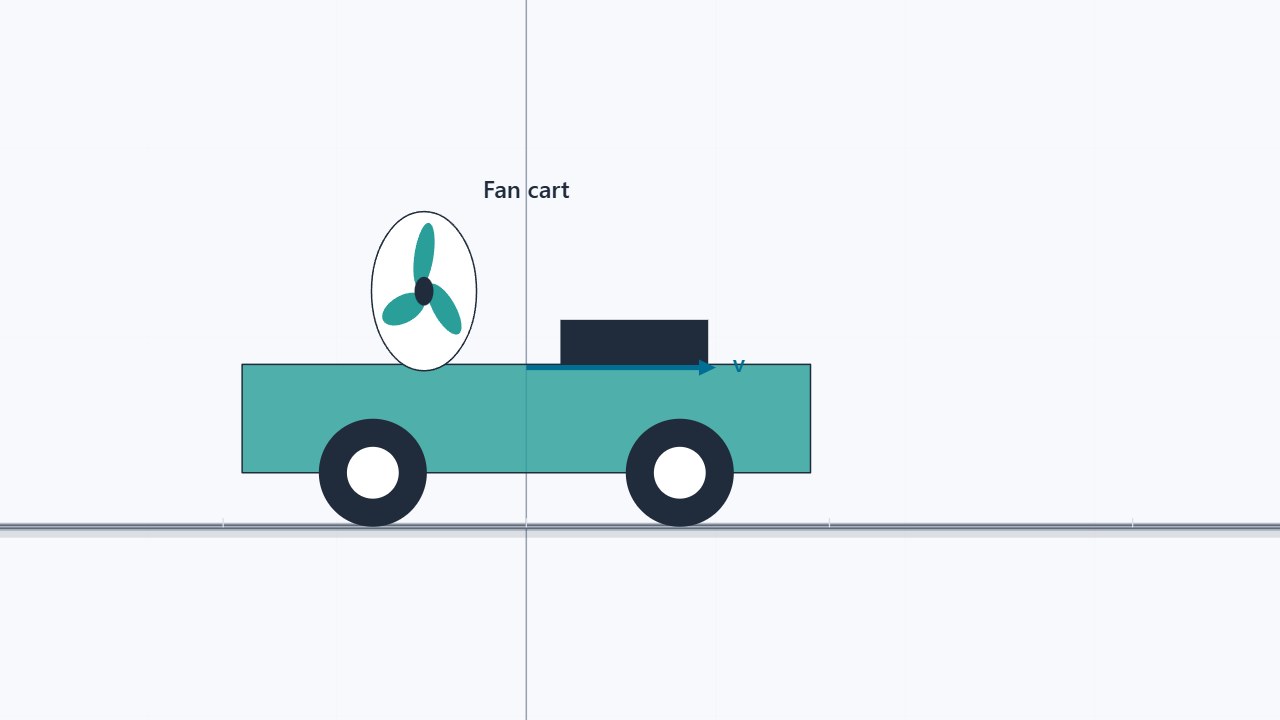
Compare fan pushes on a moving cart. Use three time graphs to explain its turnaround, test the impulse–momentum relationship, and predict a new final velocity.Unit 4 · Linear Momentum
Impulse and Spring Bumper Simulation
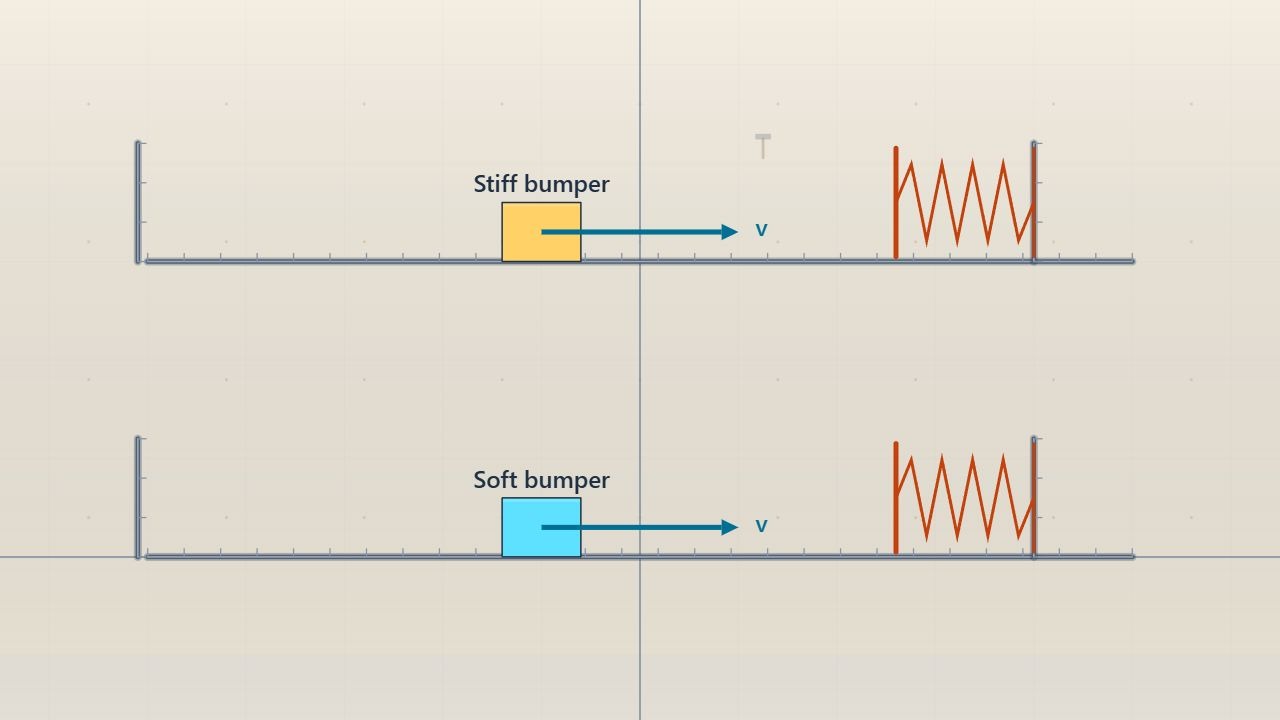
Compare soft and stiff bumpers to explain how similar rebounds can have different peak forces and contact times.Unit 4 · Linear Momentum
Ballistic Pendulum Simulation and Virtual Lab
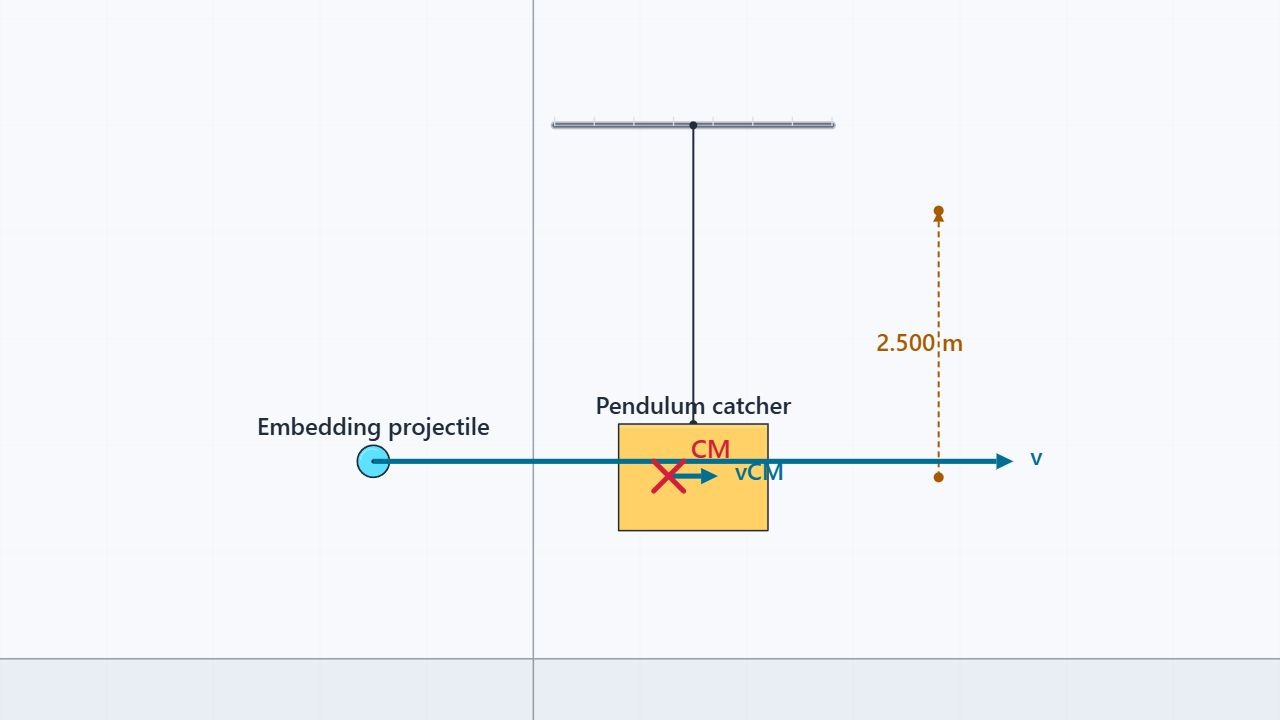
Investigate an embedding collision followed by a pendulum swing, then use catcher-mass and rise data to infer incoming projectile speed.Unit 4 · Linear Momentum
Collision and Projectile Motion Simulation
Predict two blocks’ motion through a ramp descent, an elastic collision, a rebound, and horizontal launches.Unit 5
Torque and Rotational Dynamics
Unit 5 · Torque and Rotational Dynamics
Angular Kinematics Simulation
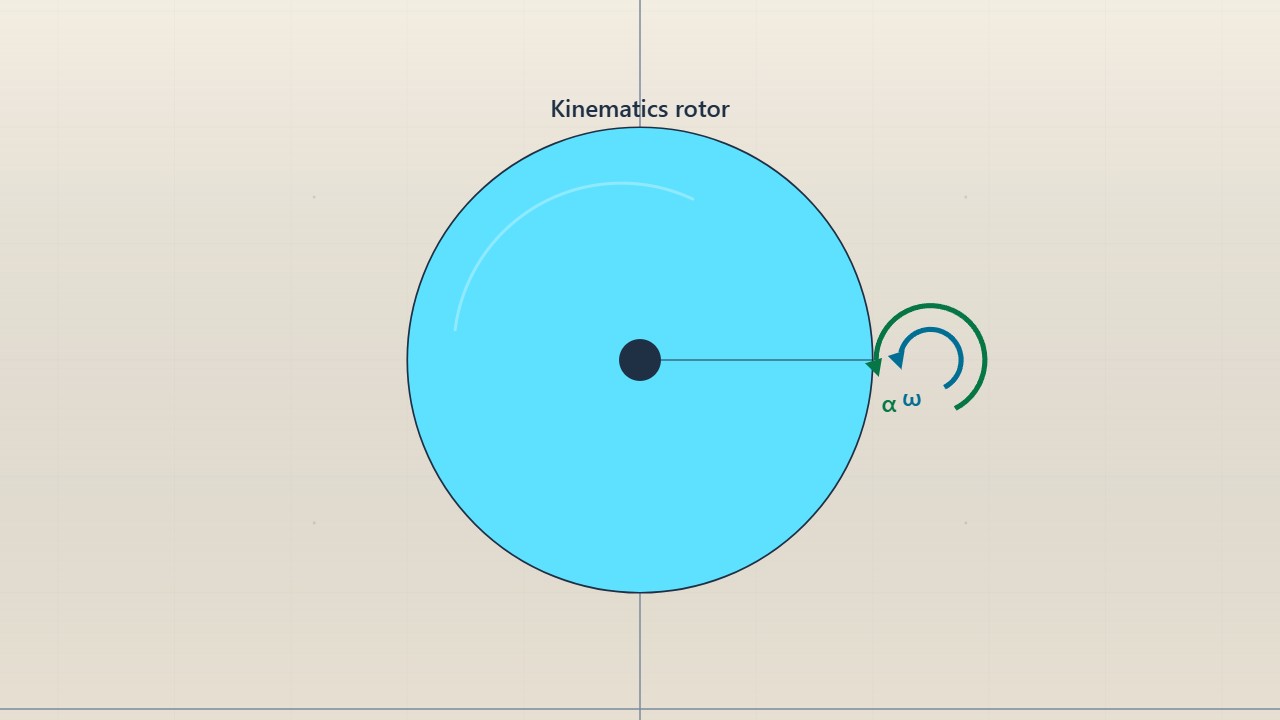
Investigate rotation from rest at constant angular acceleration and use a linearized displacement–time graph to determine angular acceleration.Unit 5 · Torque and Rotational Dynamics
Wall-Supported Beam Statics Simulation
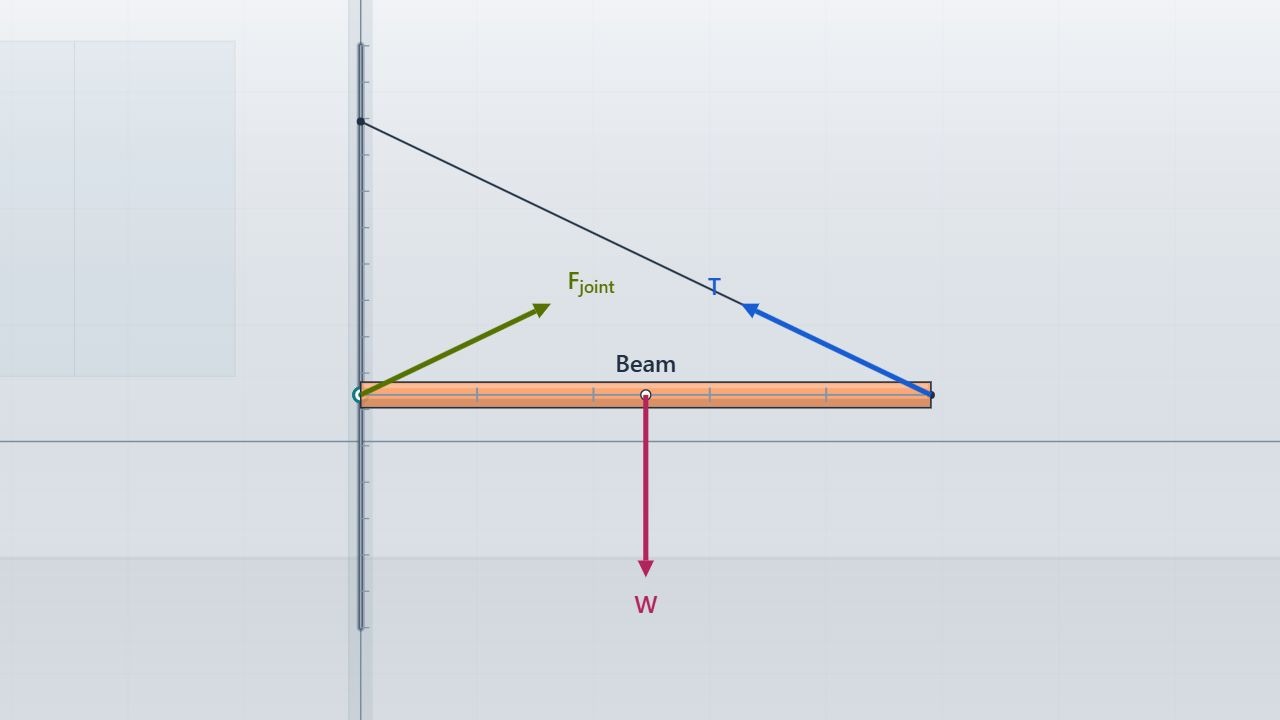
Use torque and force balance to predict rope tension and hinge forces, then test how moving a load changes the supports.Unit 5 · Torque and Rotational Dynamics
Torque and Rotational Equilibrium Simulation
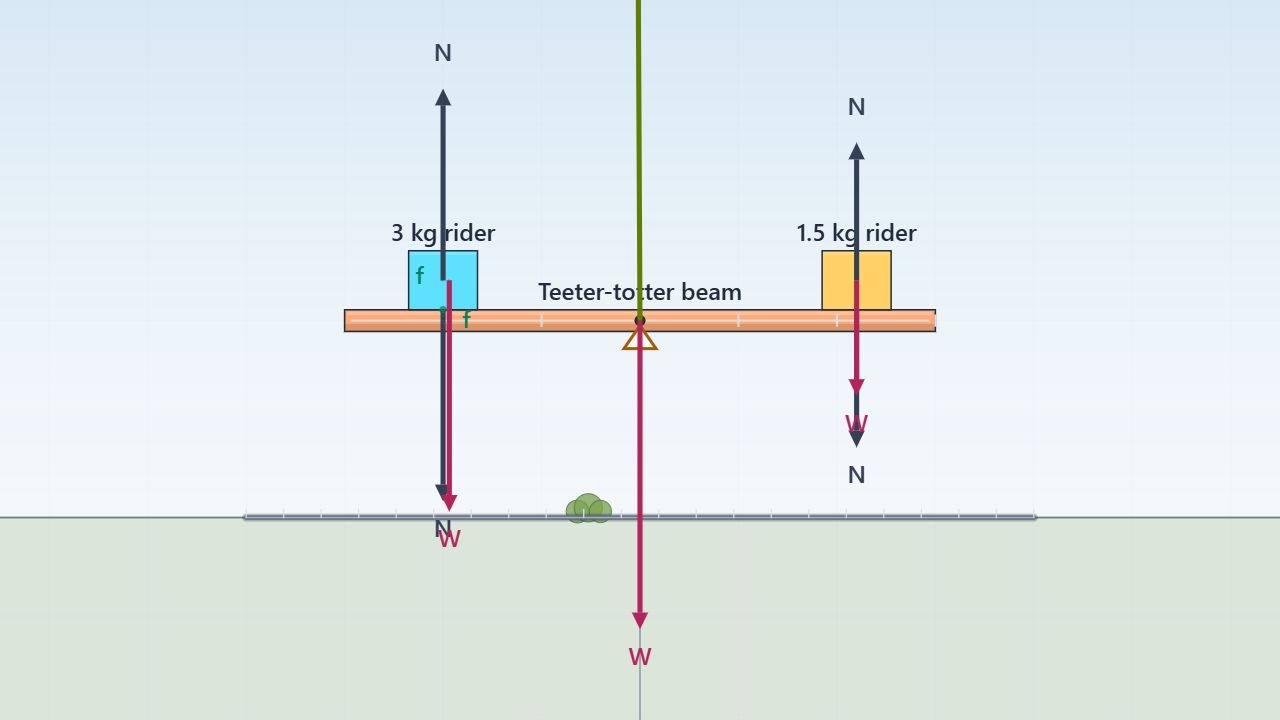
Compare rotation directions, find balancing positions for different rider masses, and use a graph to test torque equilibrium.Unit 5 · Torque and Rotational Dynamics
Net Torque and Angular Acceleration Simulation
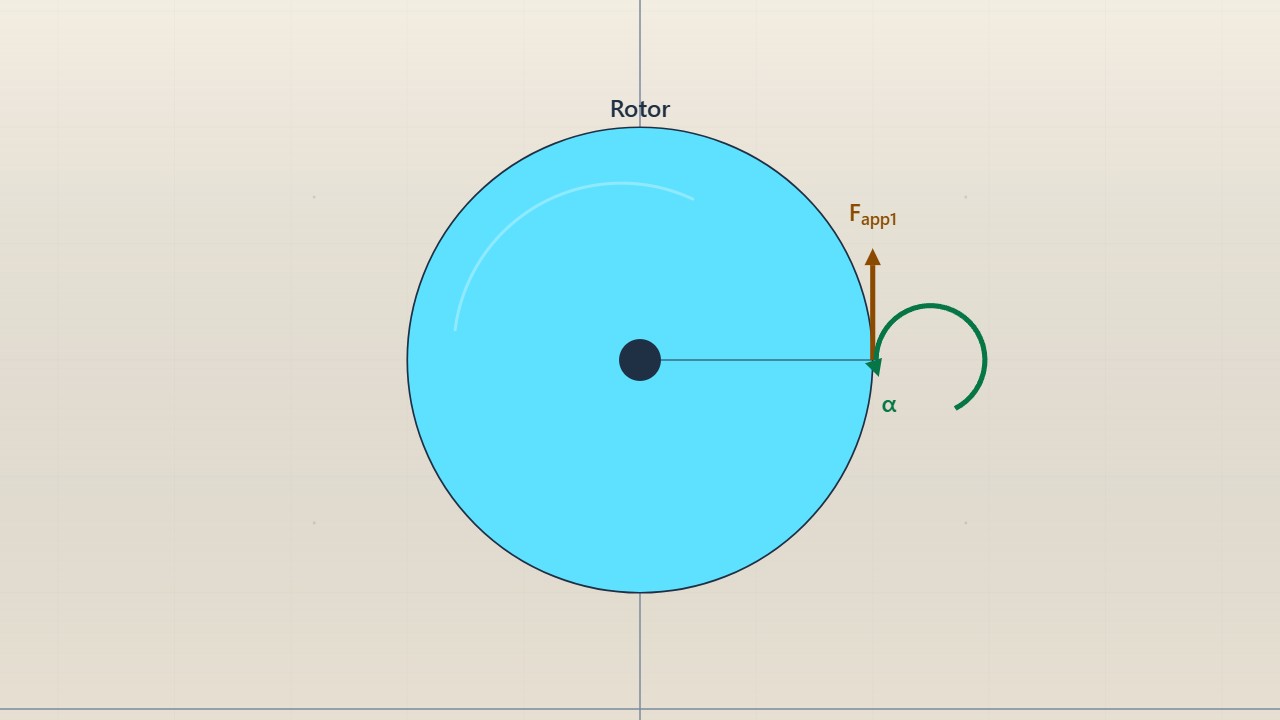
Compare force application points, then investigate signed net torque and use a best-fit graph to determine rotational inertia.Unit 5 · Torque and Rotational Dynamics
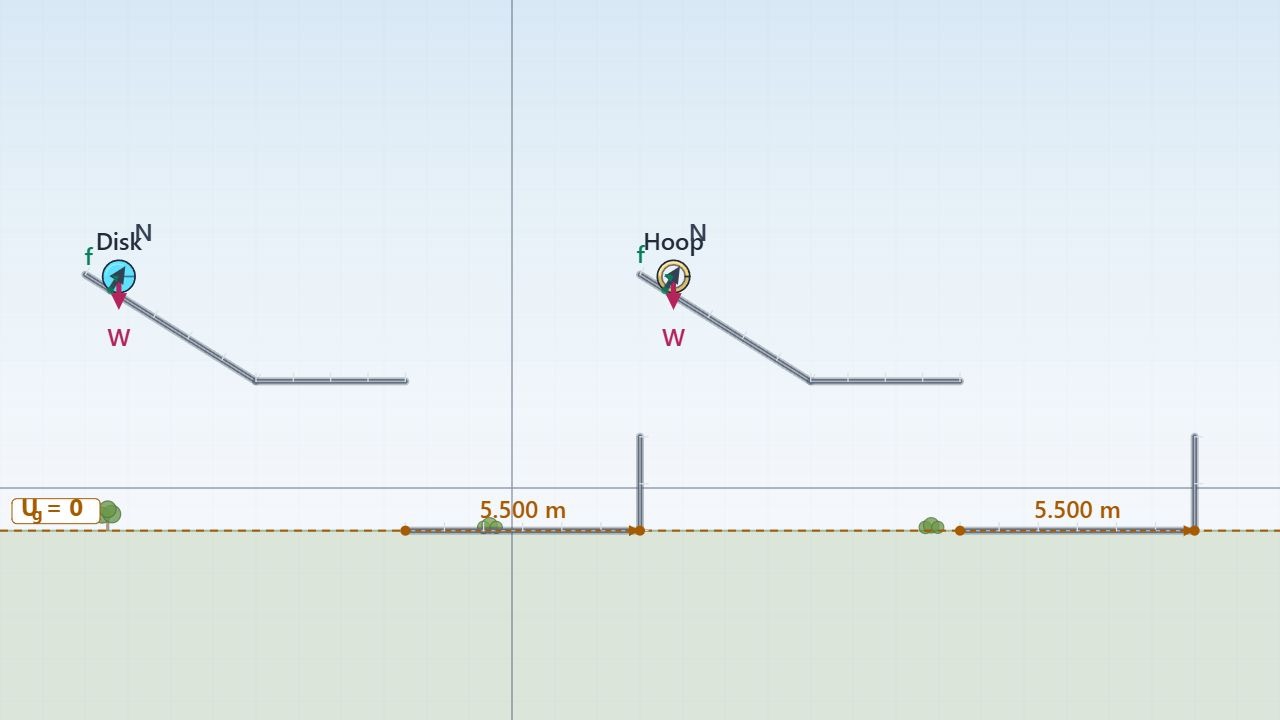
Rotational Inertia and Angular Acceleration Lab
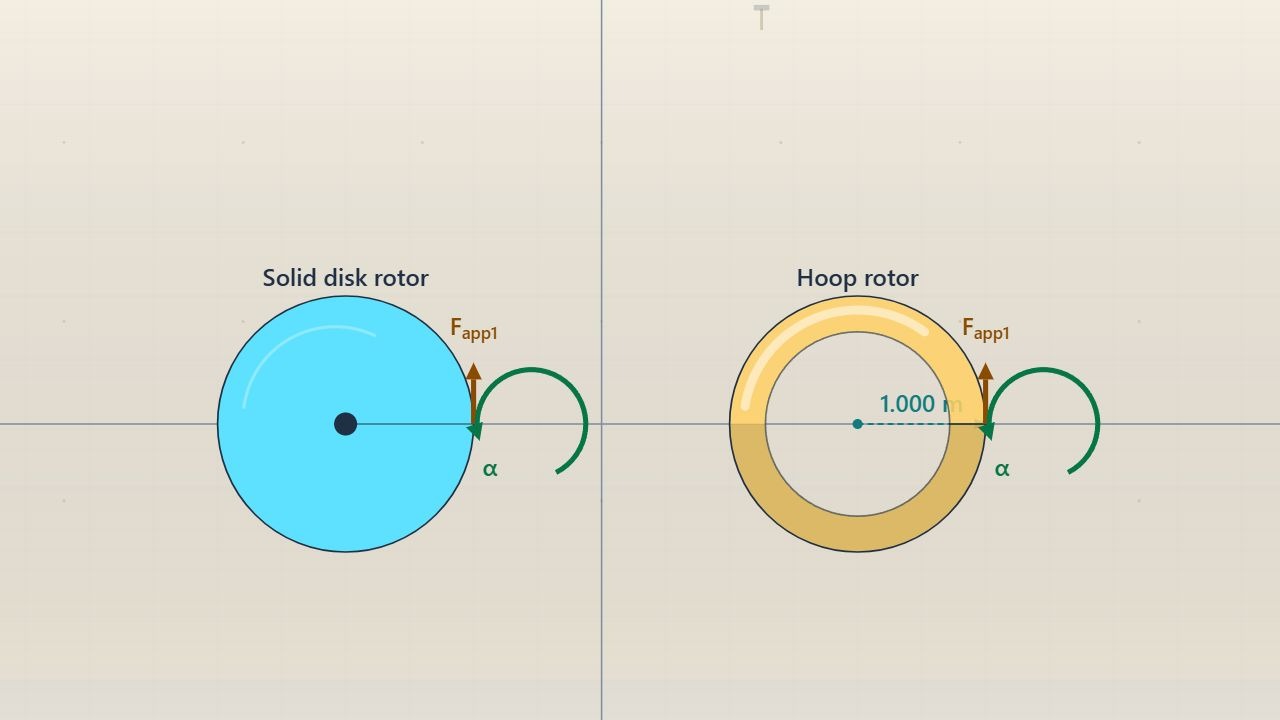
Compare a disk and a hoop under equal torques, then predict how mass, radius, and force position affect angular acceleration.Unit 5 · Torque and Rotational Dynamics
Massive-Pulley Atwood Machine Simulation
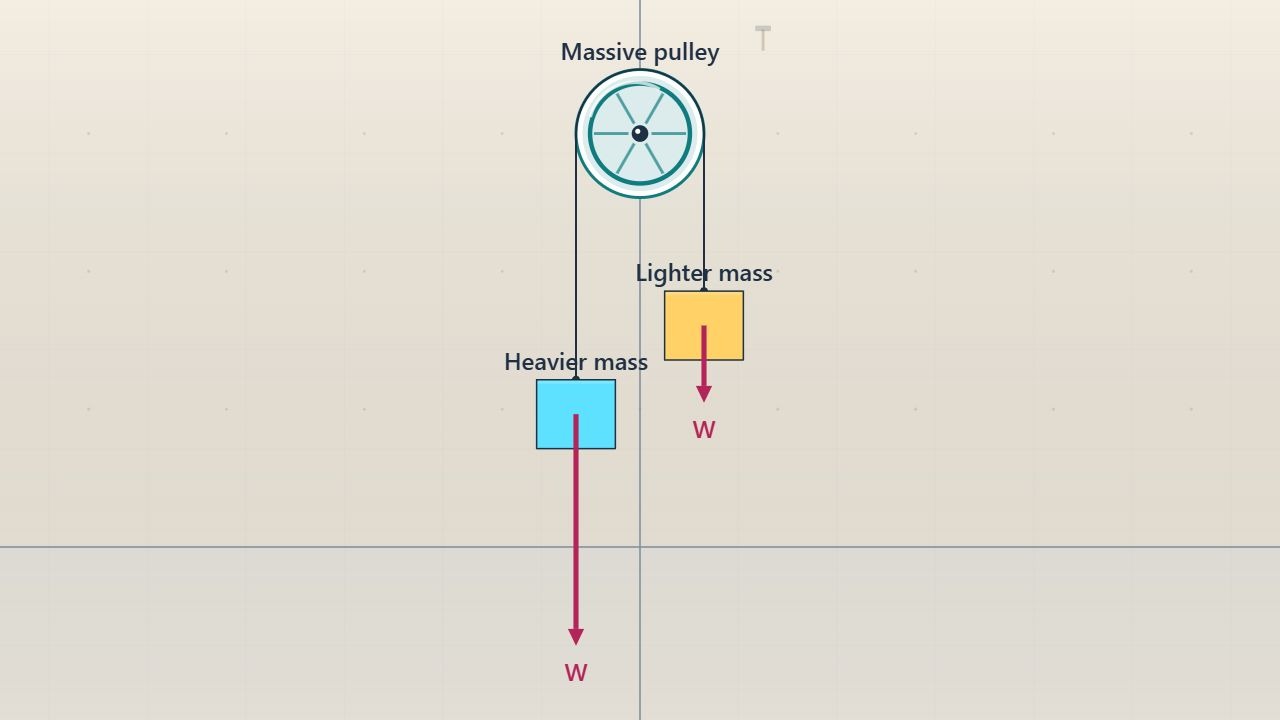
Compare rope tensions on a massive pulley, then vary pulley mass and use acceleration data to determine gravity.Unit 6
Energy and Momentum of Rotating Systems
Unit 6 · Energy and Momentum of Rotating Systems
Rolling Objects Simulation and Virtual Lab
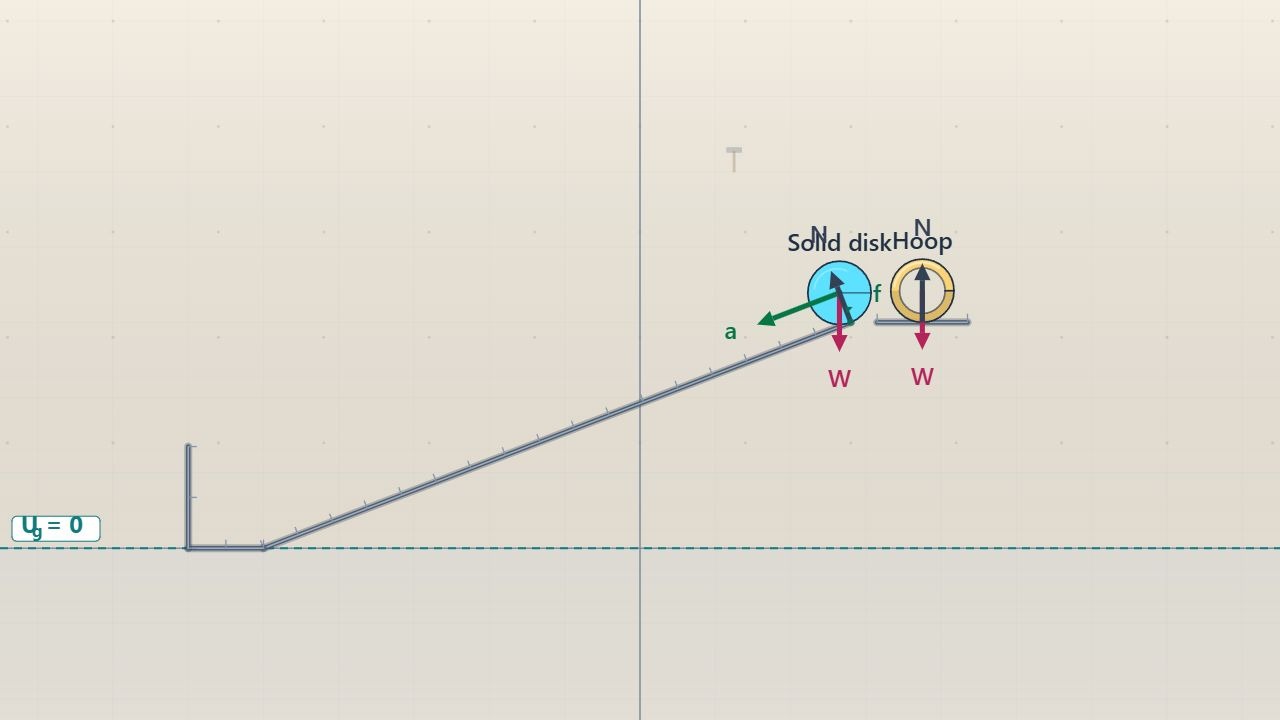
Investigate how mass distribution changes rolling acceleration and use a linearized graph to determine gravity.Unit 6 · Energy and Momentum of Rotating Systems
Rolling Projectile Motion Simulation
Compare disk and hoop launch energies, predict their flight distances, and test whether changing mass changes the landings.Unit 6 · Energy and Momentum of Rotating Systems
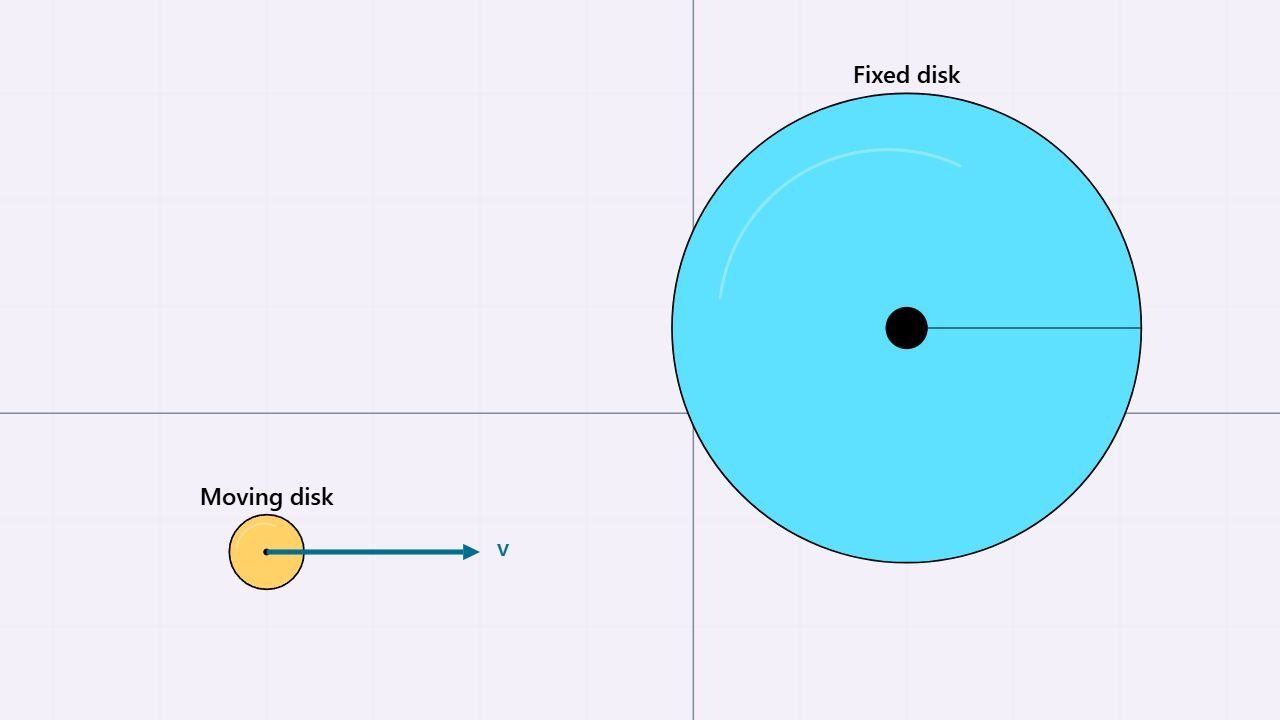
Conservation of Angular Momentum Simulation
Compare central and off-center sticking impacts, then vary incoming mass and use final angular velocity to infer the fixed disk’s inertia.Unit 6 · Energy and Momentum of Rotating Systems
Elliptical Orbit Simulation and Virtual Lab
Track speed and energy around an elliptical orbit, then use total energy to predict whether different launches are bound or escaping.Unit 7
Oscillations
Unit 7 · Oscillations
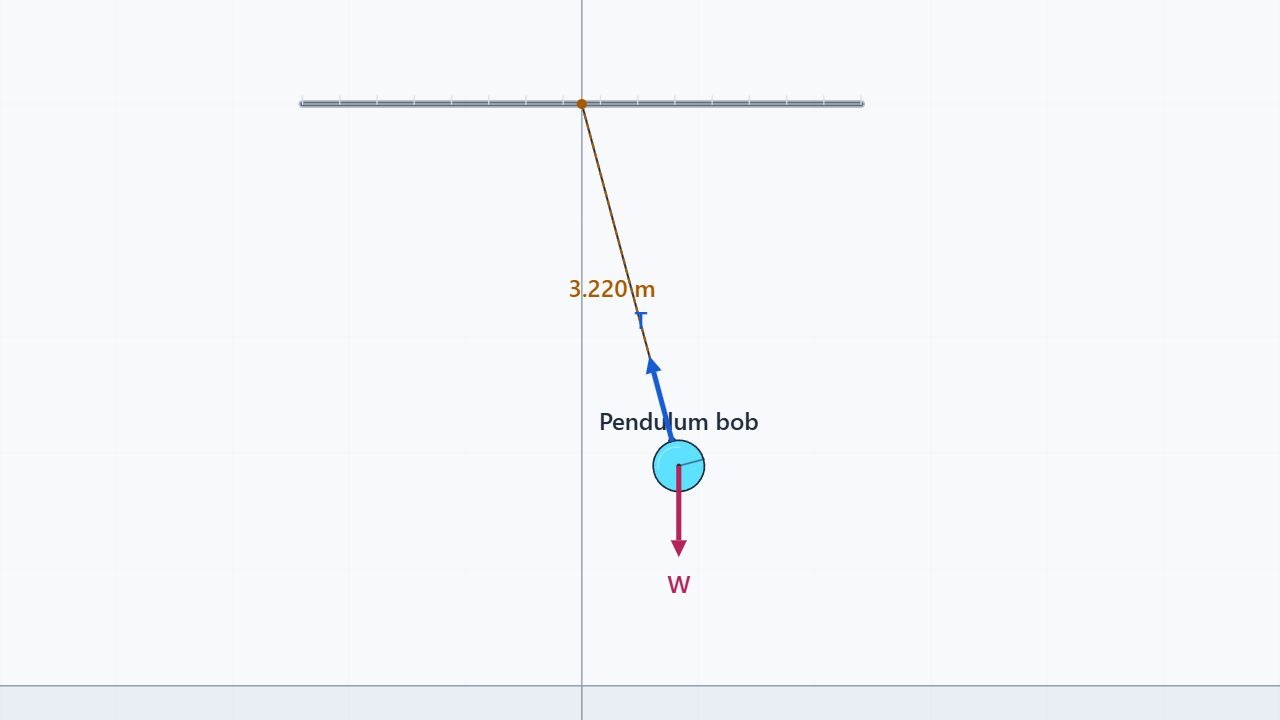
Pendulum Period Simulation and Virtual Lab
Compare bob masses, then investigate pendulum length and use a linearized period graph to determine gravity.Unit 7 · Oscillations
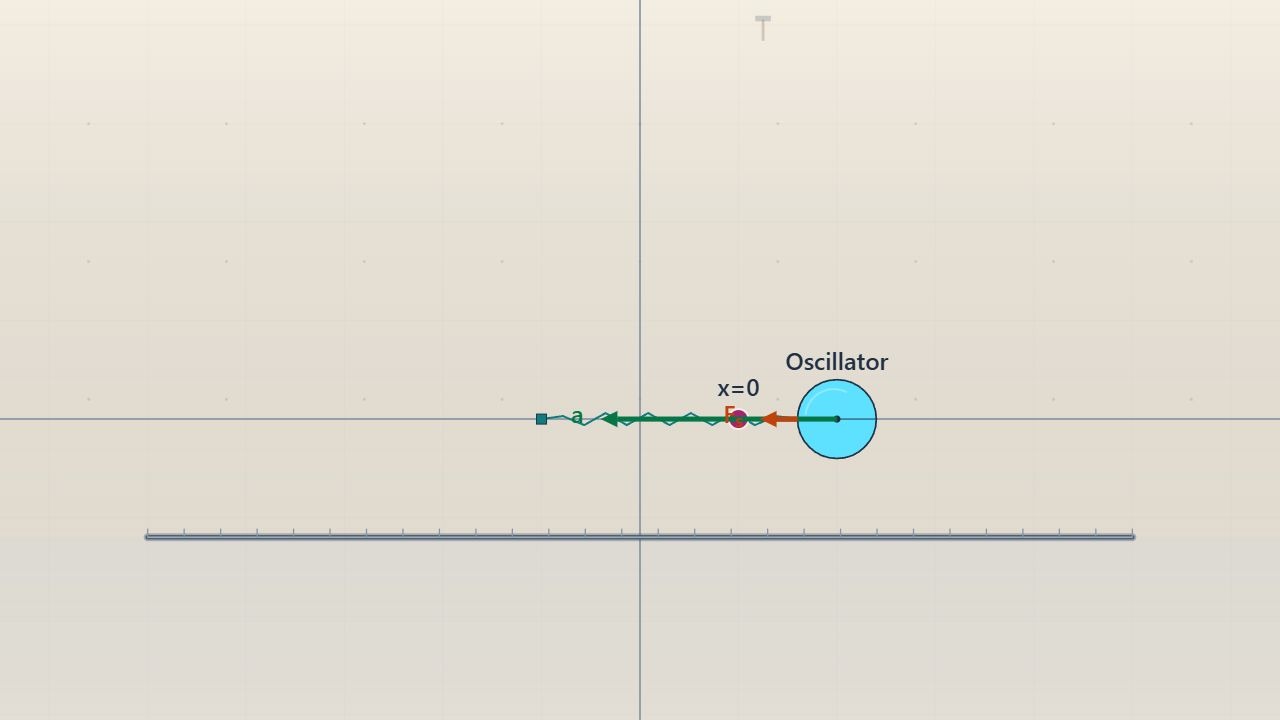
Mass-Spring Oscillator Simulation
Compare oscillation amplitudes, then vary mass and use a linearized period graph to determine spring stiffness.Unit 8
Fluids
Unit 8 · Fluids
Density and Displacement Simulation and Lab
Compare immersion positions, then measure mass and displaced volume for one material and determine its density from a graph.Unit 8 · Fluids
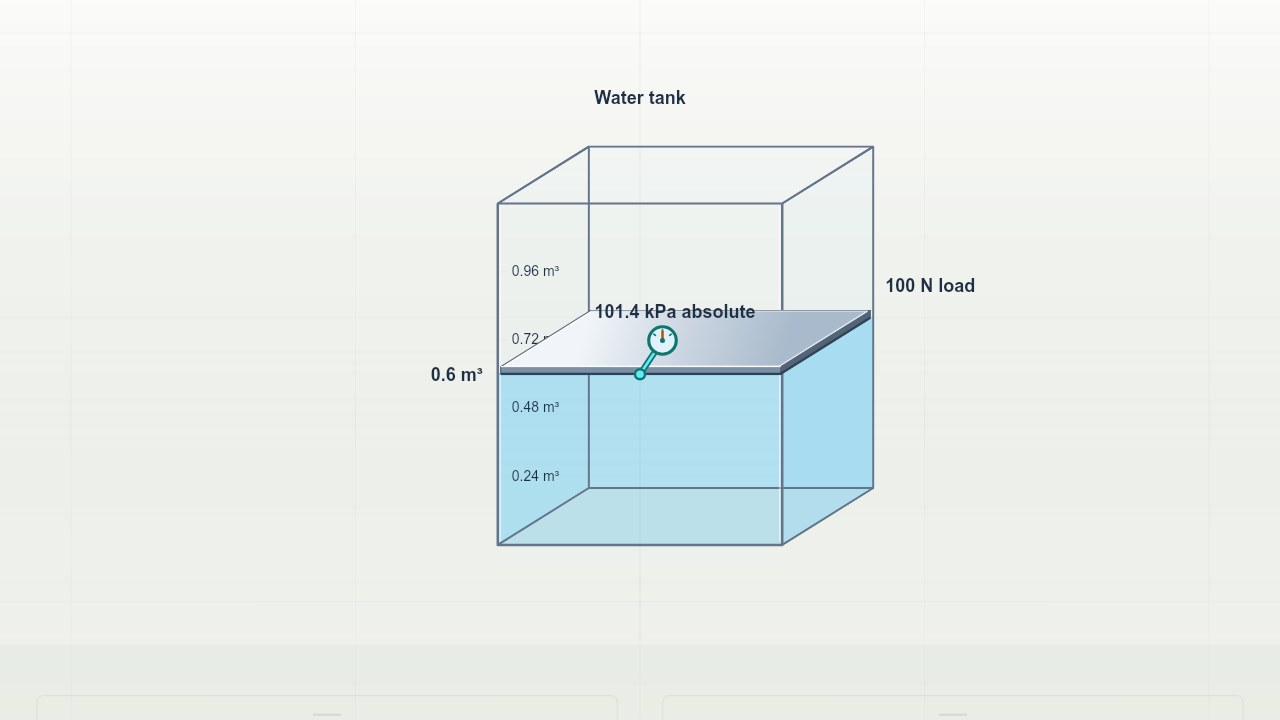
Force Area and Pressure Simulation and Lab
Compare piston loads, then investigate how face area changes added pressure and use a linearized graph to determine the load.Unit 8 · Fluids
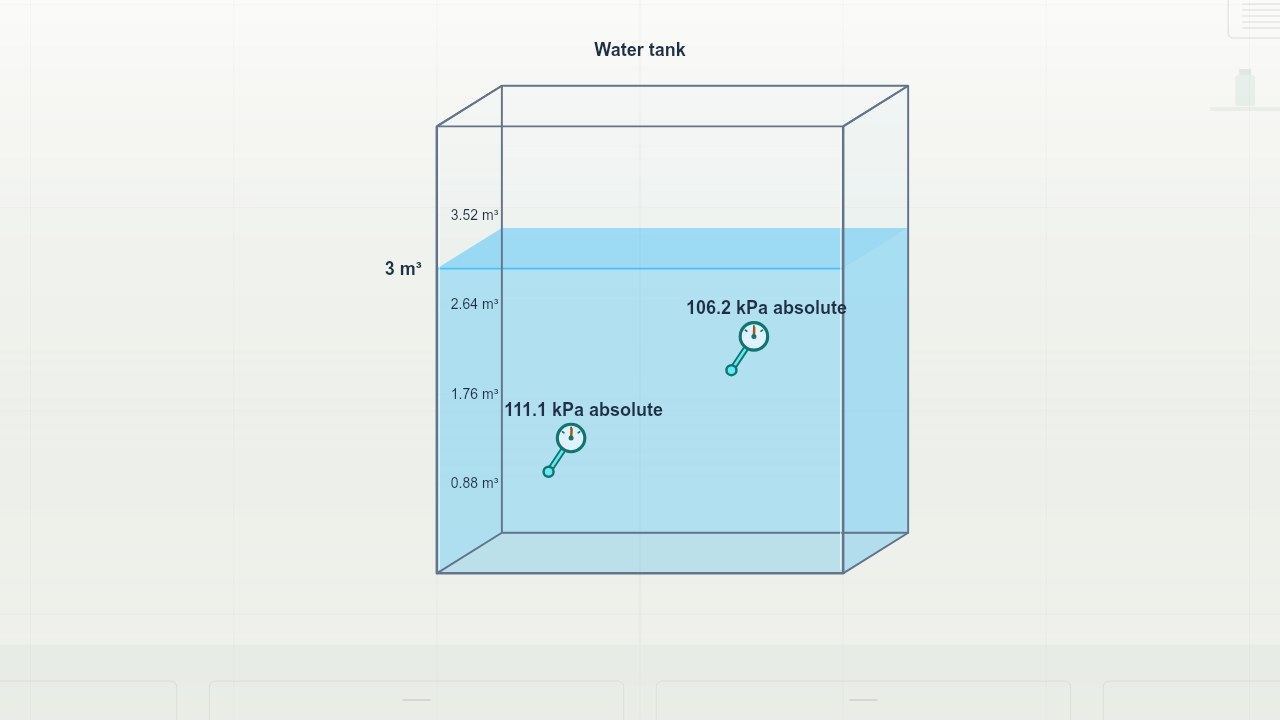
Pressure and Depth Simulation and Lab
Compare pressure at different depths, then find the depth needed for the same gauge pressure in different liquids and determine gravity.Unit 8 · Fluids
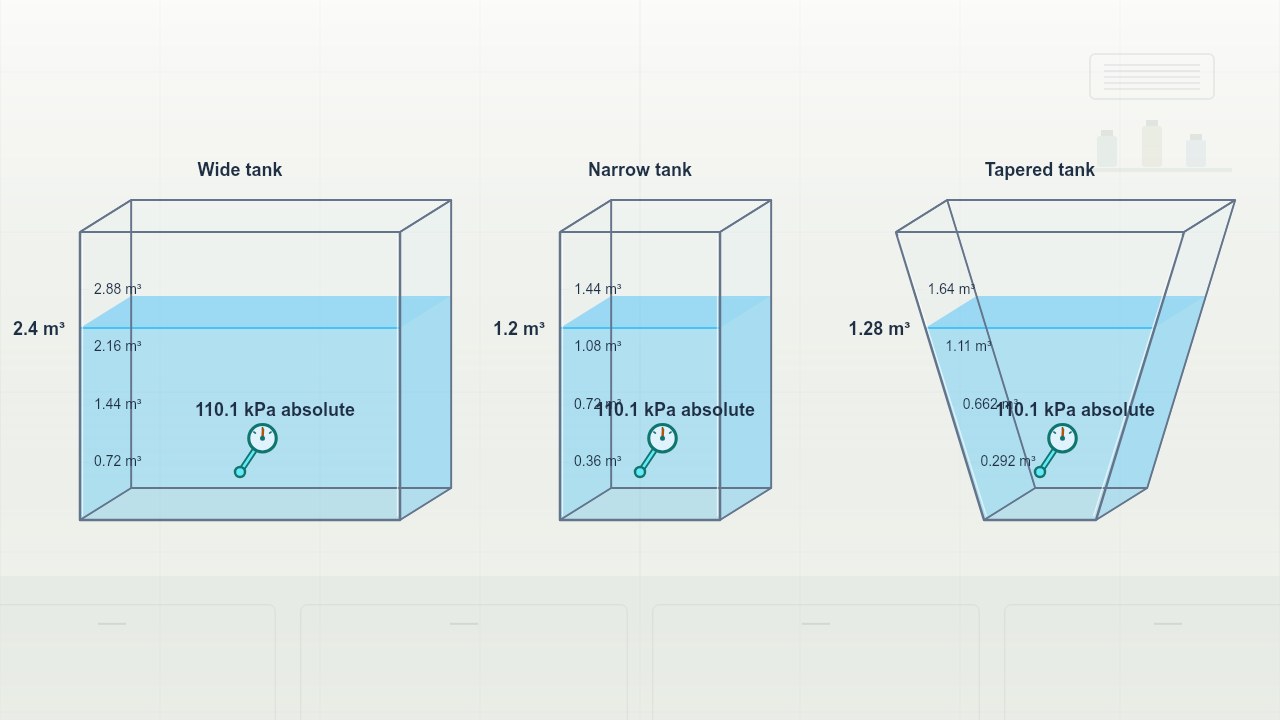
Pressure in Different Vessels Simulation and Lab
Compare pressure at the same depths in wide, narrow, and tapered vessels, then test a change in liquid density.Unit 8 · Fluids
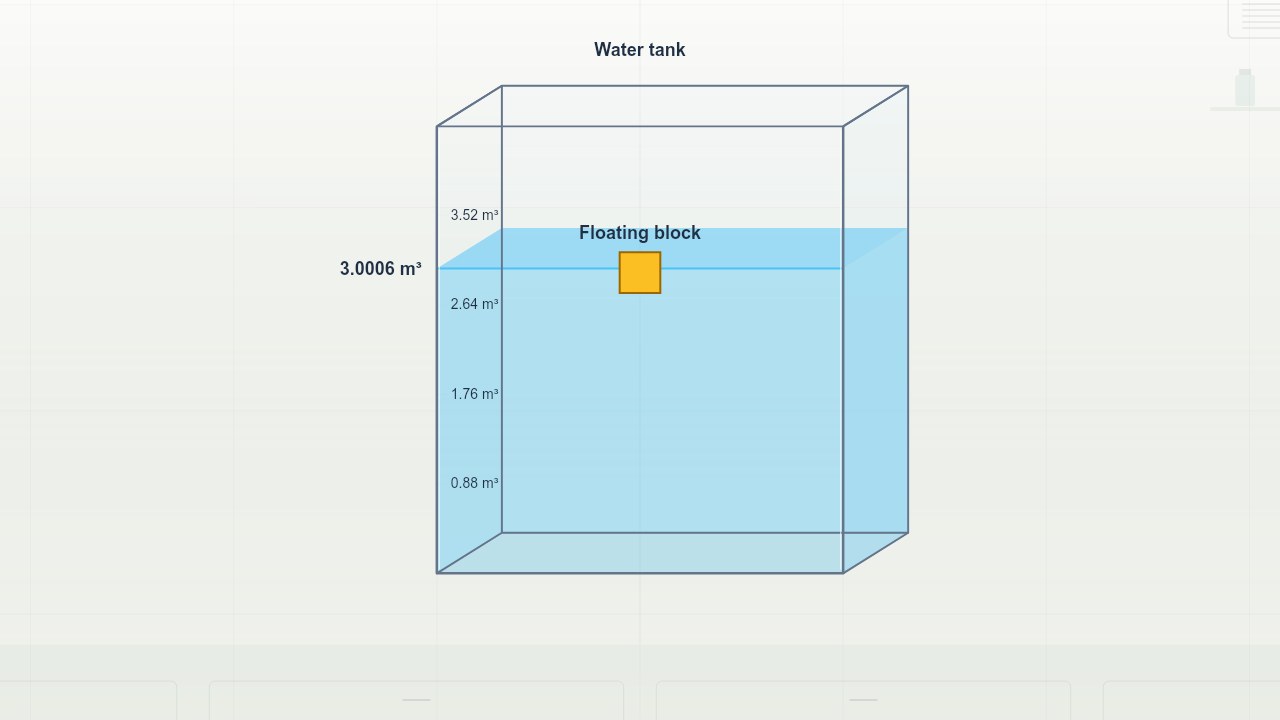
Floating Sinking and Buoyancy Simulation and Lab
Compare floating masses, then vary liquid density and use submerged-fraction data to determine the block’s density.Unit 8 · Fluids
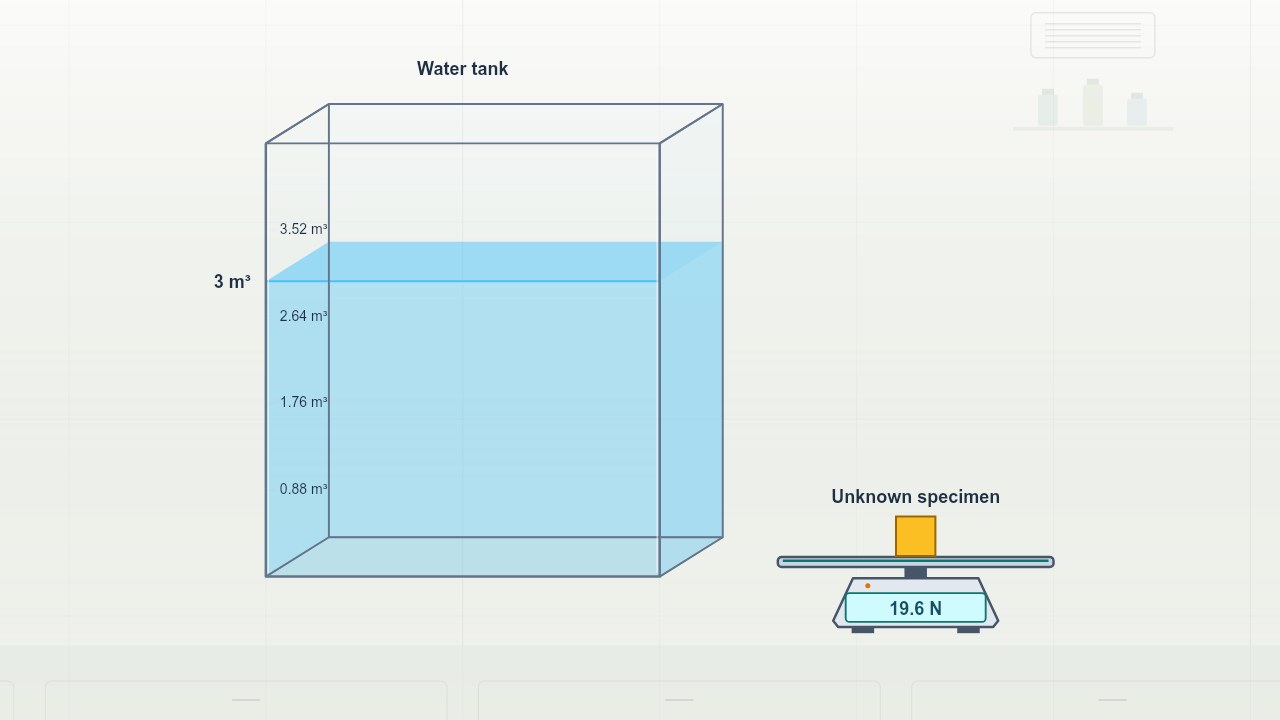
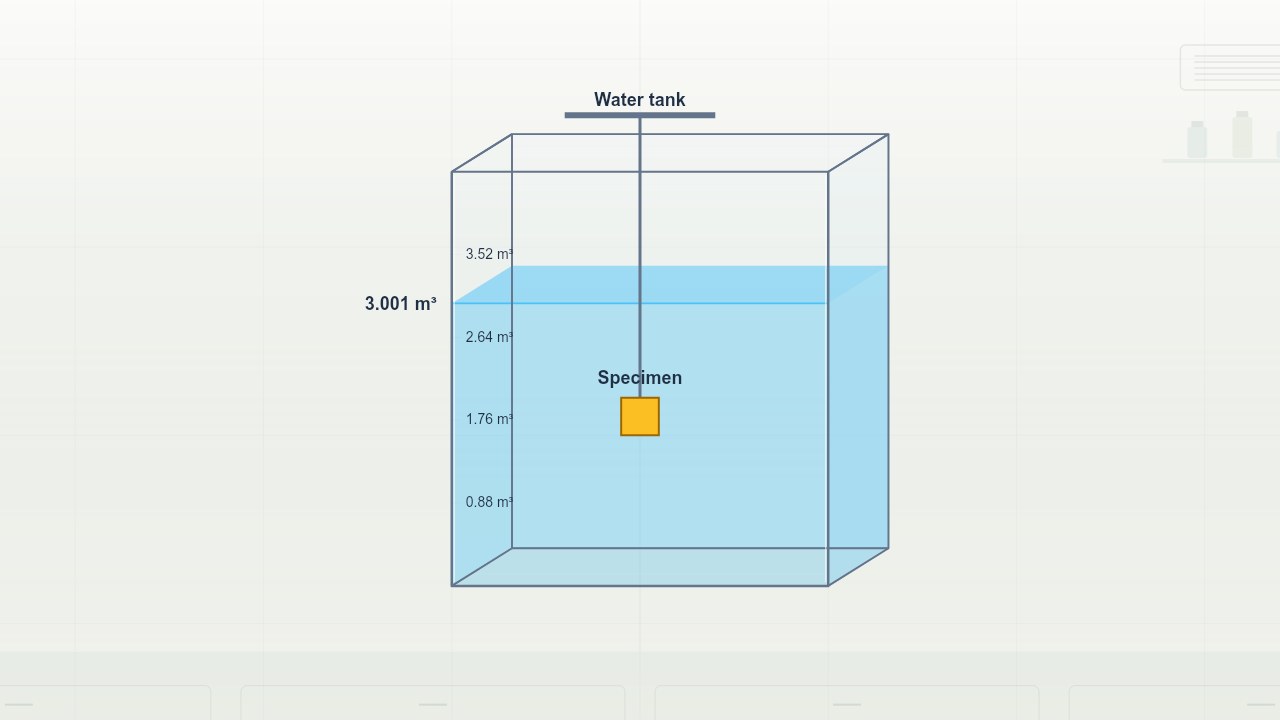
Apparent Weight Underwater Simulation and Lab
Compare support in air and underwater, then vary liquid density and use a rope-tension graph to determine specimen volume.Unit 8 · Fluids
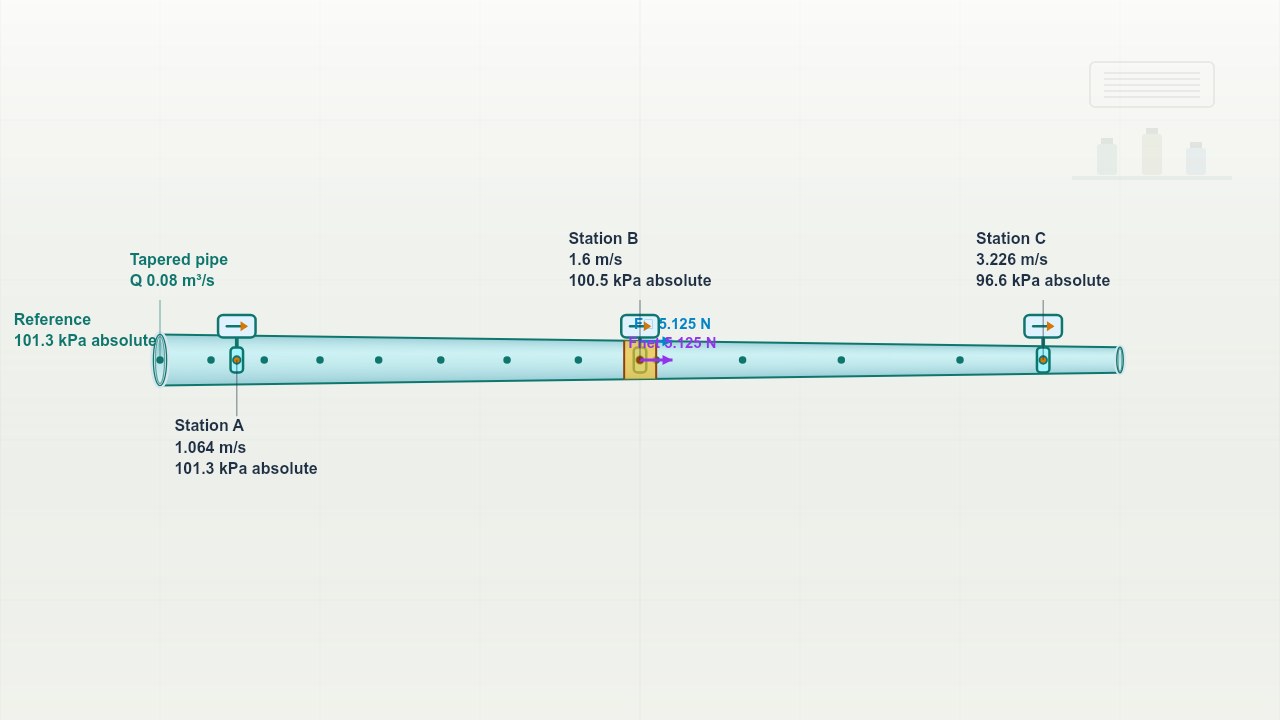
Fluid Parcels and Pressure Forces Simulation and Lab
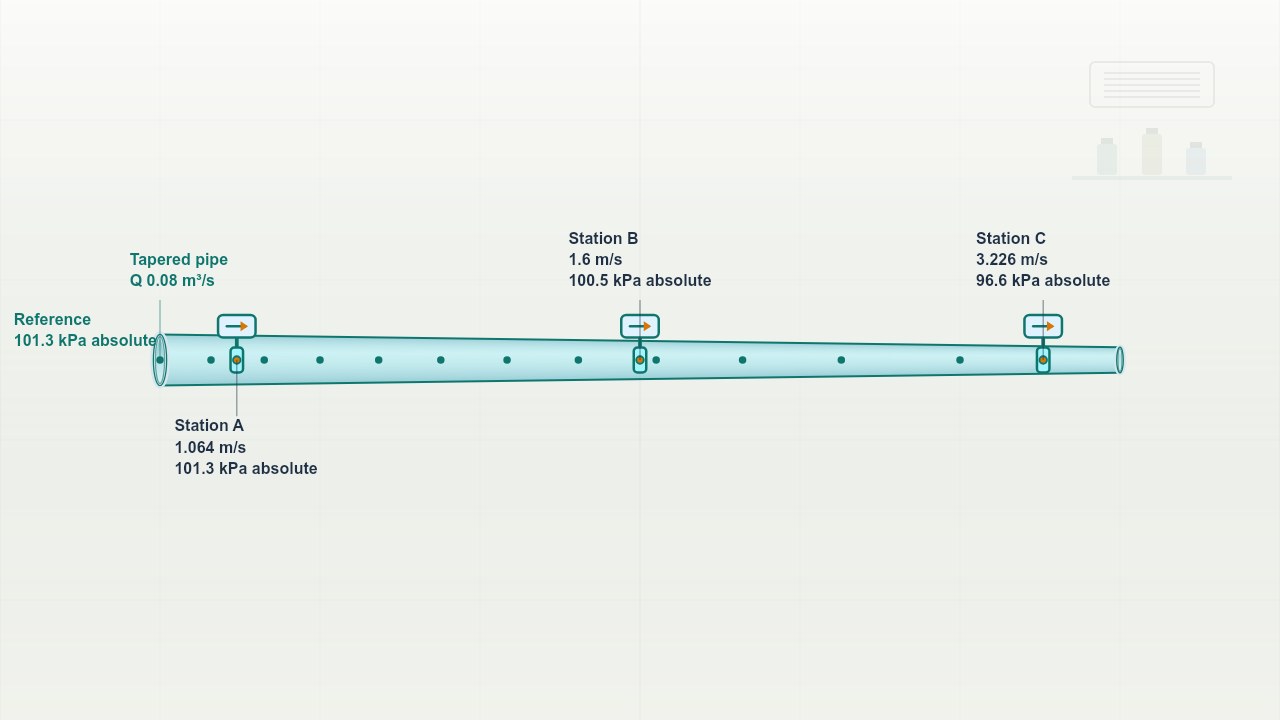
Compare a fluid parcel at three positions in a narrowing pipe and check how its pressure forces produce acceleration.Unit 8 · Fluids
Continuity and Volume Delivered Simulation and Lab
Compare equal-time deliveries through different outlet areas, then investigate local speed and use a graph to determine volume flow rate.Unit 8 · Fluids
Venturi Pressure and Speed Simulation and Lab
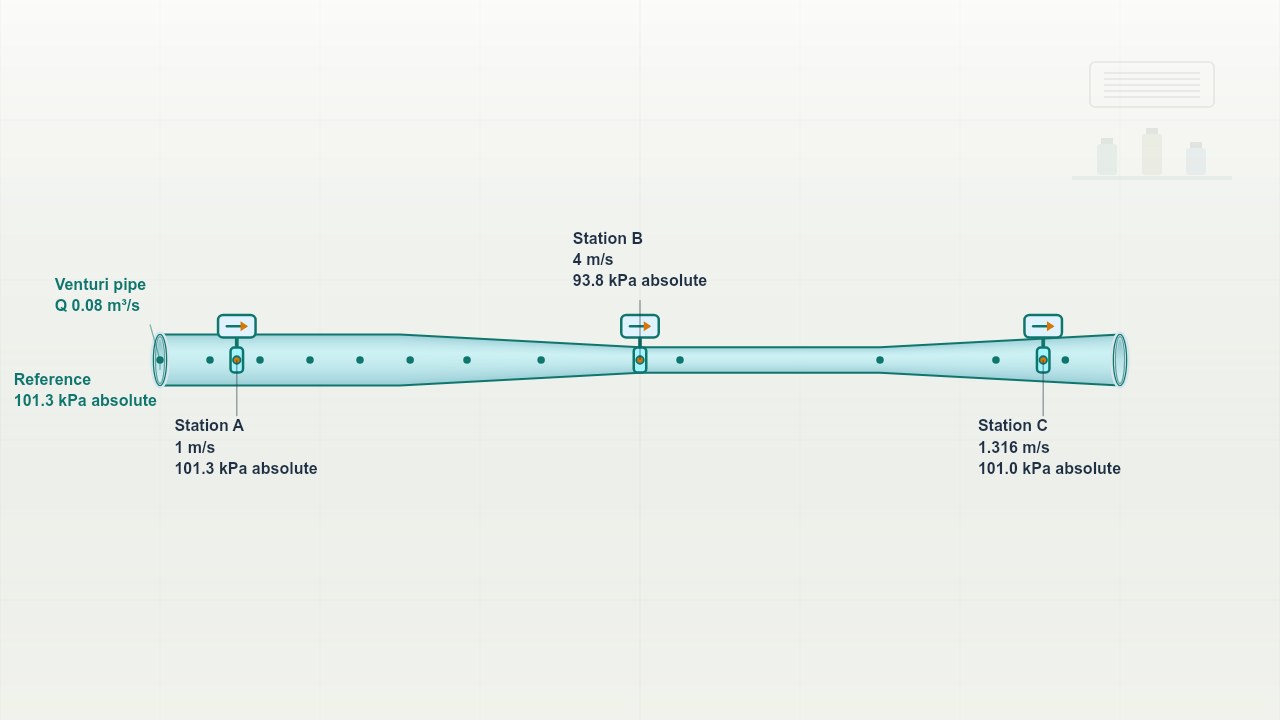
Compare pressure along a Venturi, then vary throat area and use a linearized pressure–speed graph to determine liquid density.Unit 8 · Fluids
Bernoulli Flow Uphill and Downhill Simulation and Lab
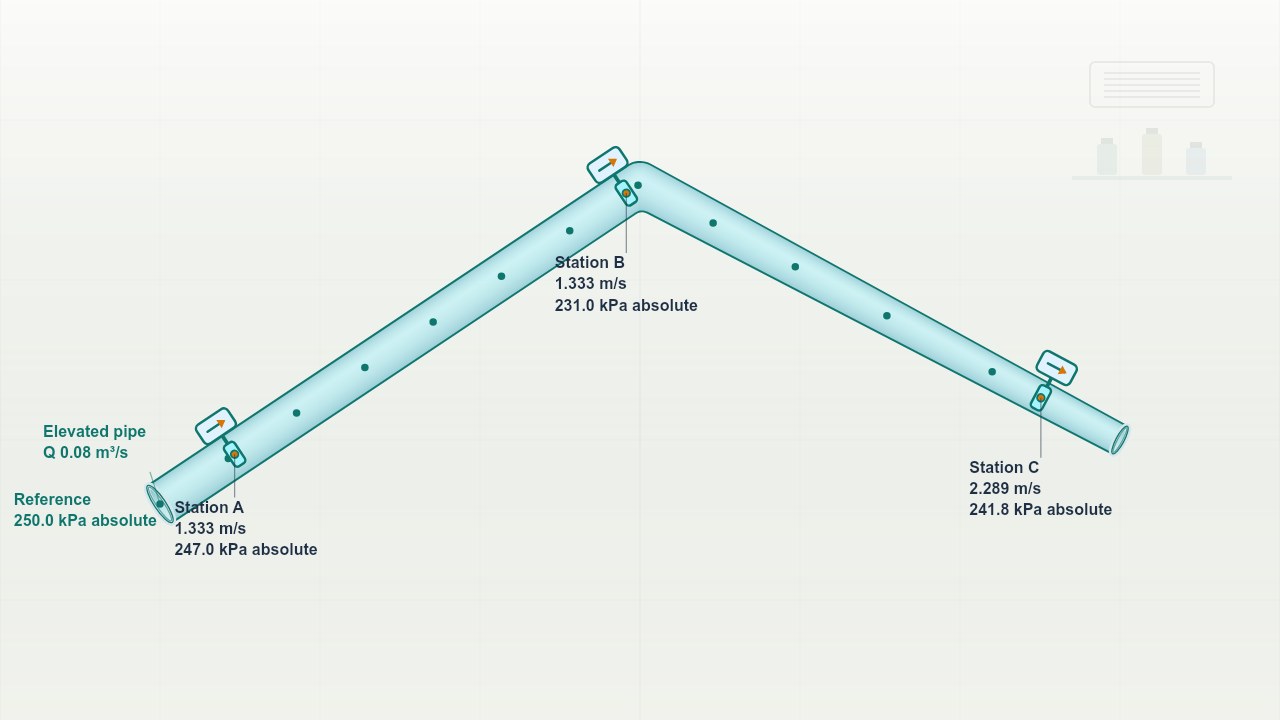
Compare uphill and downhill flow, then change flow rate and use pressure, speed, and height differences to determine liquid density.Unit 8 · Fluids
Tank Outflow and Jet Range Simulation and Lab
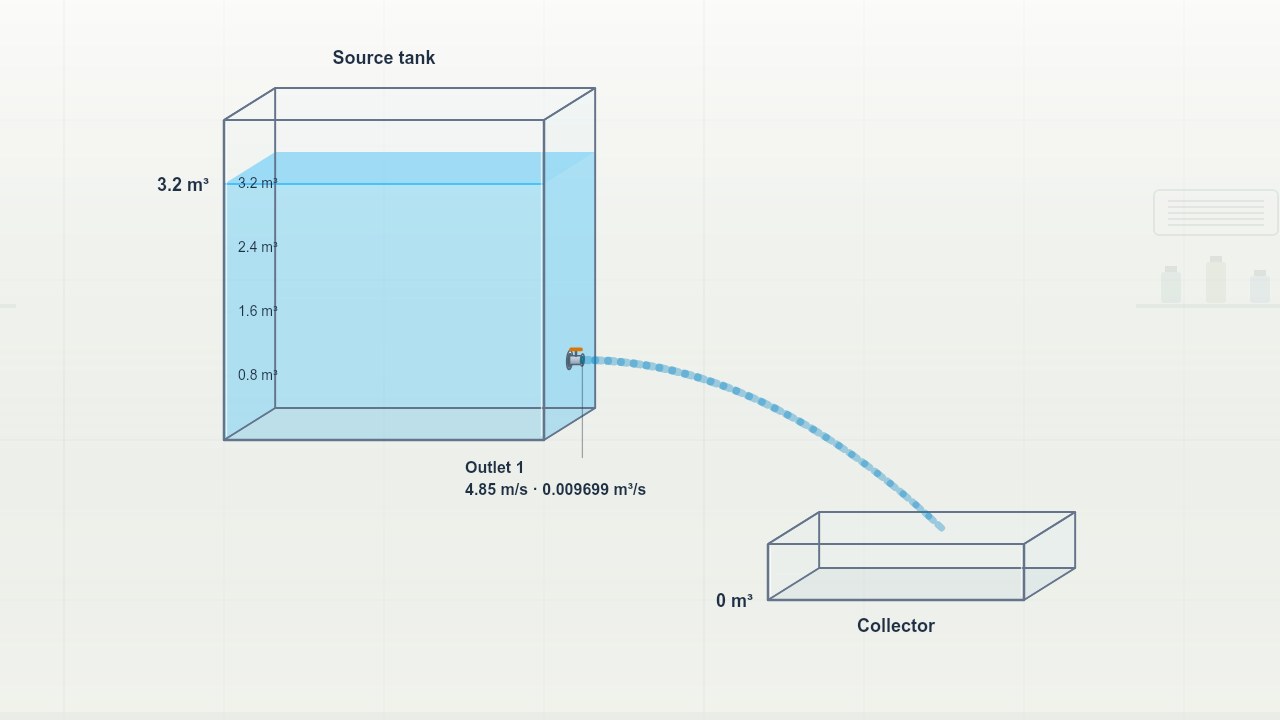
Apply Torricelli’s law and Bernoulli’s equation to predict exit speed and jet range, then use a graph to determine the vertical drop.Unit 8 · Fluids
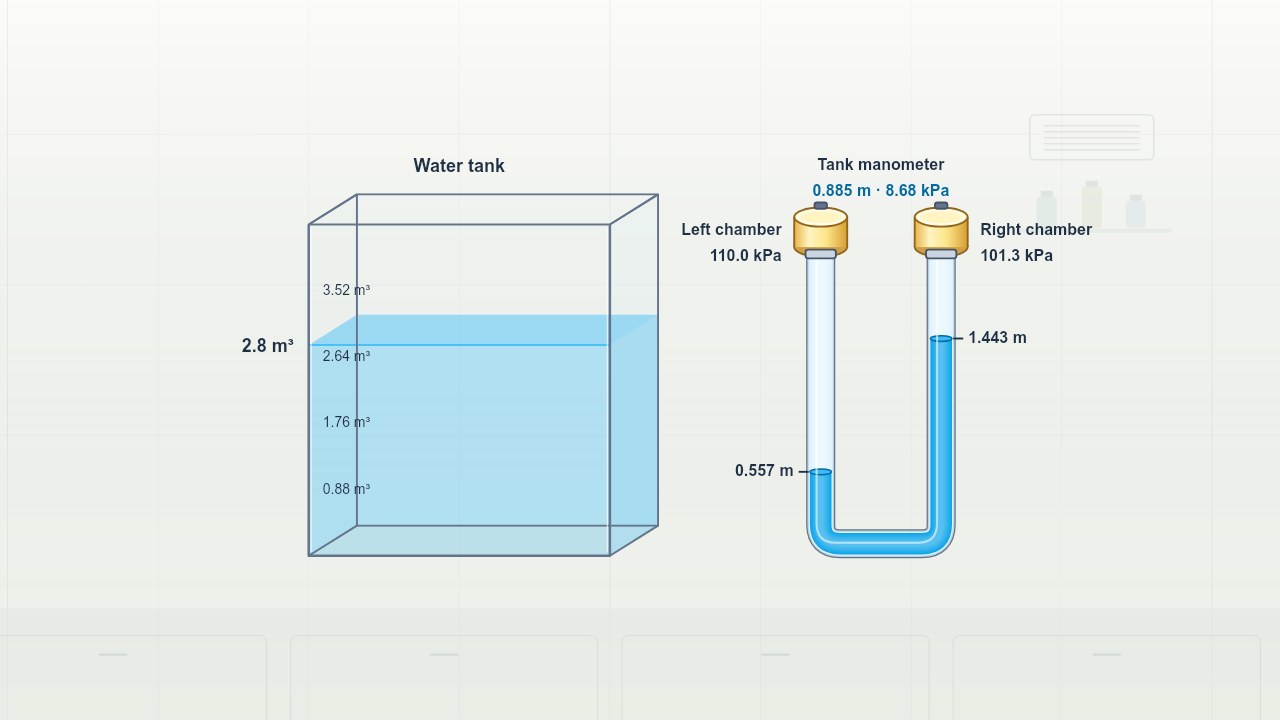
Manometer Pressure Comparison Simulation and Lab
Use the liquid levels in a U-tube to compare two chamber pressures and calculate their difference.Unit 8 · Fluids
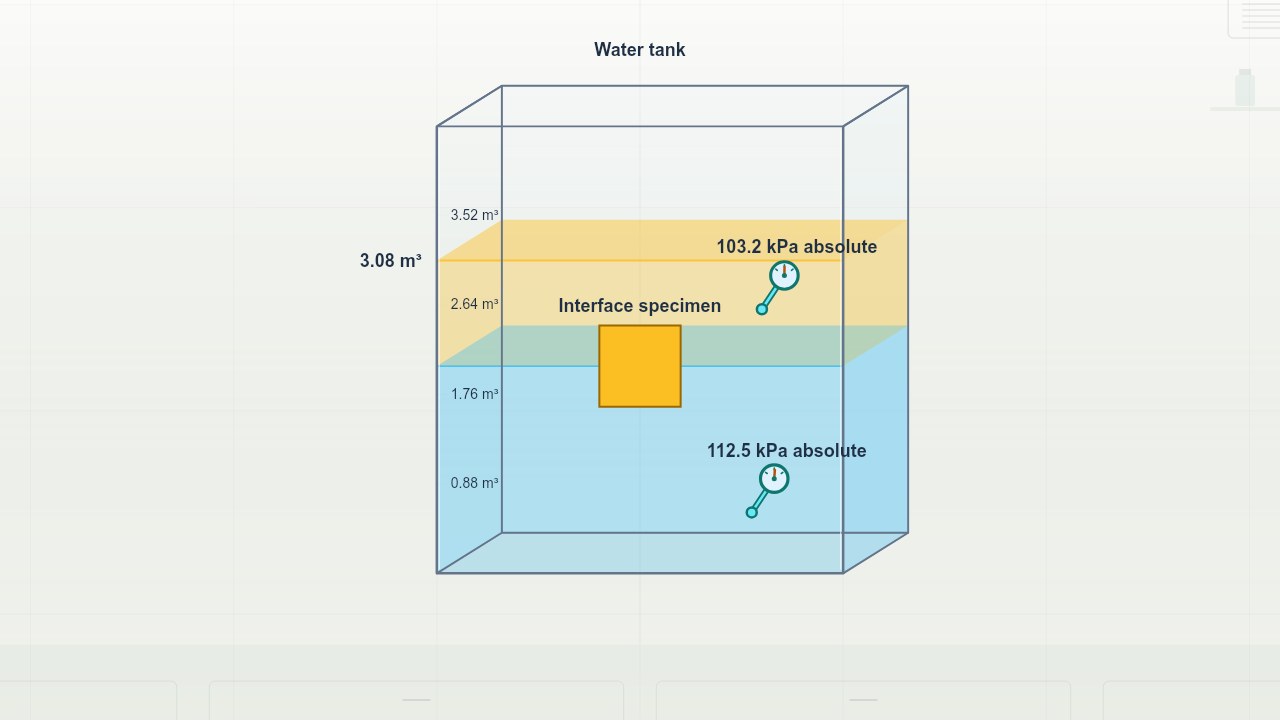
Immiscible Liquid Layers Simulation and Lab
Predict whether a specimen floats in oil, rests across the oil–water boundary, or sinks through both liquids.Unit 8 · Fluids
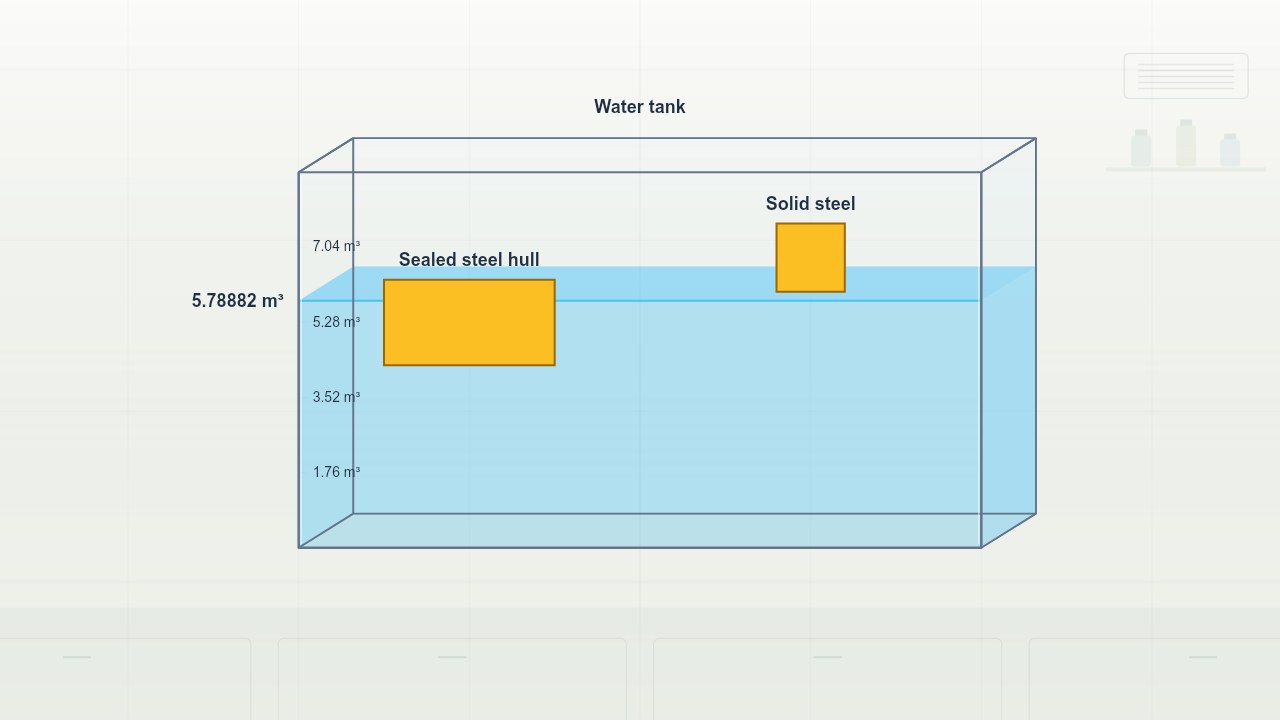
Hollow Hulls and Average Density Simulation and Lab
Compare solid steel with a sealed hollow hull and use average density to predict whether thicker hull walls will sink.No experiments found
Try another search or unit, or clear the filters to see all experiments.
Need a custom setup?
Build beyond the prepared labs
Use the full sandbox to combine objects, forces, surfaces, springs, and measurement tools.