
Unit 1 · Kinematics
AP Physics 1 · Interactive mechanics
Interactive Physics Lessons
Choose a lesson to explore a concept, test your predictions, and build understanding through interactive experiments.
Unit 1
Kinematics
Unit 1 · Kinematics
Position and Velocity Graphs
Translate between motion and graphs by connecting position–time slope with velocity and velocity–time area under the curve with displacement. View lesson
Unit 1 · Kinematics
Constant Acceleration
Connect constant acceleration with uniform velocity changes, curved position graphs, and the standard kinematics relationships. View lesson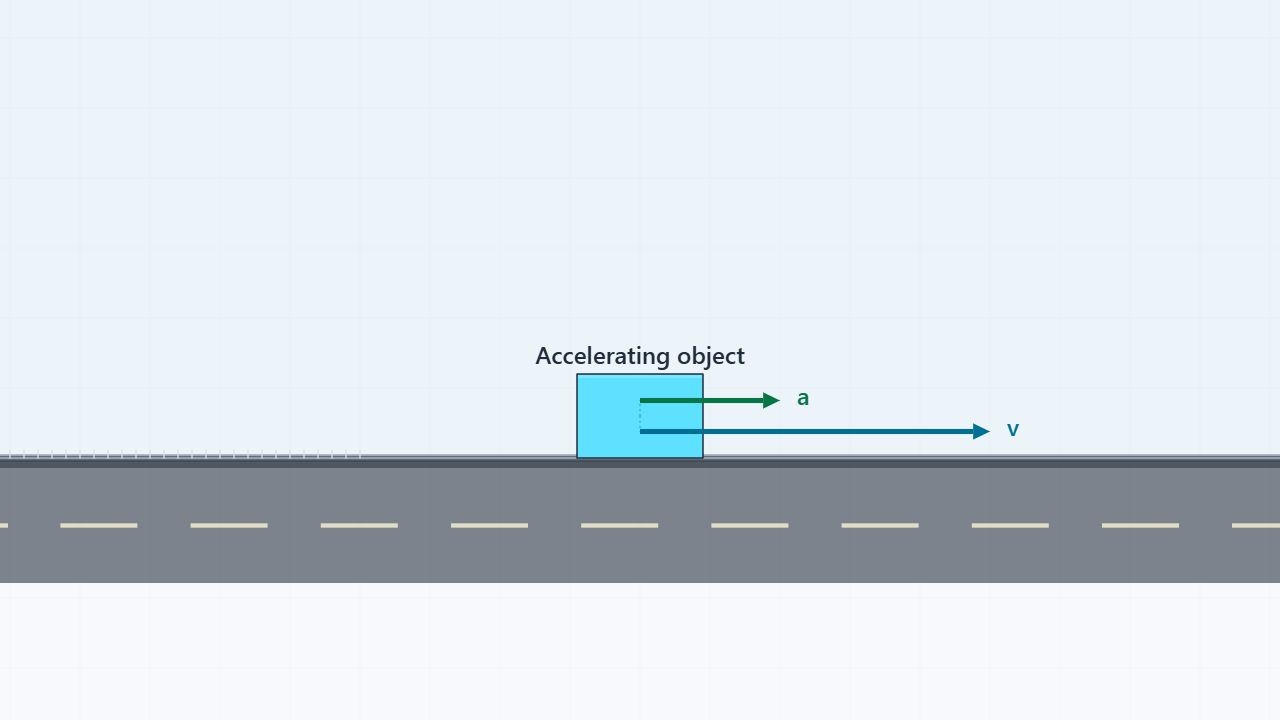
Unit 1 · Kinematics
Acceleration Graphs
Translate motion among position, velocity, and acceleration graphs using slope and area-under-the-curve relationships. View lesson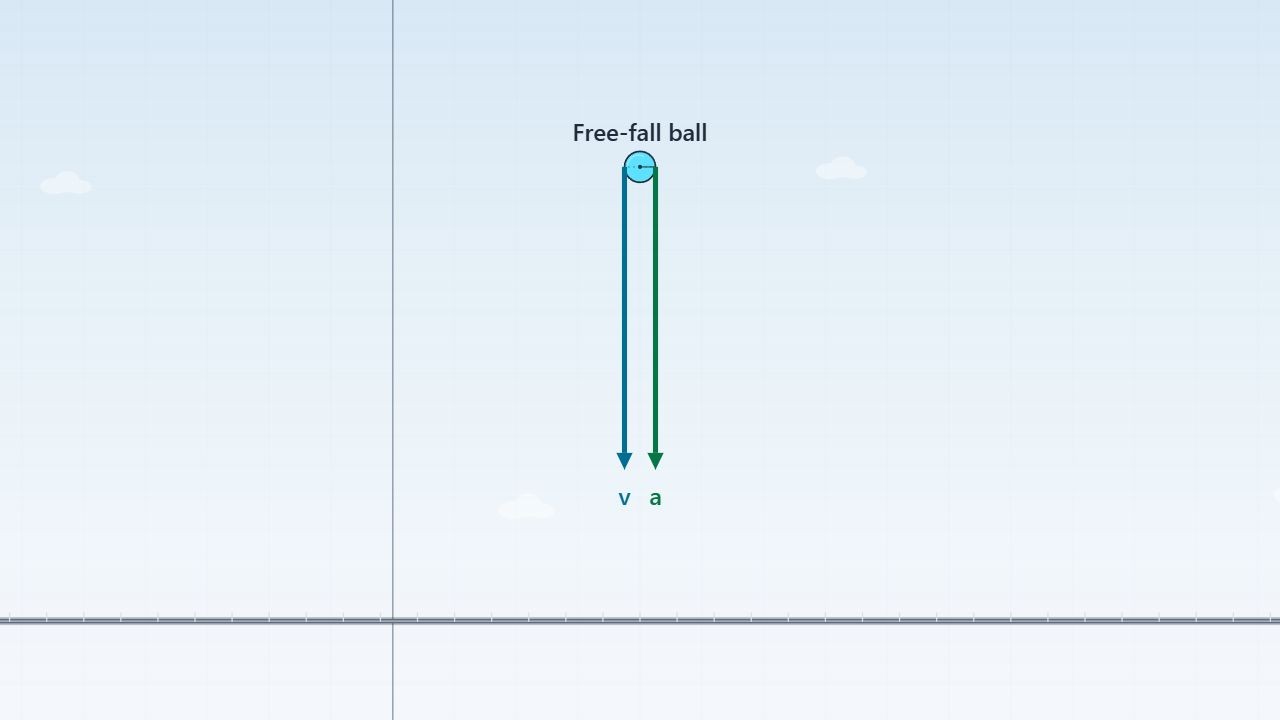
Unit 1 · Kinematics
Free Fall Motion
Apply constant vertical acceleration to falling and upward-launched objects while keeping signs and motion direction distinct. View lesson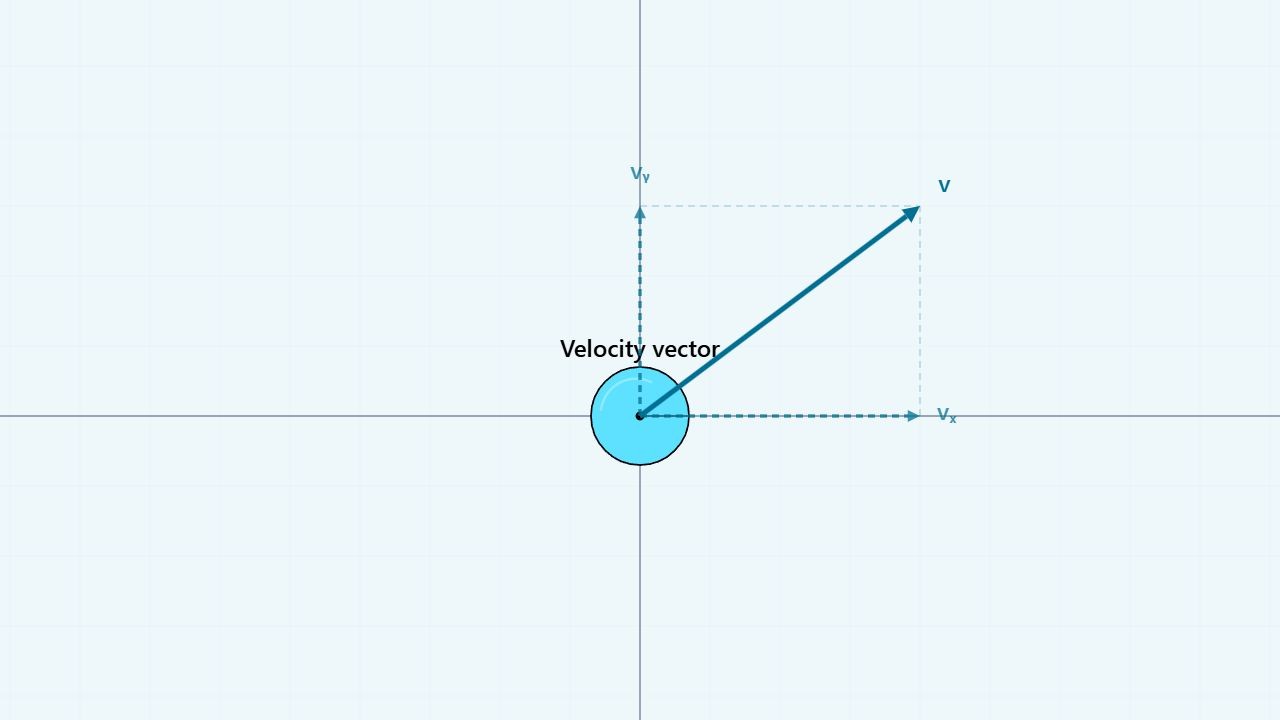
Unit 1 · Kinematics
2D Vectors and Relative Motion
Resolve vectors into perpendicular components, add them tip to tail, and use reference frames to predict a boat’s ground-relative motion. View lesson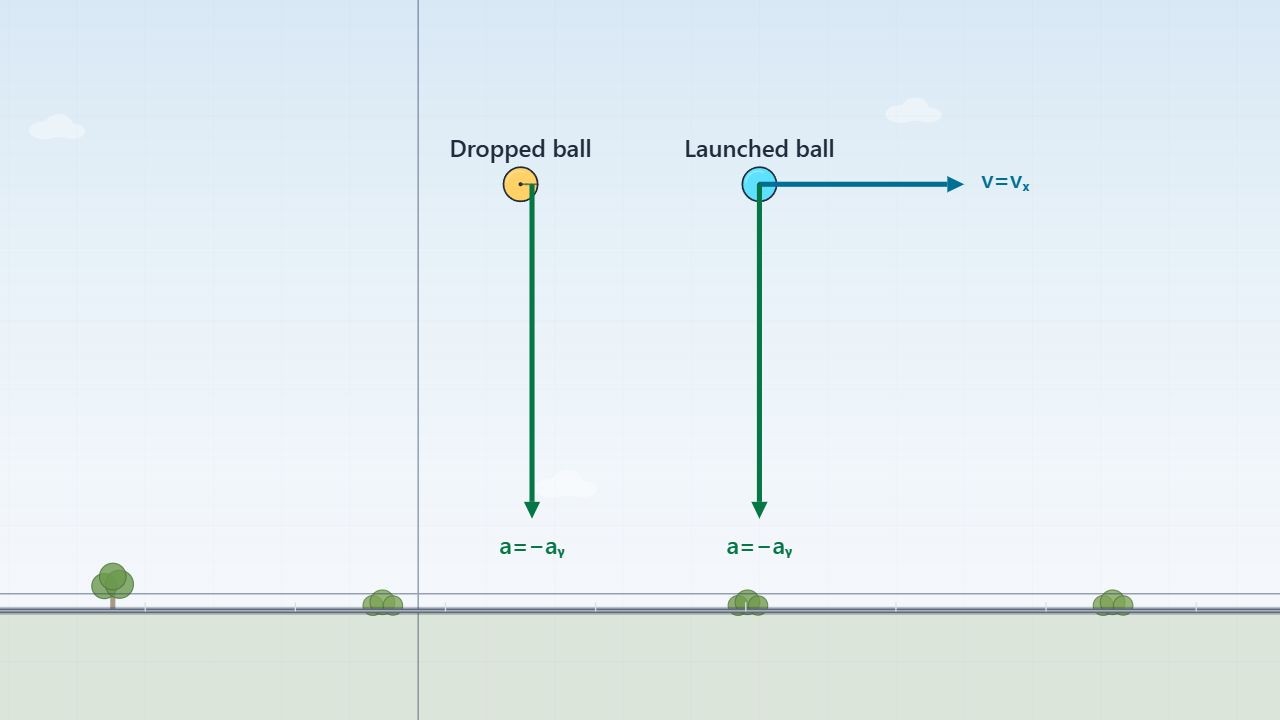
Unit 1 · Kinematics
Projectile Motion
Use one shared clock to connect constant horizontal velocity, downward acceleration, apex conditions, graphs, and landing predictions. View lesson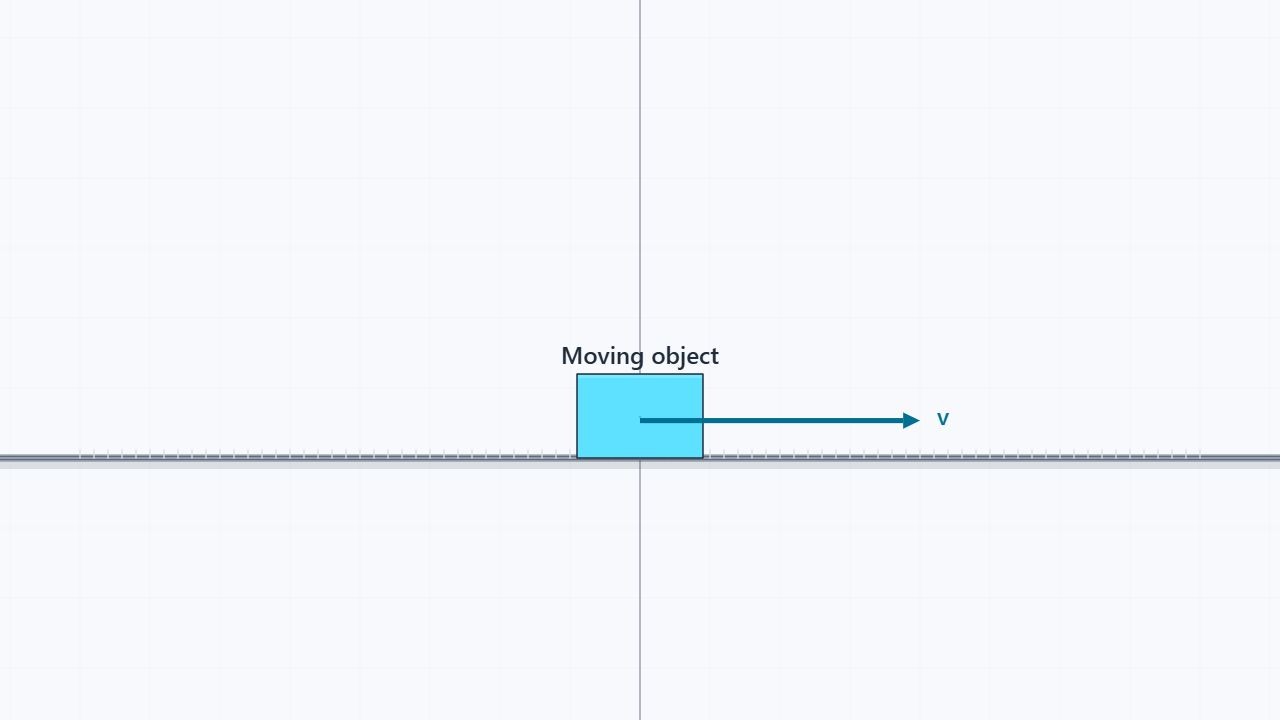
Unit 1 · Kinematics
Unit 1 Kinematics Concept Review
Choose the right diagram, graph, component model, or kinematics equation for each motion problem, then use scaling relationships to check the result. View lessonUnit 2, Part 1
Forces
Unit 2, Part 1 · Forces
Free-Body Diagrams
Choose the system first, draw only the external forces acting on it, and use components to connect a complete free-body diagram to net force and acceleration. View lesson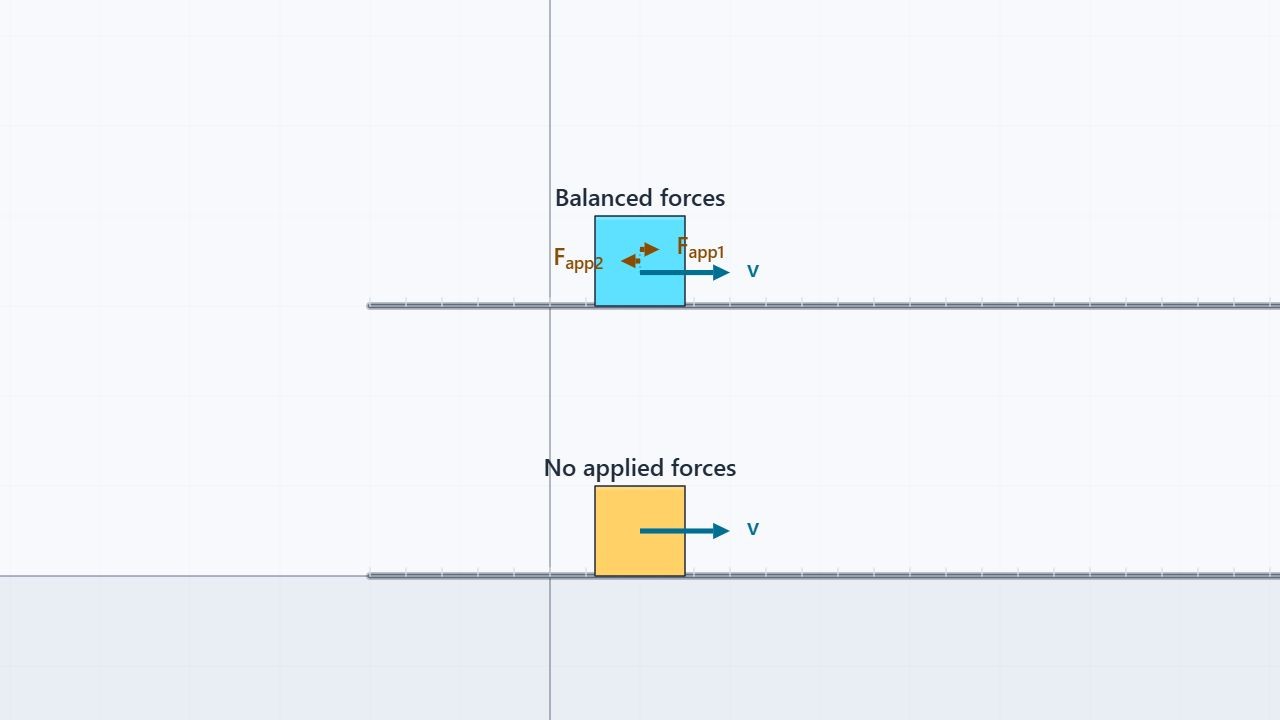
Unit 2, Part 1 · Forces
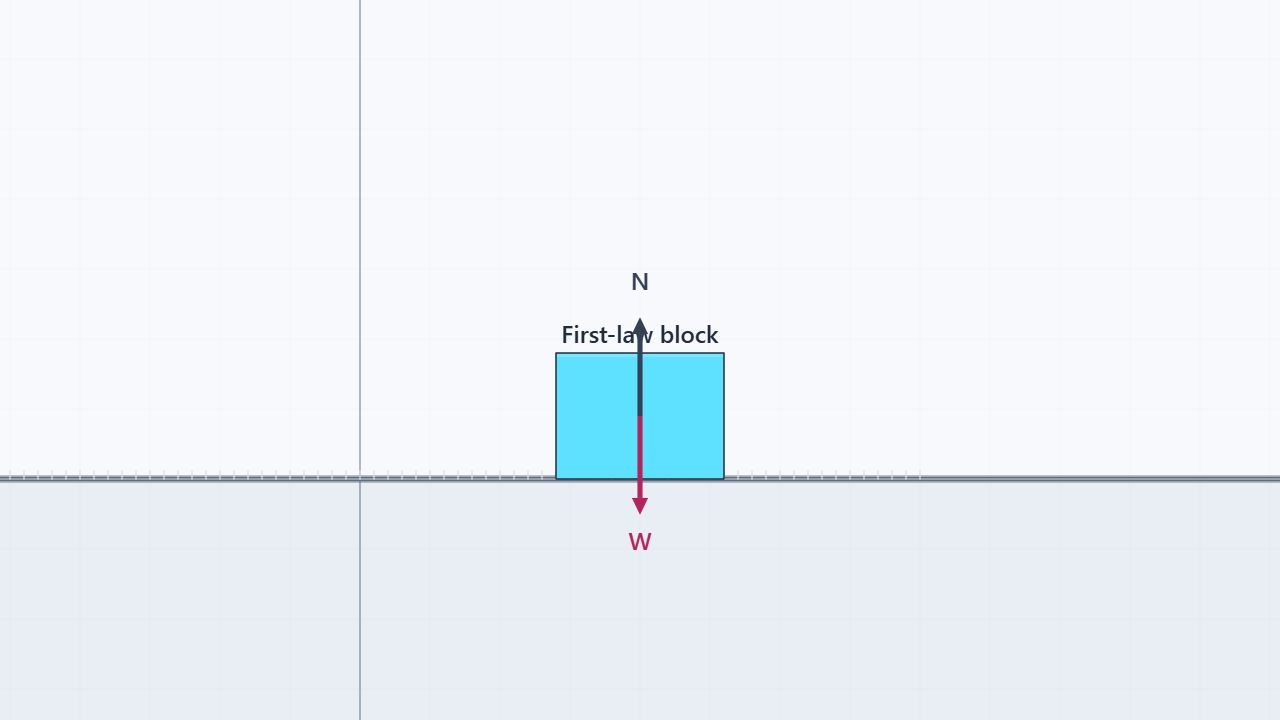
Newton’s First Law and Equilibrium
Use net force and acceleration evidence to distinguish rest from constant-velocity motion, then test static and dynamic equilibrium in one and two dimensions. View lesson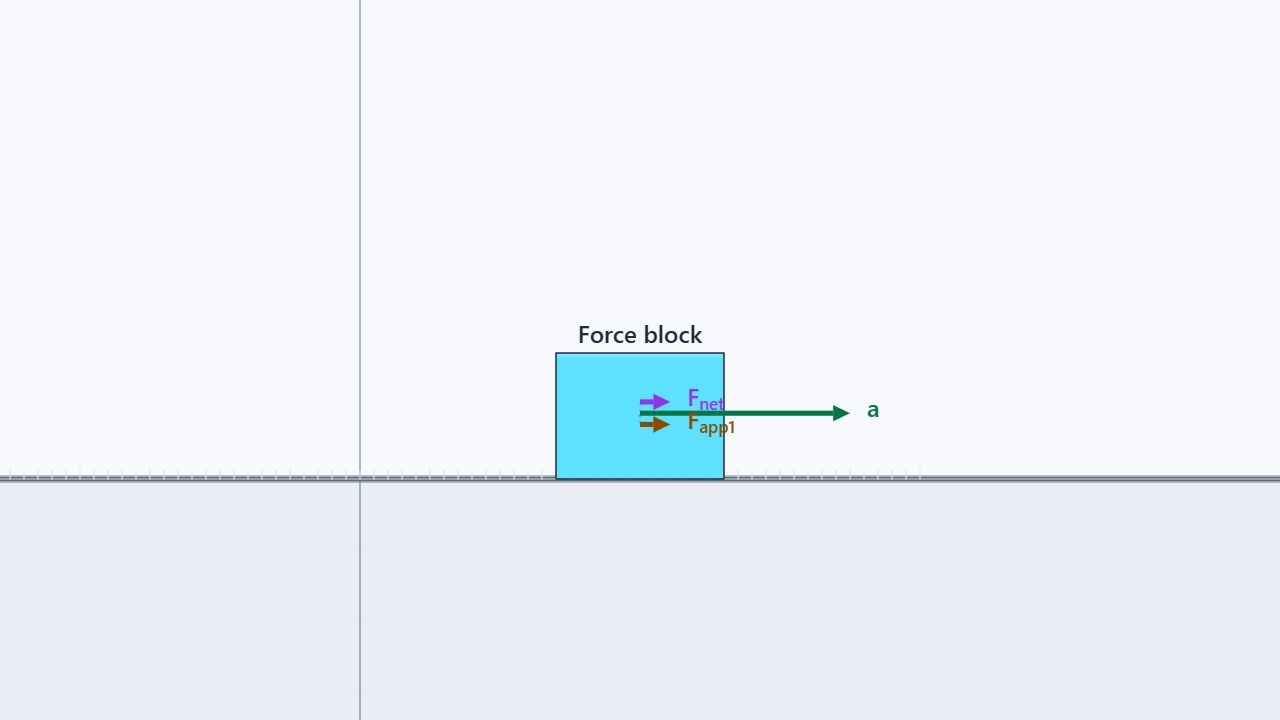
Unit 2, Part 1 · Forces
Newton’s Second Law
Test how the magnitude and direction of net external force and the system mass determine acceleration. View lesson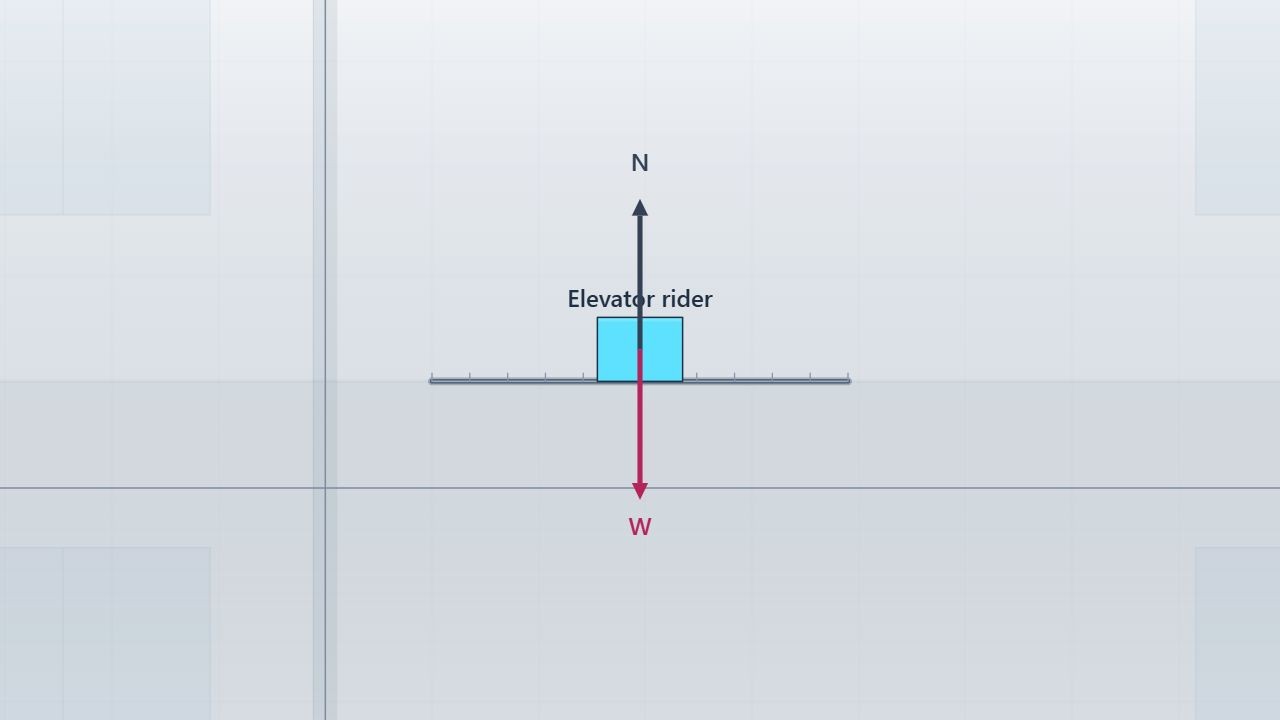
Unit 2, Part 1 · Forces
Elevator Forces and Apparent Weight
Use the direction of elevator acceleration to predict how the normal force and apparent weight compare with gravitational force. View lesson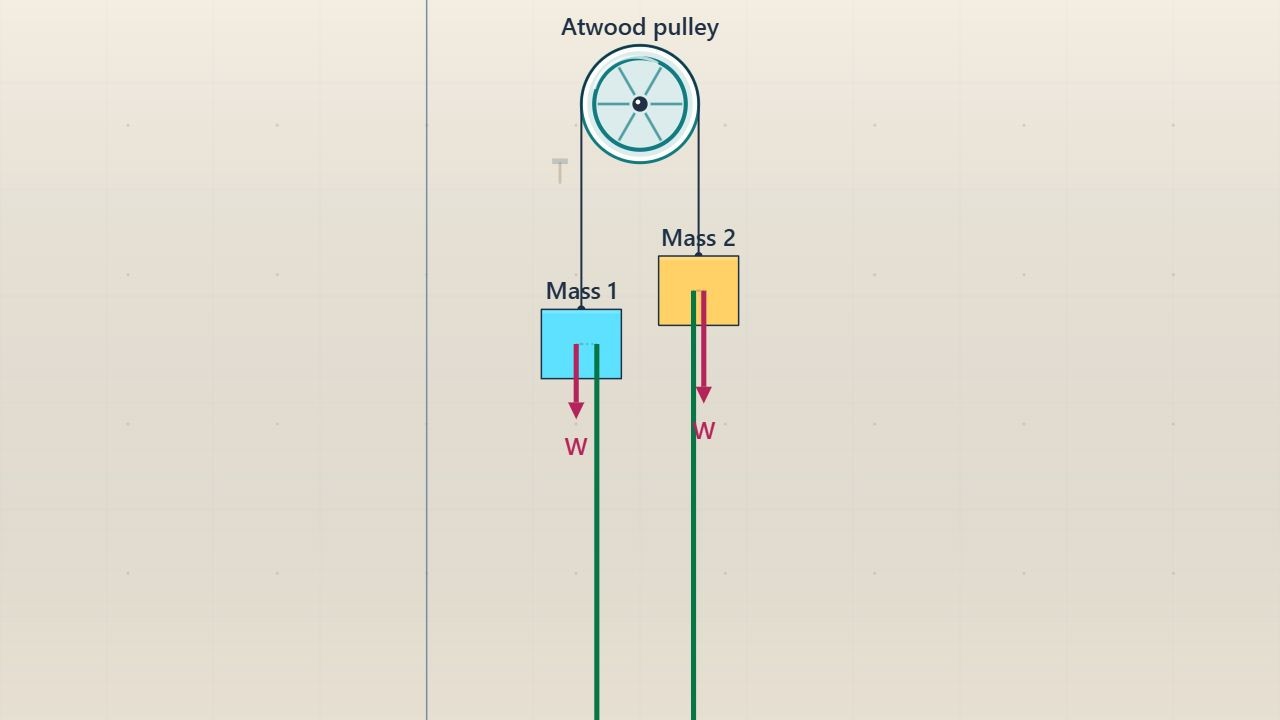
Unit 2, Part 1 · Forces
Atwood Machines and Two-Body Systems
Compare object and system models for two connected masses sharing one acceleration magnitude. View lesson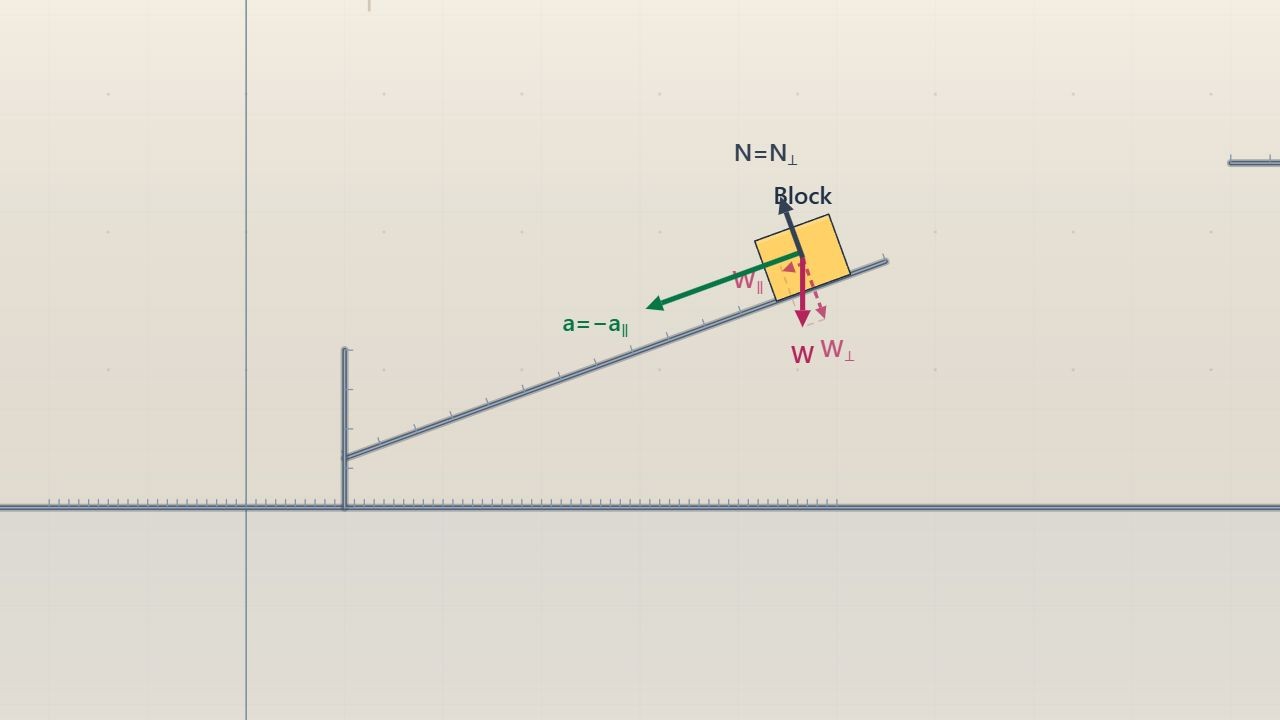
Unit 2, Part 1 · Forces
Inclined Planes
Resolve weight into components parallel and perpendicular to a ramp and connect those components to equilibrium or acceleration. View lesson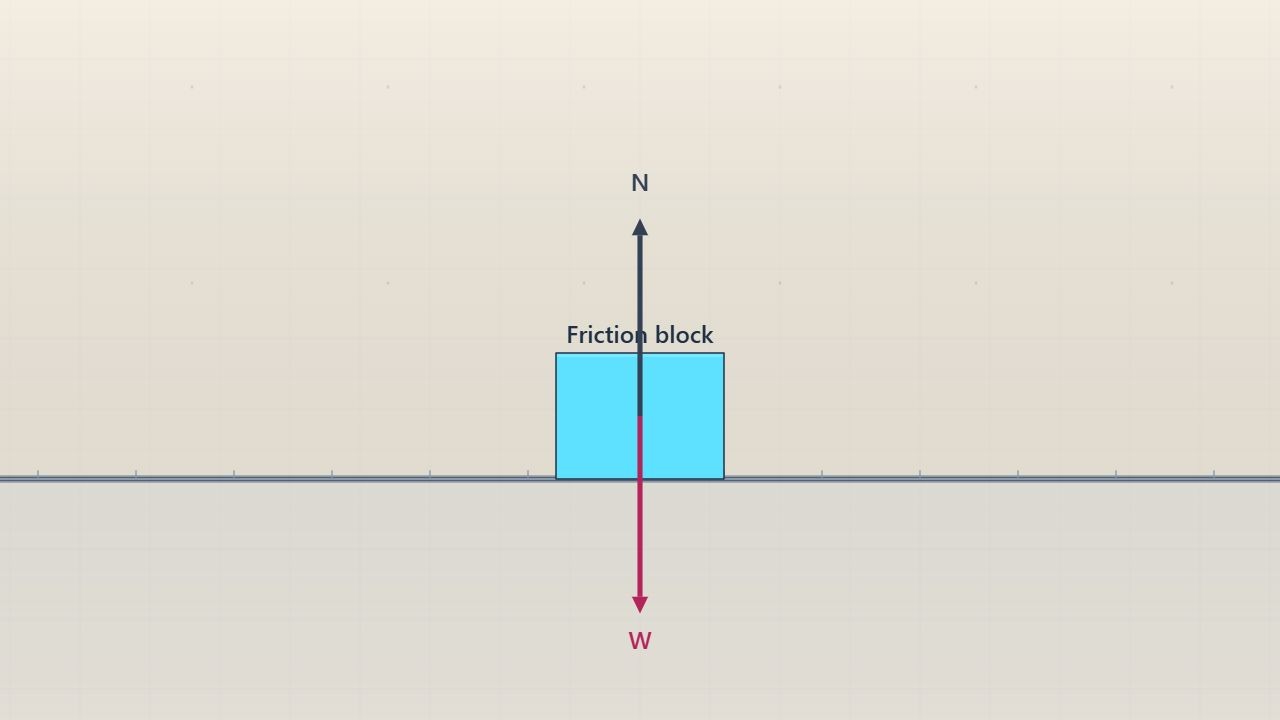
Unit 2, Part 1 · Forces
Static and Kinetic Friction
Determine when static friction adjusts to prevent slipping and when kinetic friction acts during sliding. View lesson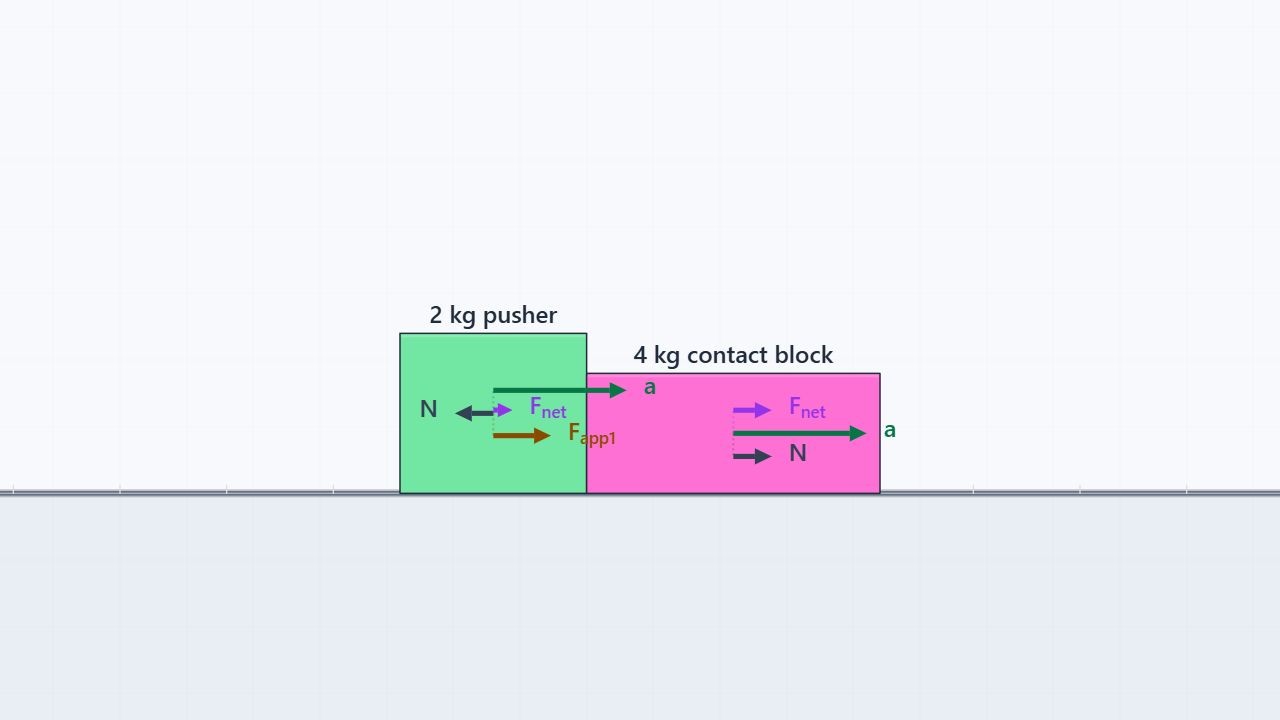
Unit 2, Part 1 · Forces
Newton’s Third Law
Identify equal-magnitude, opposite-direction forces exerted by two interacting objects on one another. View lesson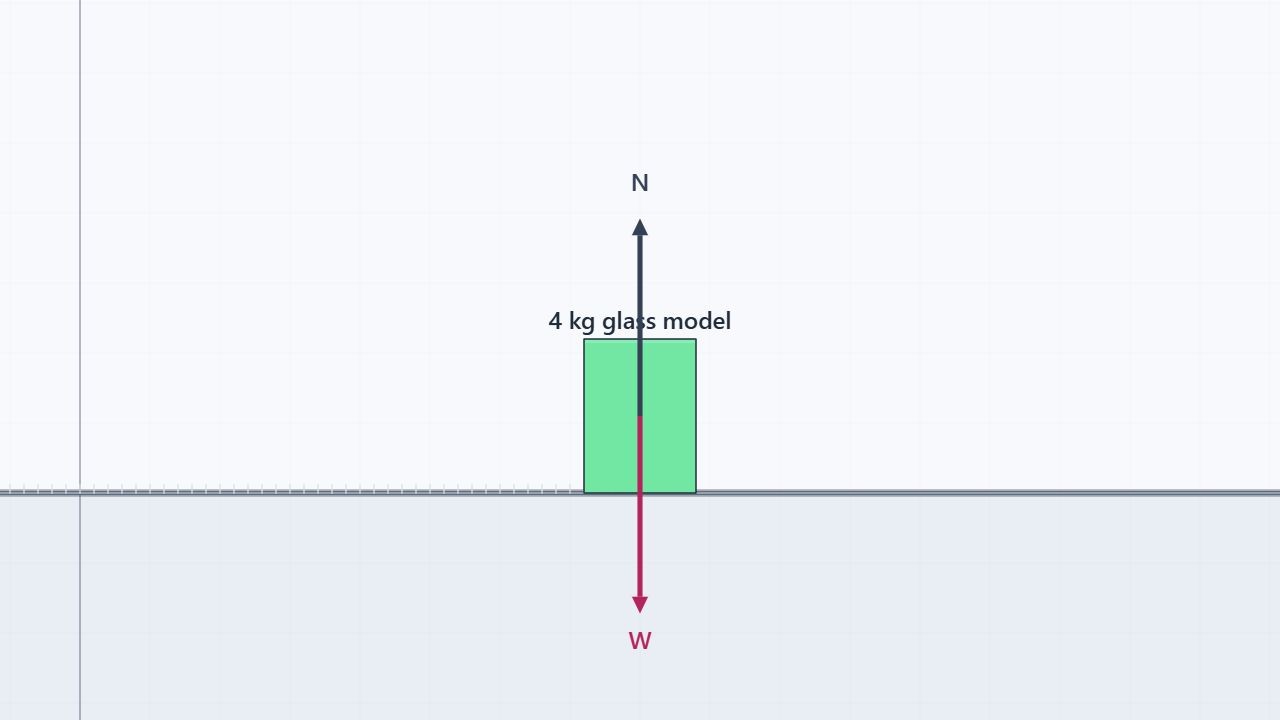
Unit 2, Part 1 · Forces
Unit 2 Force and Dynamics Concept Review
Connect force diagrams, Newton’s laws, friction, ramps, elevators, and connected systems in a cumulative Unit 2 review. View lessonUnit 2, Part 2
Circular Motion and Gravity
Unit 2, Part 2 · Circular Motion and Gravity
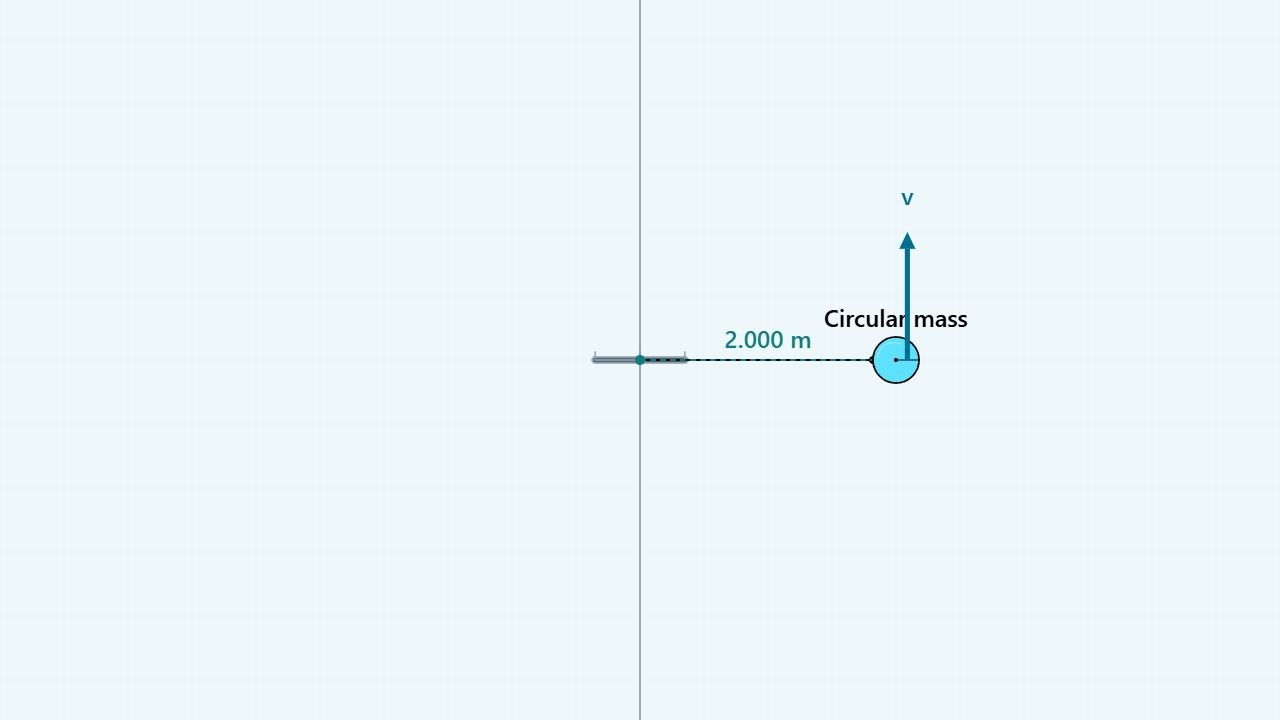
Circular Motion
Measure a circular trip, explain why constant speed still requires acceleration, and test how mass, speed, and radius change the inward force. View lesson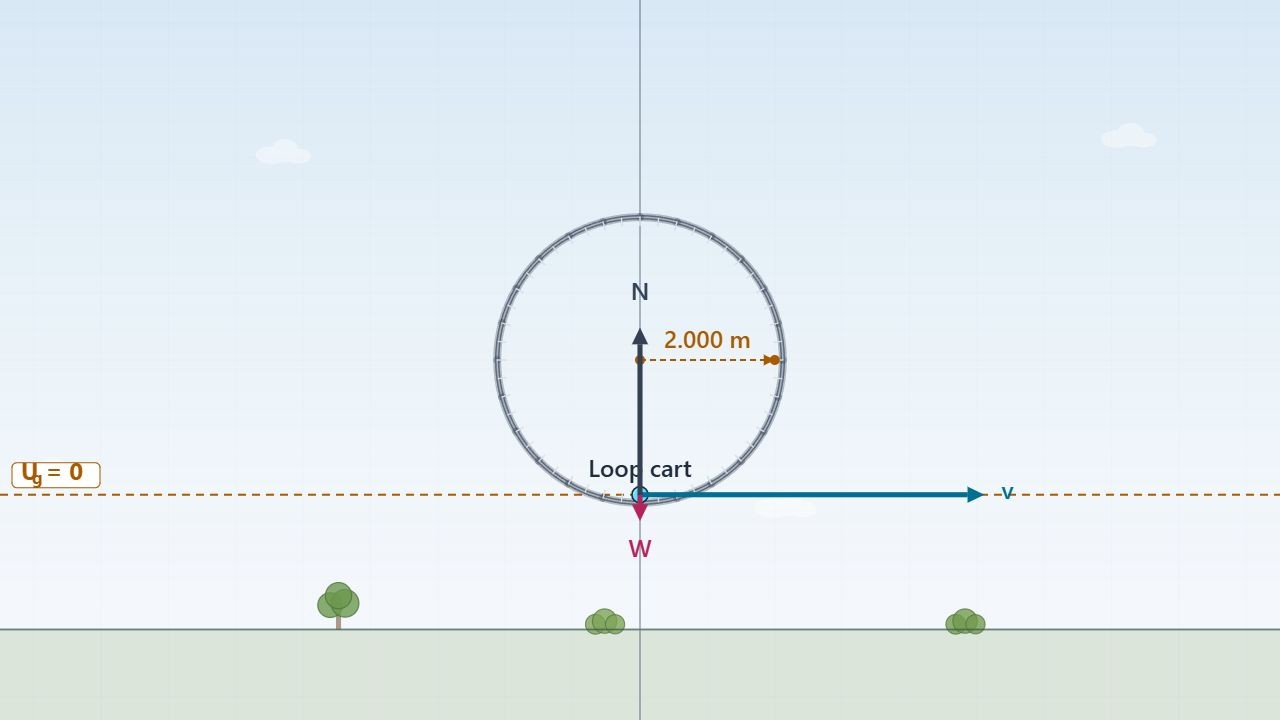
Unit 2, Part 2 · Circular Motion and Gravity
Vertical Circular Motion
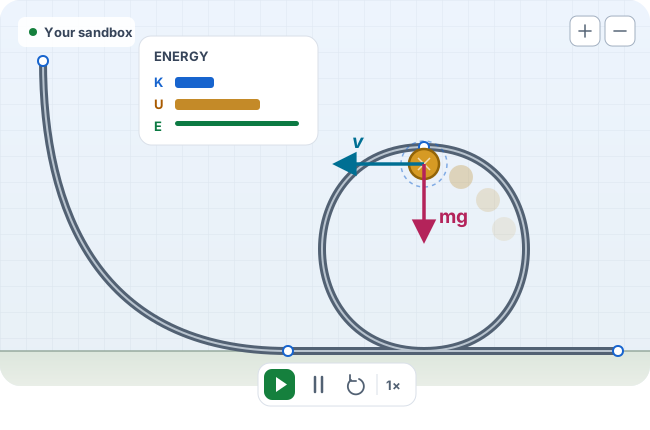
Observe how speed, normal force, and acceleration change around a vertical loop, then test the conditions for maintaining contact. View lesson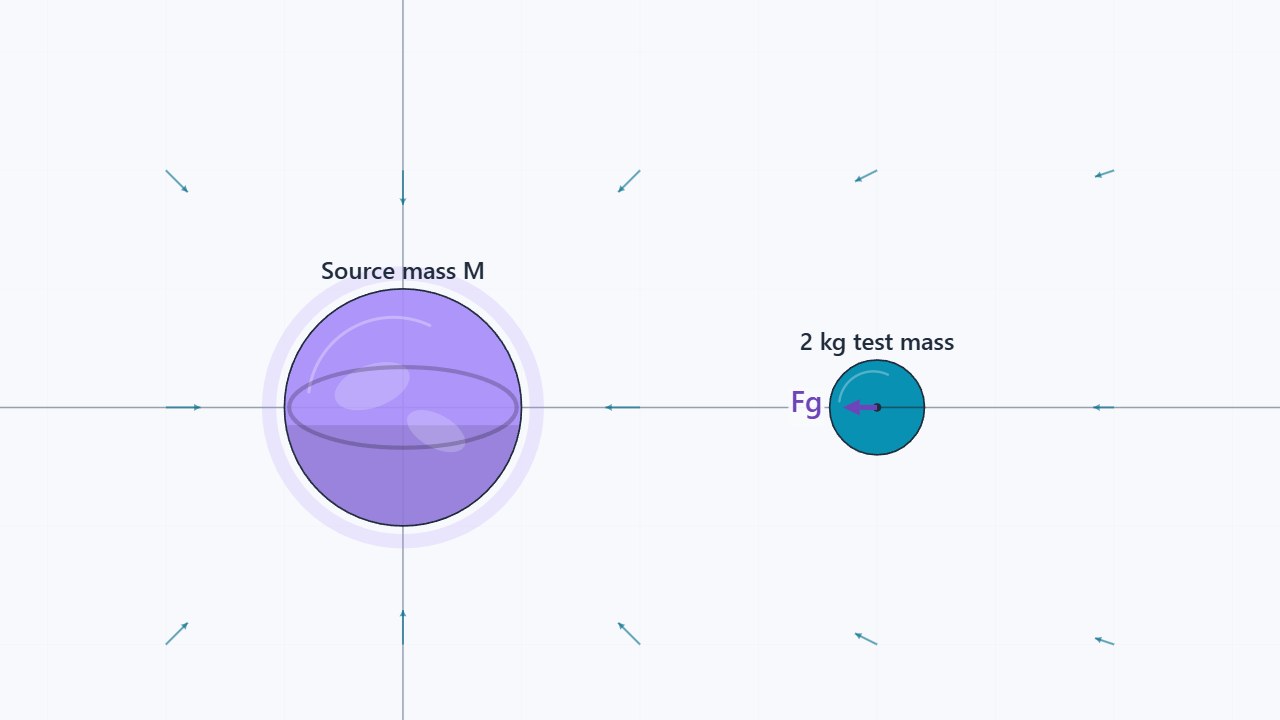
Unit 2, Part 2 · Circular Motion and Gravity
Newton’s Law of Gravitation and Gravitational Fields
Change source mass, test mass, and center distance to connect gravitational force with field strength. View lesson
Unit 2, Part 2 · Circular Motion and Gravity
Circular Orbits
Launch a satellite, measure its motion, and derive circular-orbit speed and period from gravity and Newton’s Second Law. View lesson
Unit 2, Part 2 · Circular Motion and Gravity
Unit 2, Part 2 Concept Review
Connect the main circular-motion and gravity concepts using simulation evidence and controlled variable comparisons. View lessonUnit 3
Work, Energy, and Power
Unit 3 · Work, Energy, and Power
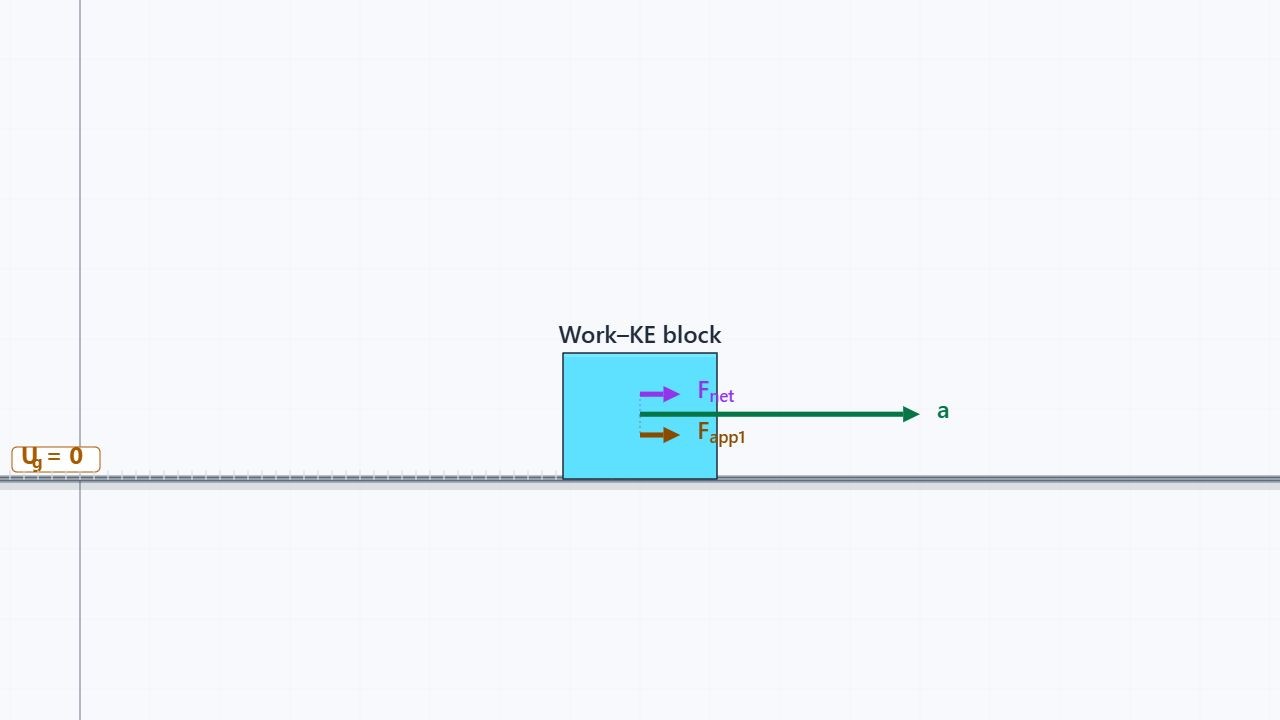
Work and Kinetic Energy
Relate the work done by the net force to a system’s change in translational and rotational kinetic energy. View lesson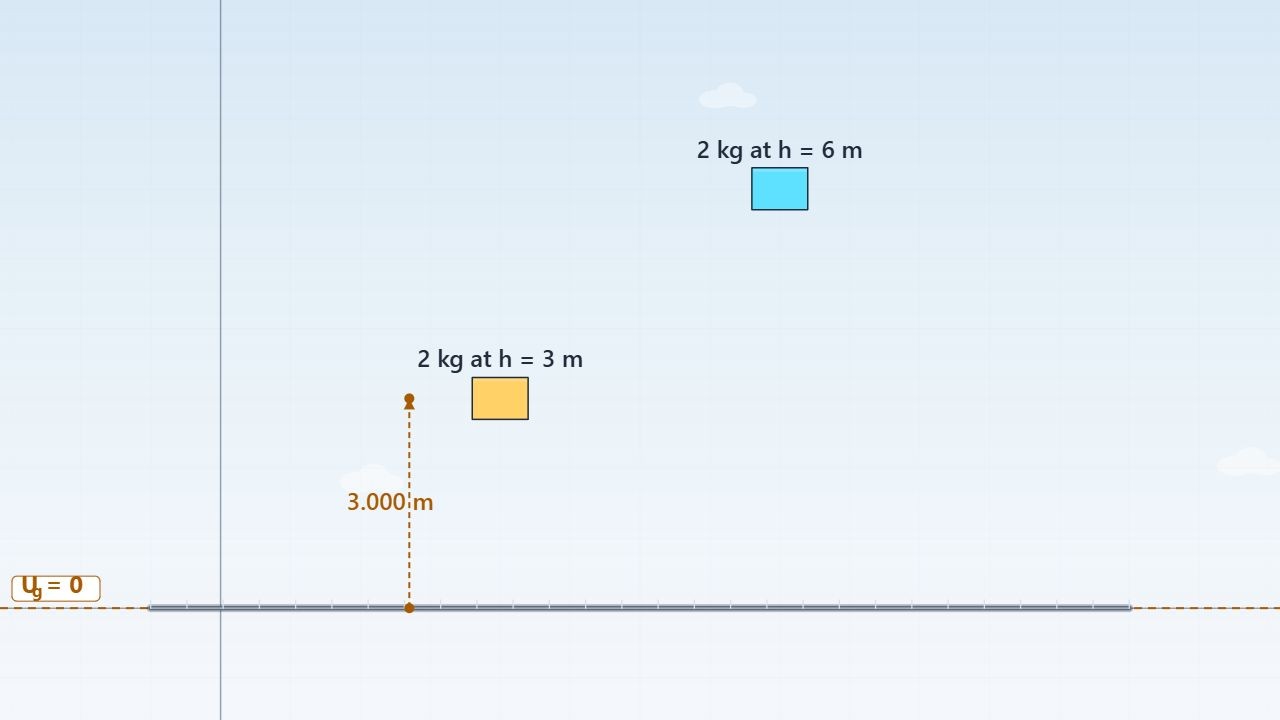
Unit 3 · Work, Energy, and Power
Conservative Forces and Gravitational Potential Energy
Relate work done by gravity to changes in gravitational potential energy and understand why only height change matters. View lesson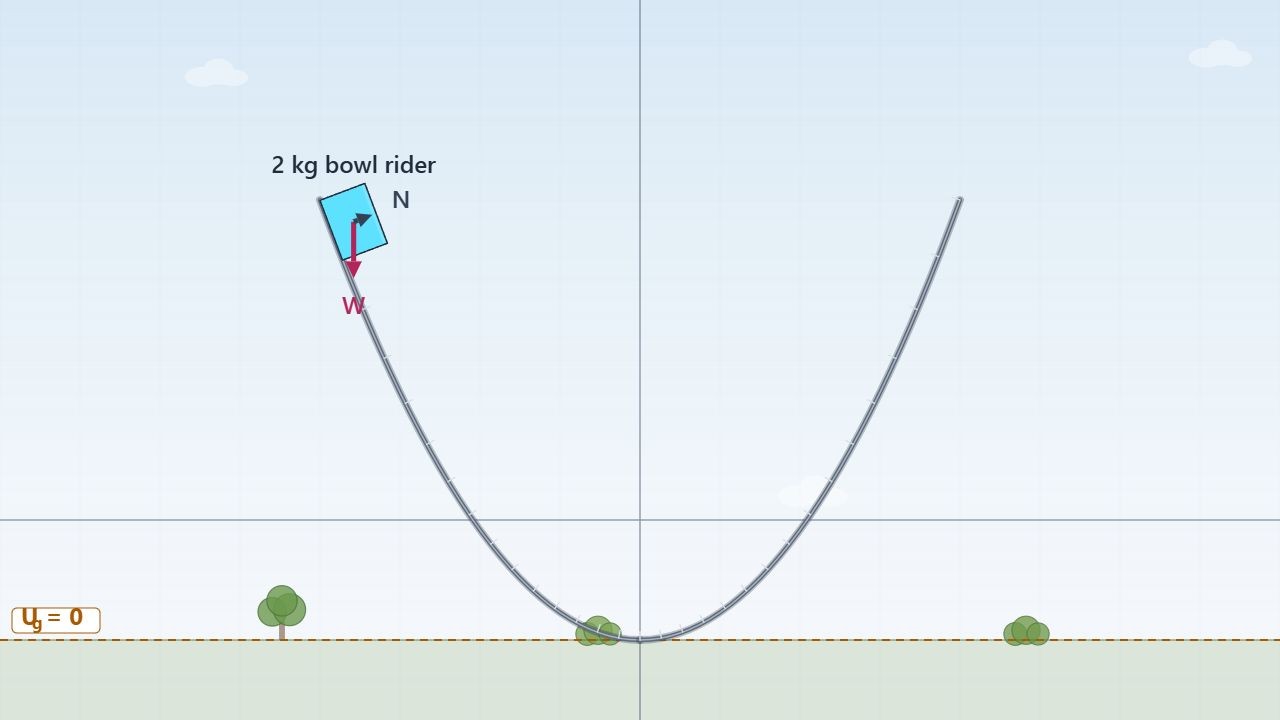
Unit 3 · Work, Energy, and Power
Conservation of Mechanical Energy
Track energy transformations and use system boundaries to decide when mechanical energy remains constant. View lesson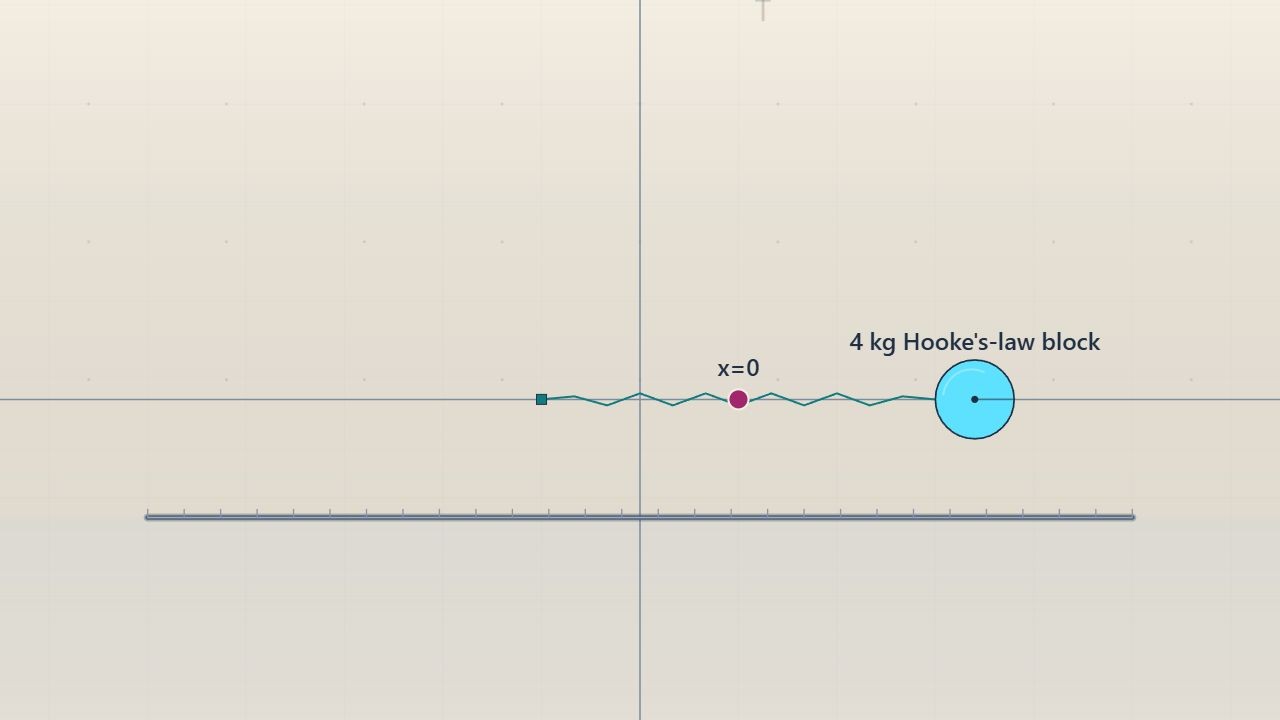
Unit 3 · Work, Energy, and Power
Hooke’s Law and Elastic Potential Energy
Connect spring displacement to restoring force, elastic potential energy, and oscillatory motion. View lesson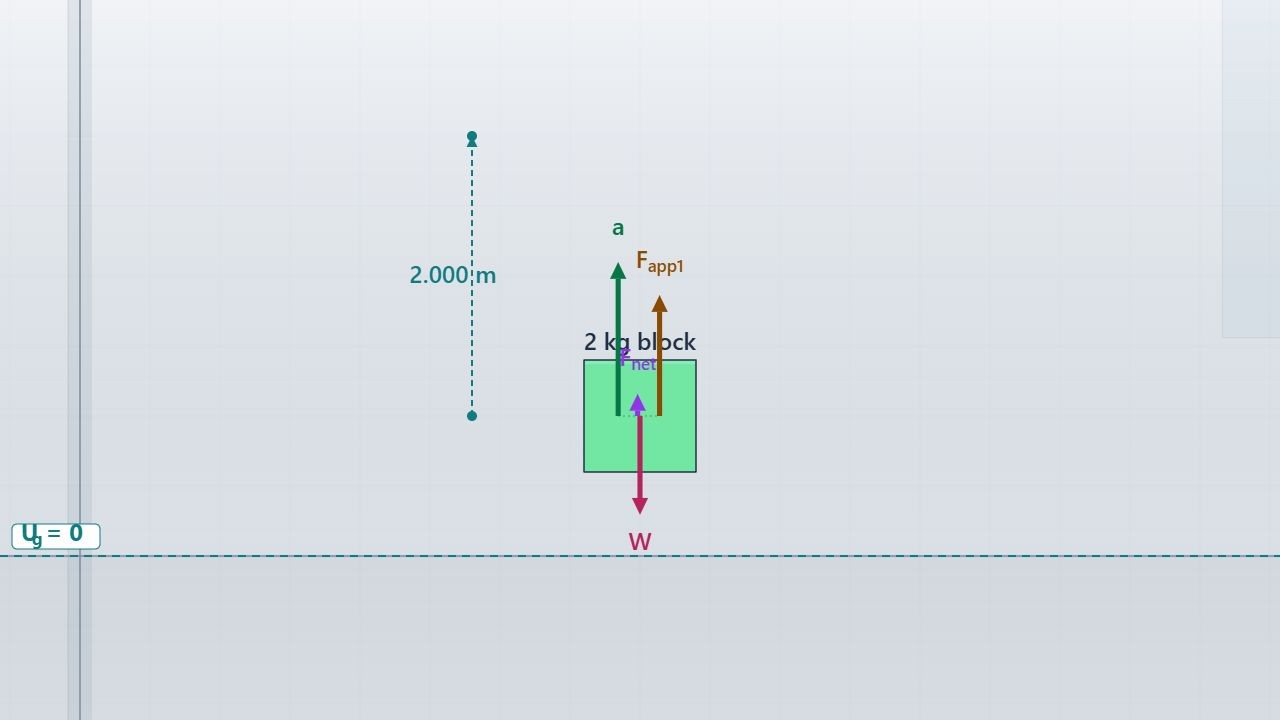
Unit 3 · Work, Energy, and Power
Conservation of Energy with External Work
Use system boundaries and energy accounting to connect external work, friction, and changes in a system’s mechanical energy. View lesson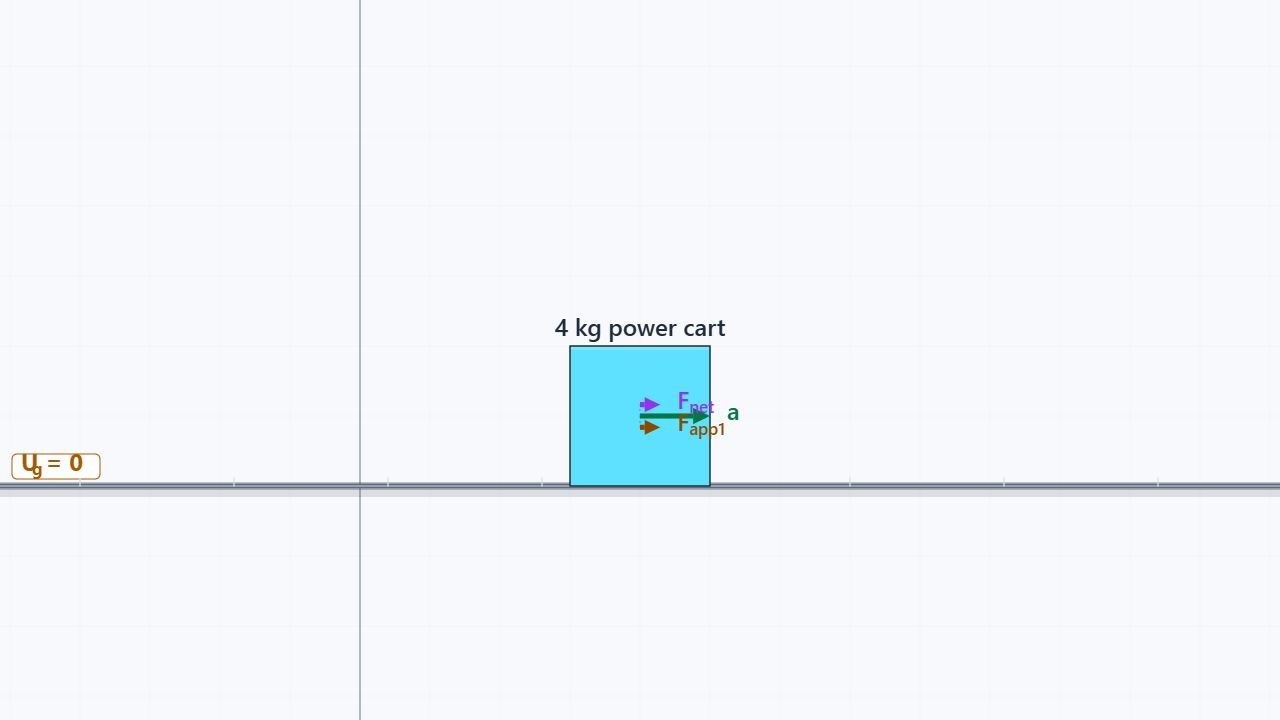
Unit 3 · Work, Energy, and Power
Power and Energy Transfer
Compare average and instantaneous rates of doing work and transferring energy. View lesson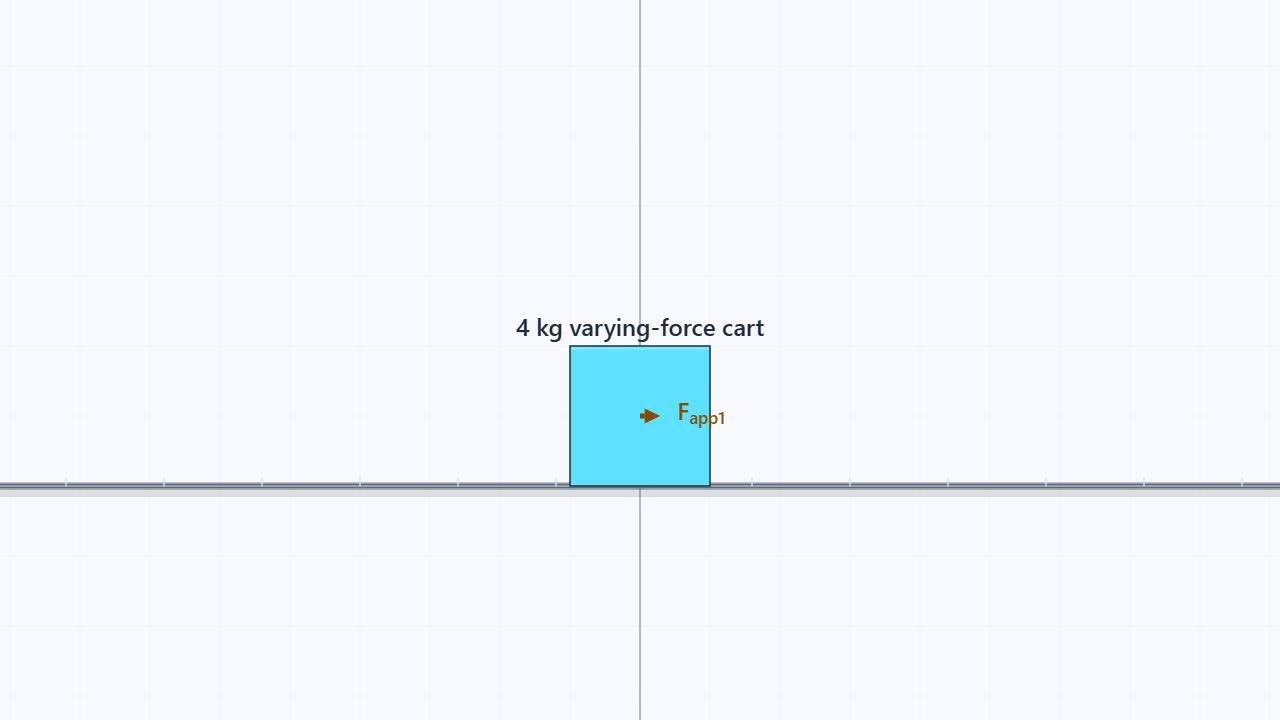
Unit 3 · Work, Energy, and Power
Work Done by Varying Forces
Use the area under a force–position curve, keeping above- and below-axis contributions, to calculate work when force changes with position. View lessonUnit 3 · Work, Energy, and Power
Unit 3 Energy Concept Review
Review work, energy stores, system boundaries, springs, and power using simulation observations and conceptual comparisons. View lessonUnit 4
Linear Momentum
Unit 4 · Linear Momentum
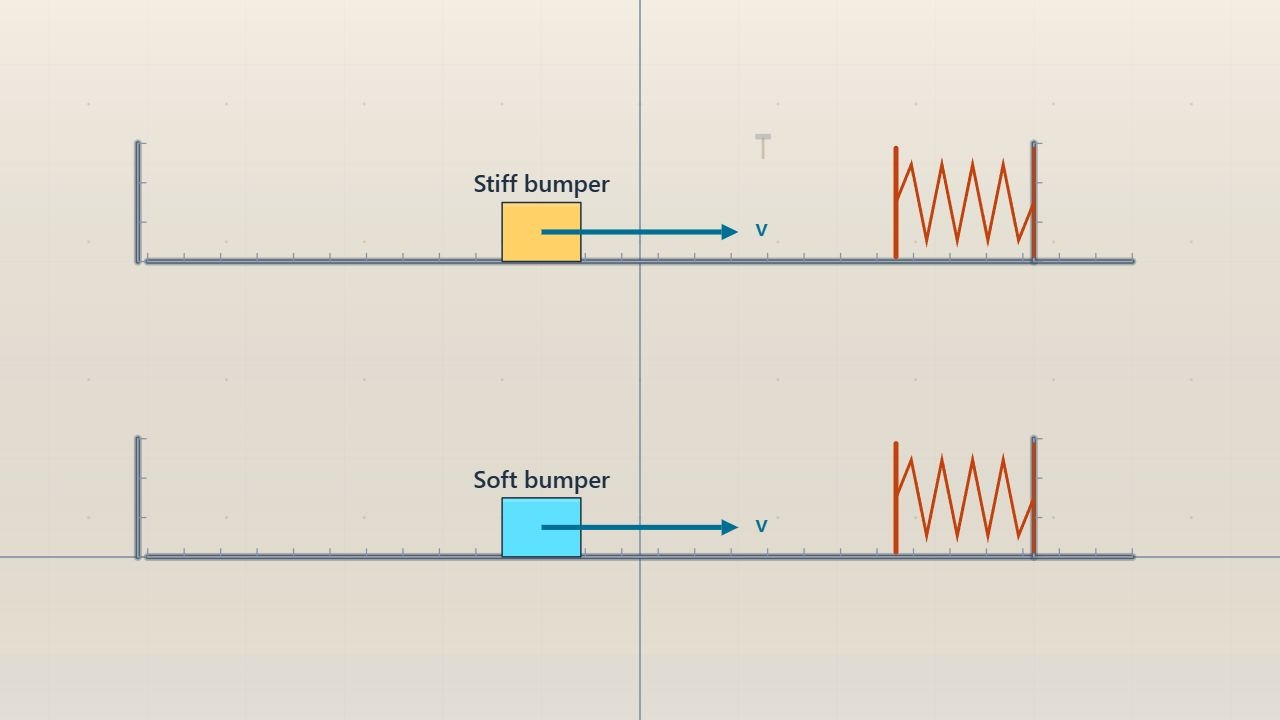
Momentum and Impulse
Change a force pulse, compare the resulting motion, and connect force–time area with impulse and change in momentum. View lesson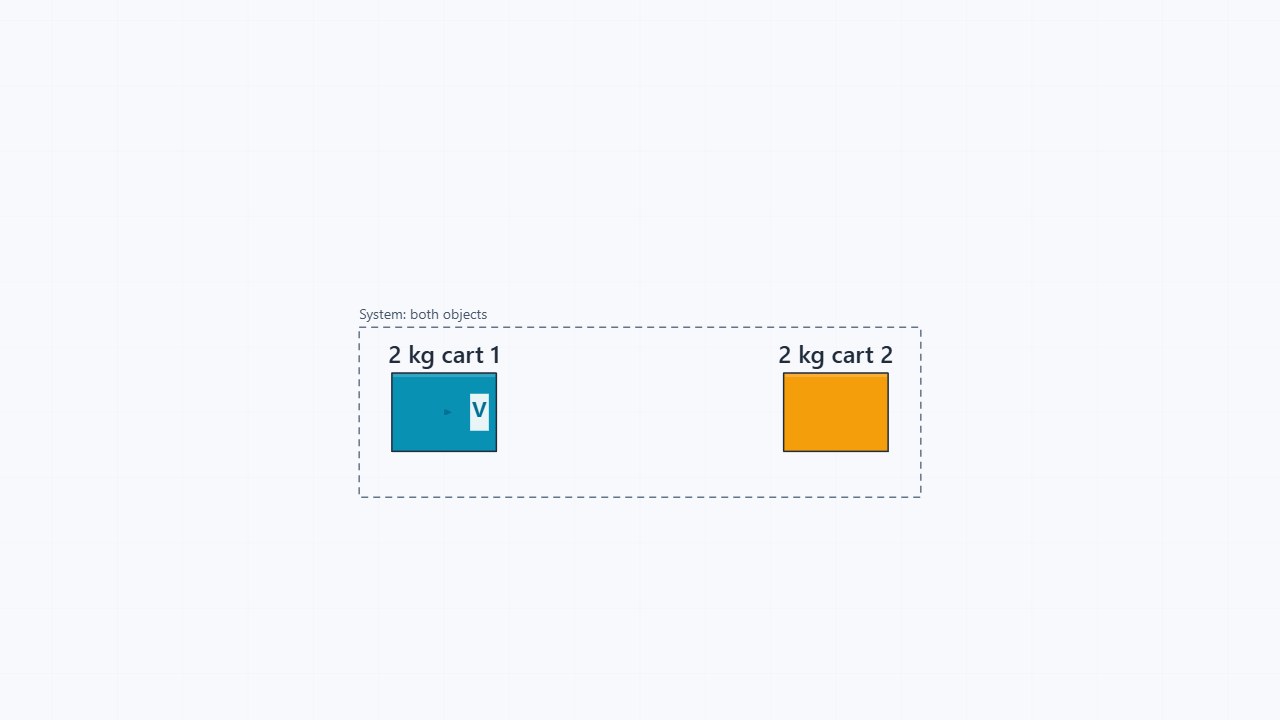
Unit 4 · Linear Momentum
Conservation of Momentum
Choose a system, observe collisions and recoil, and test momentum predictions using the motion of both objects. View lesson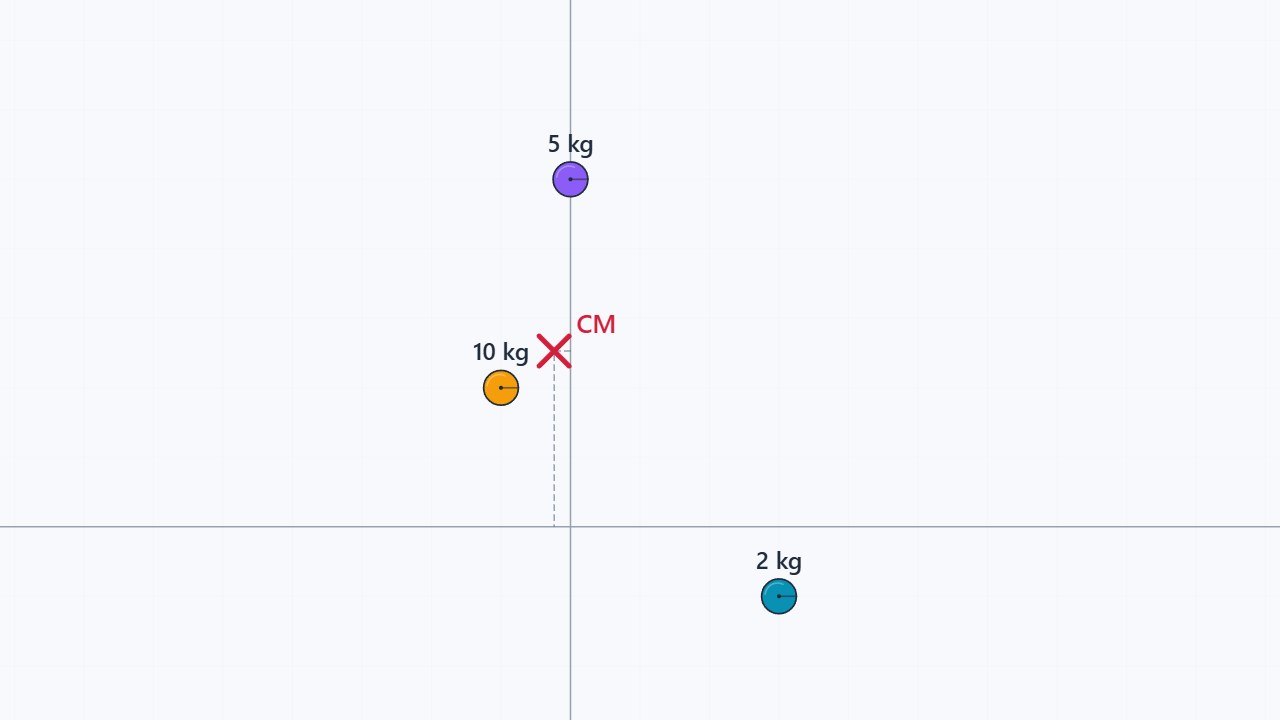
Unit 4 · Linear Momentum
Center of Mass
Move masses, locate their shared center of mass, and explain how a system can move predictably while its parts interact. View lesson
Unit 4 · Linear Momentum
Elastic Collisions
Compare collisions, track momentum and kinetic energy, and predict how mass and initial velocity affect the rebound. View lesson
Unit 4 · Linear Momentum
Unit 4 Concept Review
Choose and test momentum models in new situations, using impulse, collisions, center of mass, and energy evidence. View lessonUnit 5
Torque and Rotational Dynamics
Unit 5 · Torque and Rotational Dynamics
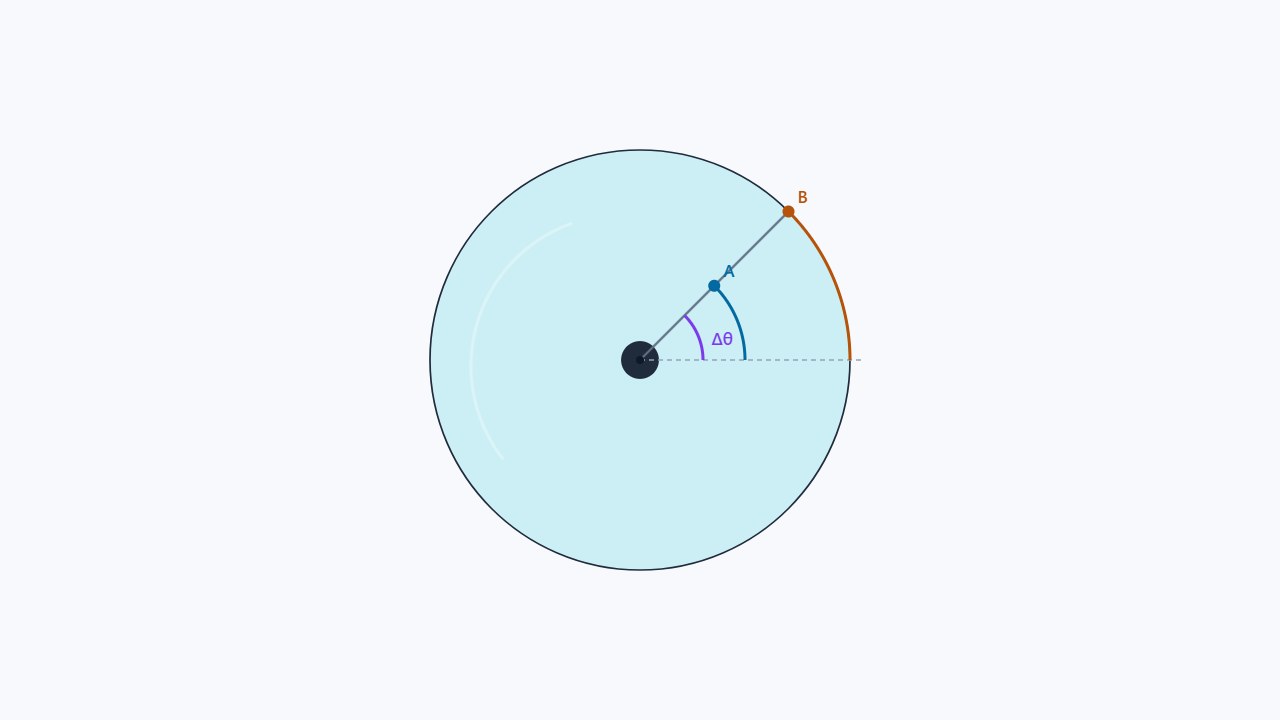
Rotational Kinematics
Measure rotation in radians, compare angular-motion graphs, and connect a rotating point’s speed and acceleration with its radius. View lesson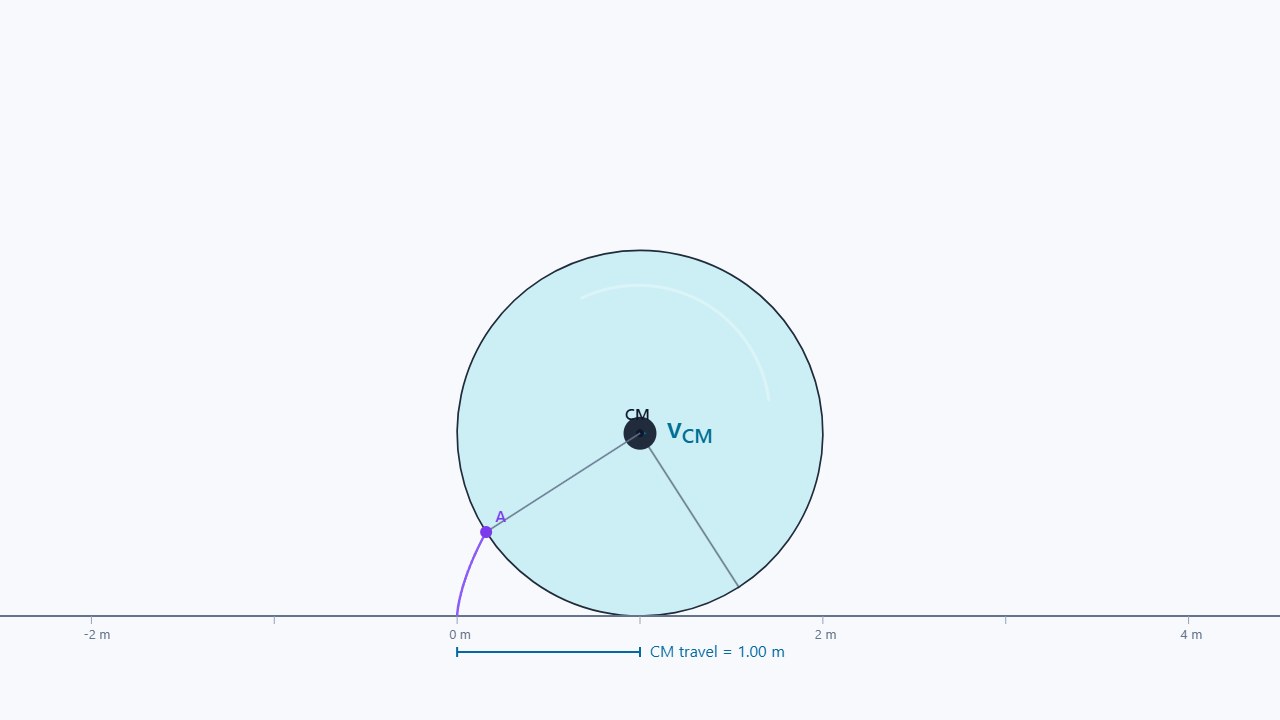
Unit 5 · Torque and Rotational Dynamics
Rolling Motion
Separate translation from rotation, track points on a wheel, and test the condition for rolling without slipping. View lesson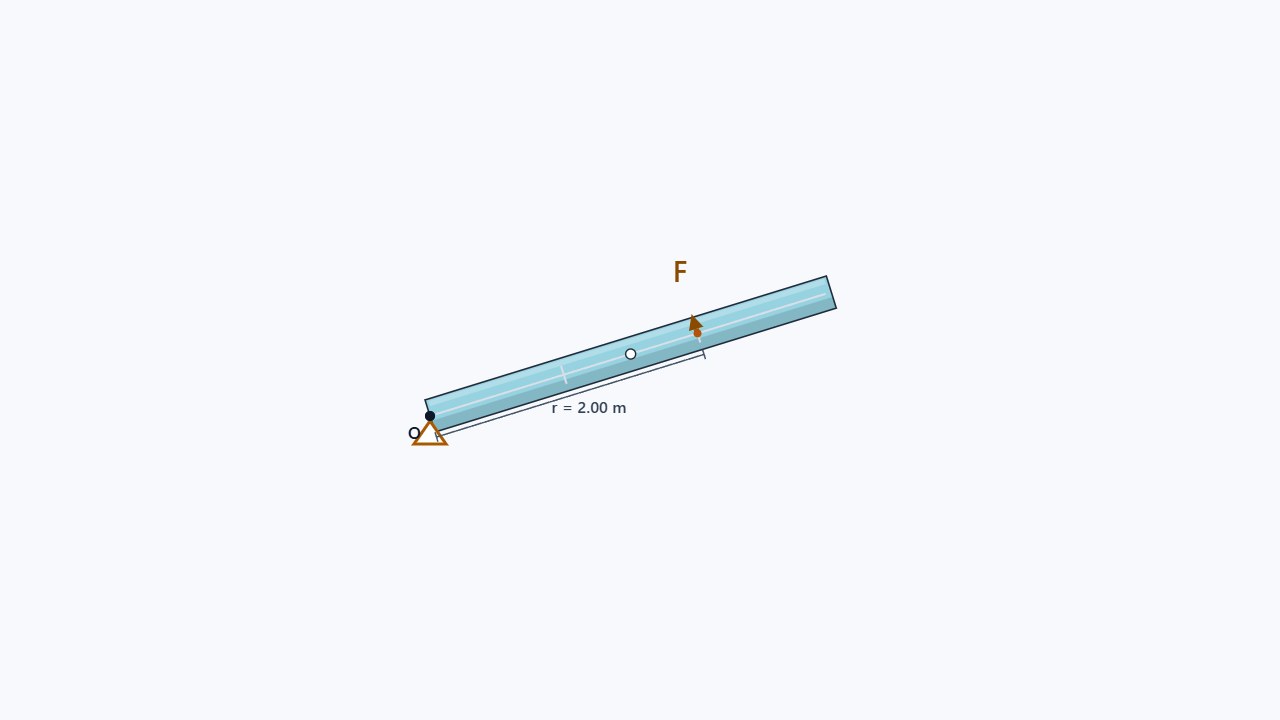
Unit 5 · Torque and Rotational Dynamics
Torque
Move a force along a lever, change its angle, and measure how force, distance, and direction affect the turning effect. View lesson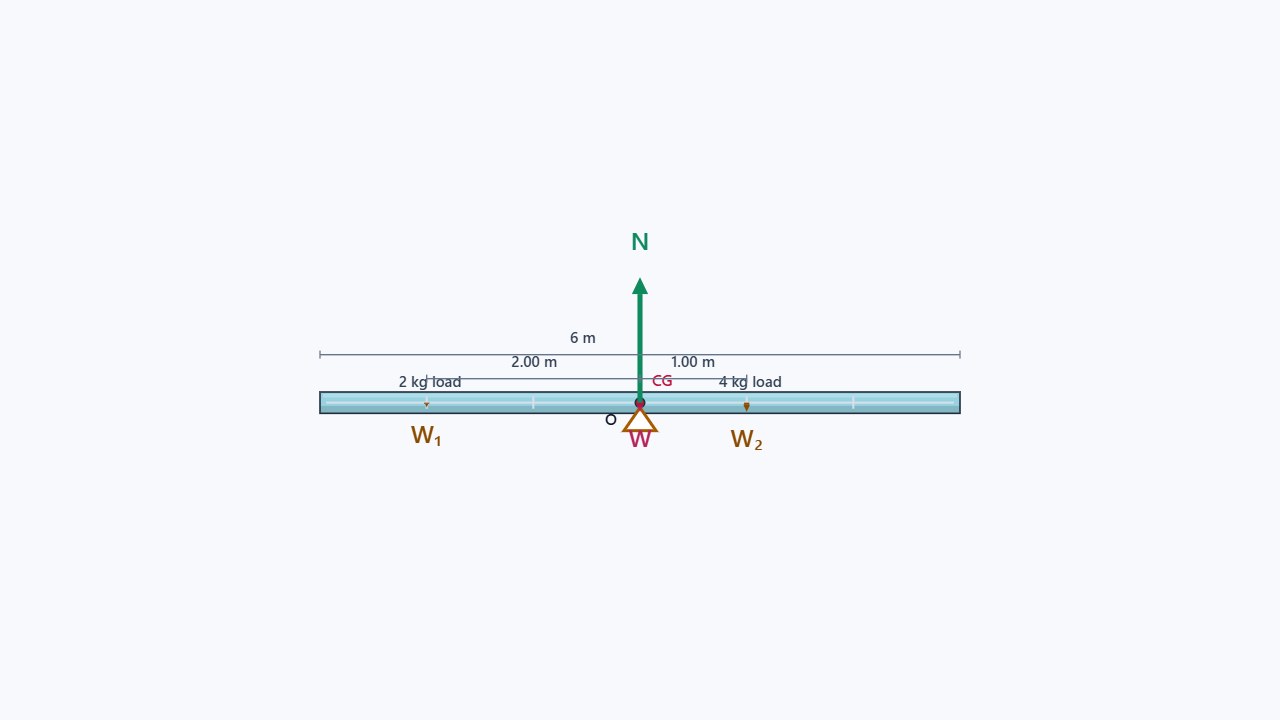
Unit 5 · Torque and Rotational Dynamics
Torque Equilibrium
Balance loads on a beam, compare rotating and static systems, and use force and torque equations to predict equilibrium. View lesson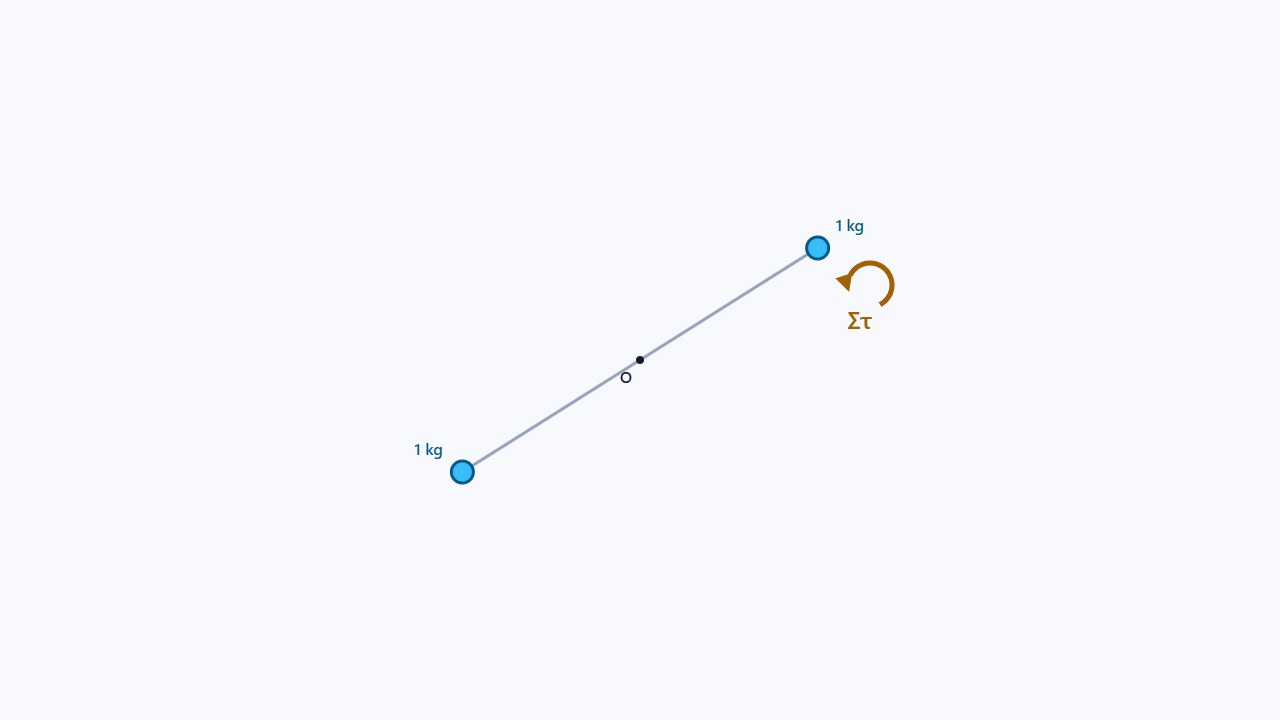
Unit 5 · Torque and Rotational Dynamics
Torque and Moment of Inertia
Change torque, mass and distance from an axis, then use the rotation you observe to explain moment of inertia and angular acceleration. View lesson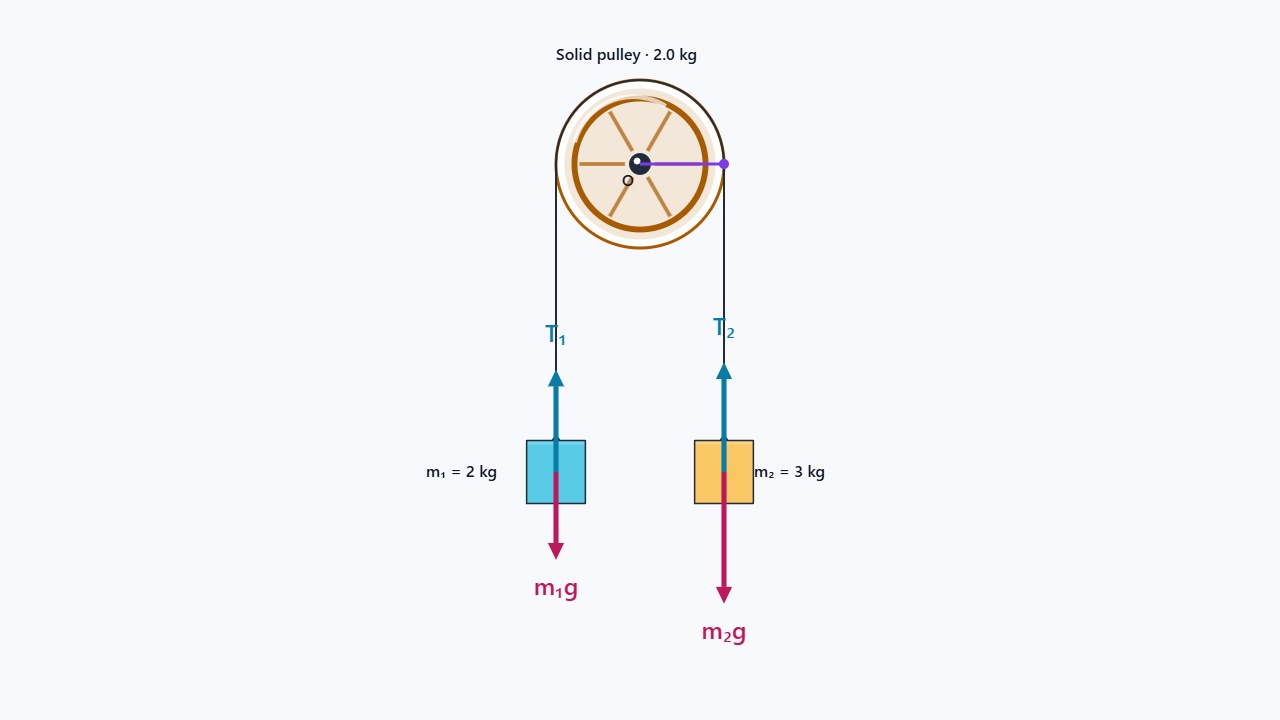
Unit 5 · Torque and Rotational Dynamics
Newton’s Laws with Torque
Watch a spool unwind and a massive pulley turn, then connect separate force and torque equations through the string’s no-slip constraint. View lessonUnit 6
Energy and Momentum of Rotating Systems
Unit 6 · Energy and Momentum of Rotating Systems
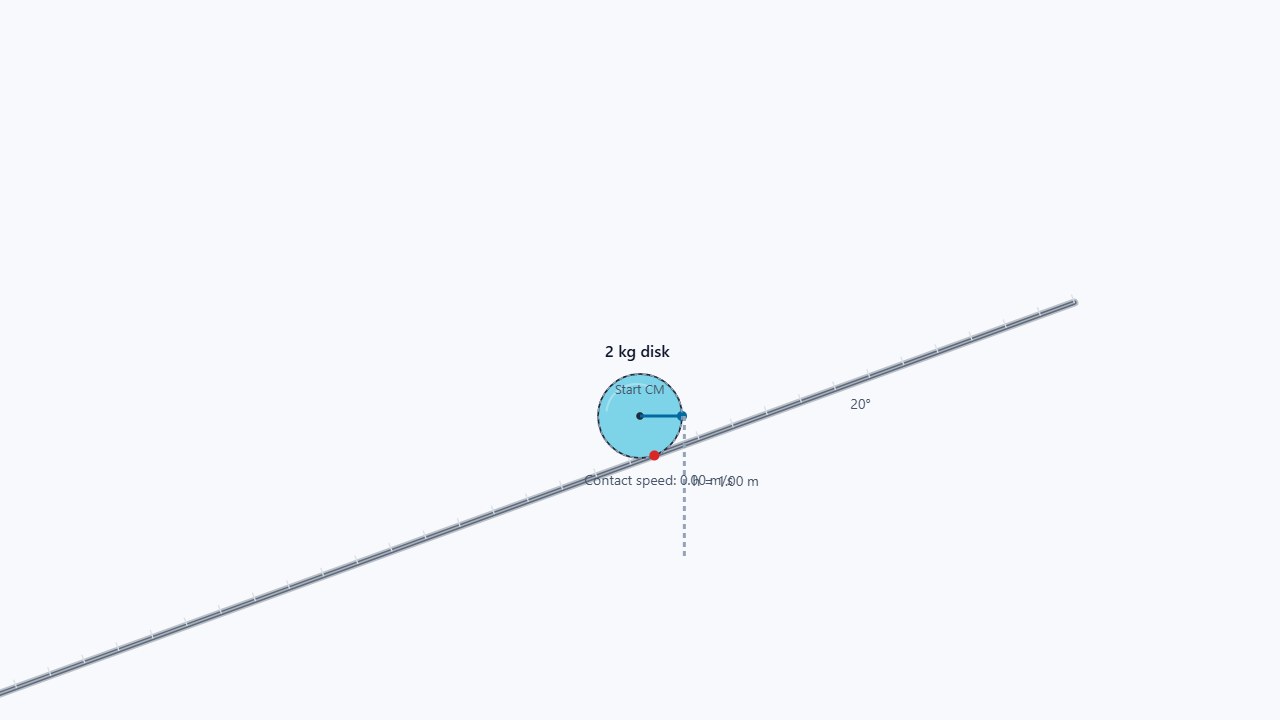
Rotational Kinetic Energy
Watch spinning and rolling objects, track their energy stores, and predict motion using energy conservation and work done by torque. View lesson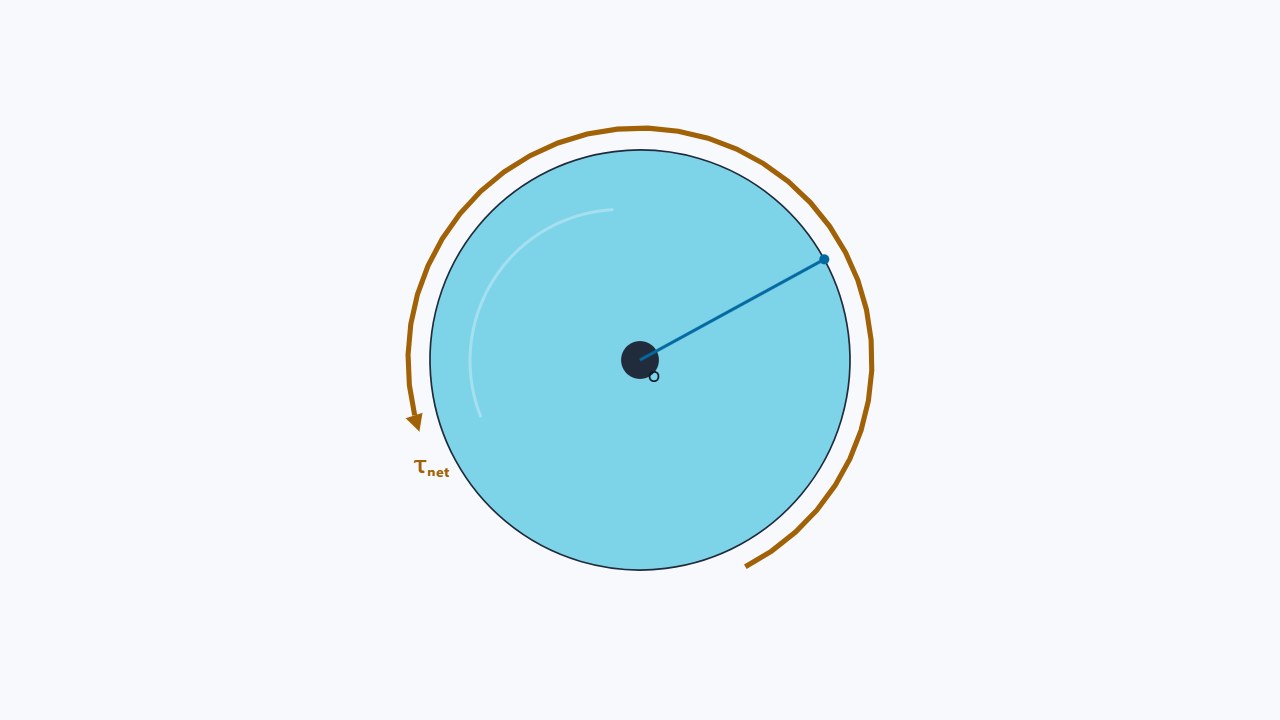
Unit 6 · Energy and Momentum of Rotating Systems
Angular Momentum
Compare spinning and straight-line motion about a reference point, then use torque acting over time to predict changes in angular momentum. View lesson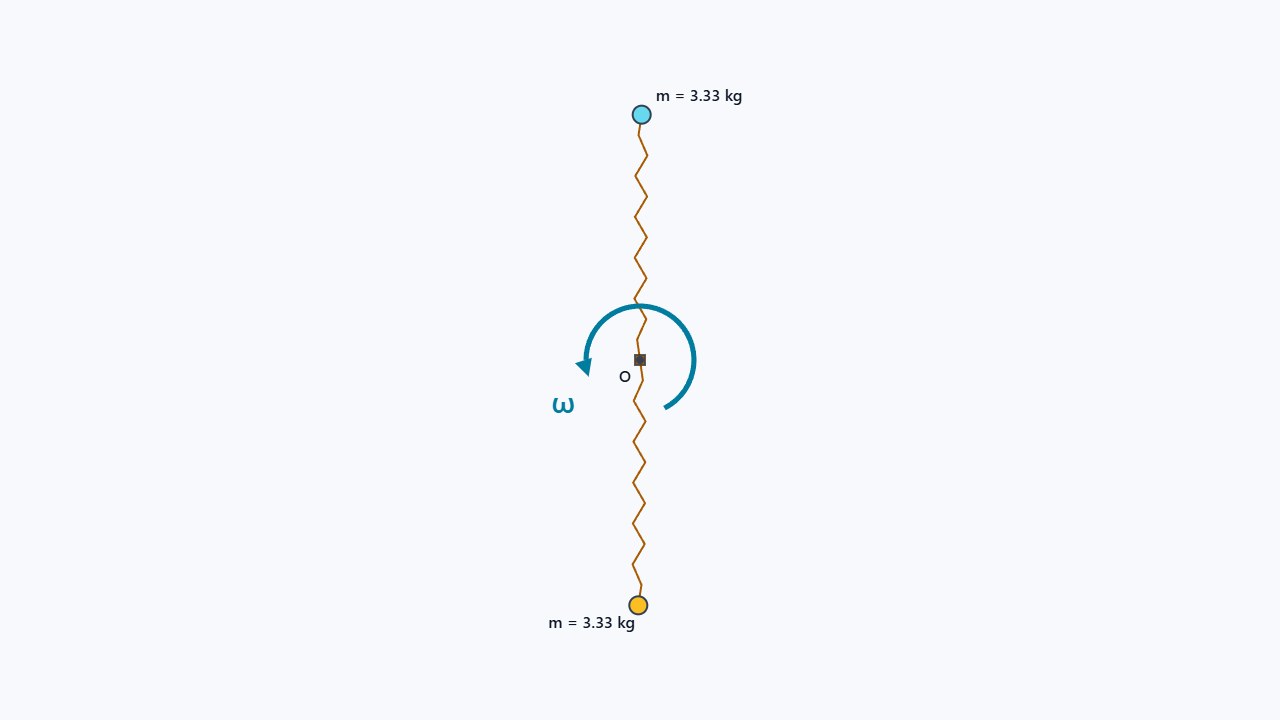
Unit 6 · Energy and Momentum of Rotating Systems
Conservation of Angular Momentum
Move mass toward a rotation axis, follow a complete orbit, and test angular-momentum conservation in a sticking turntable collision. View lesson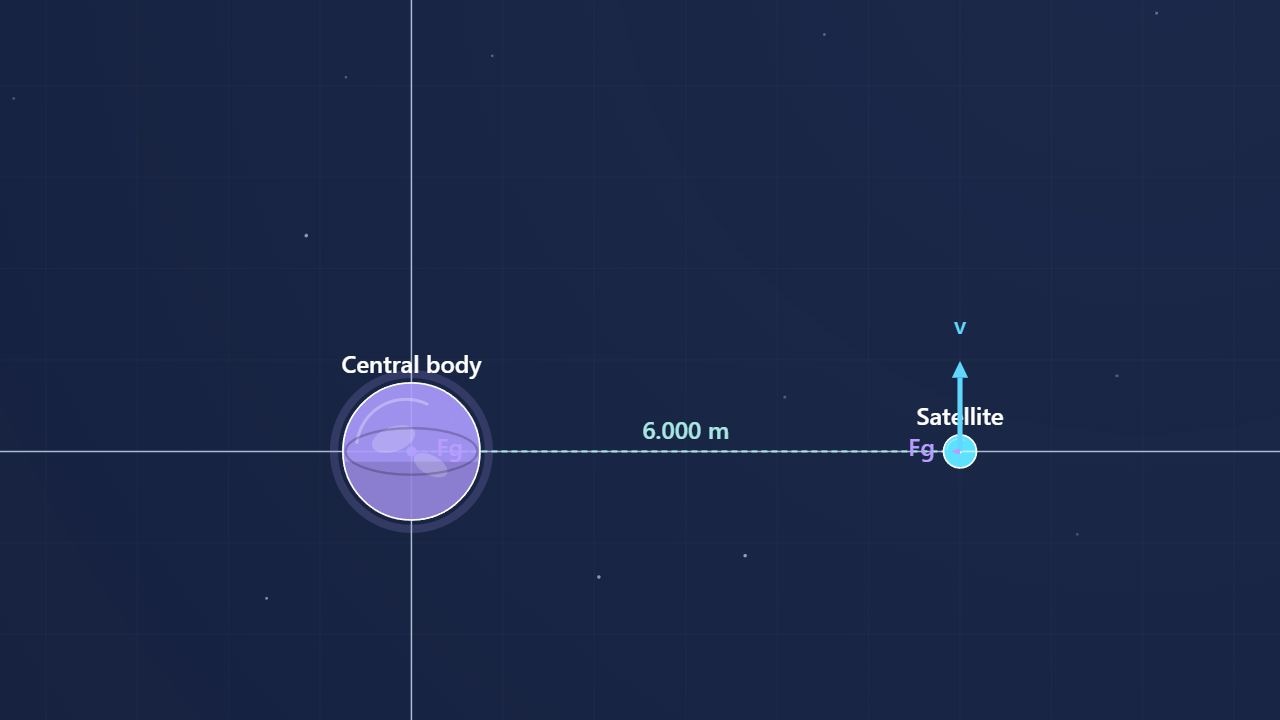
Unit 6 · Energy and Momentum of Rotating Systems
Elliptical Orbits and Gravitational Energy
Measure elliptical motion and equal-time swept areas, then connect orbital speed changes with gravitational energy and escape. View lessonUnit 7
Oscillations
Unit 7 · Oscillations
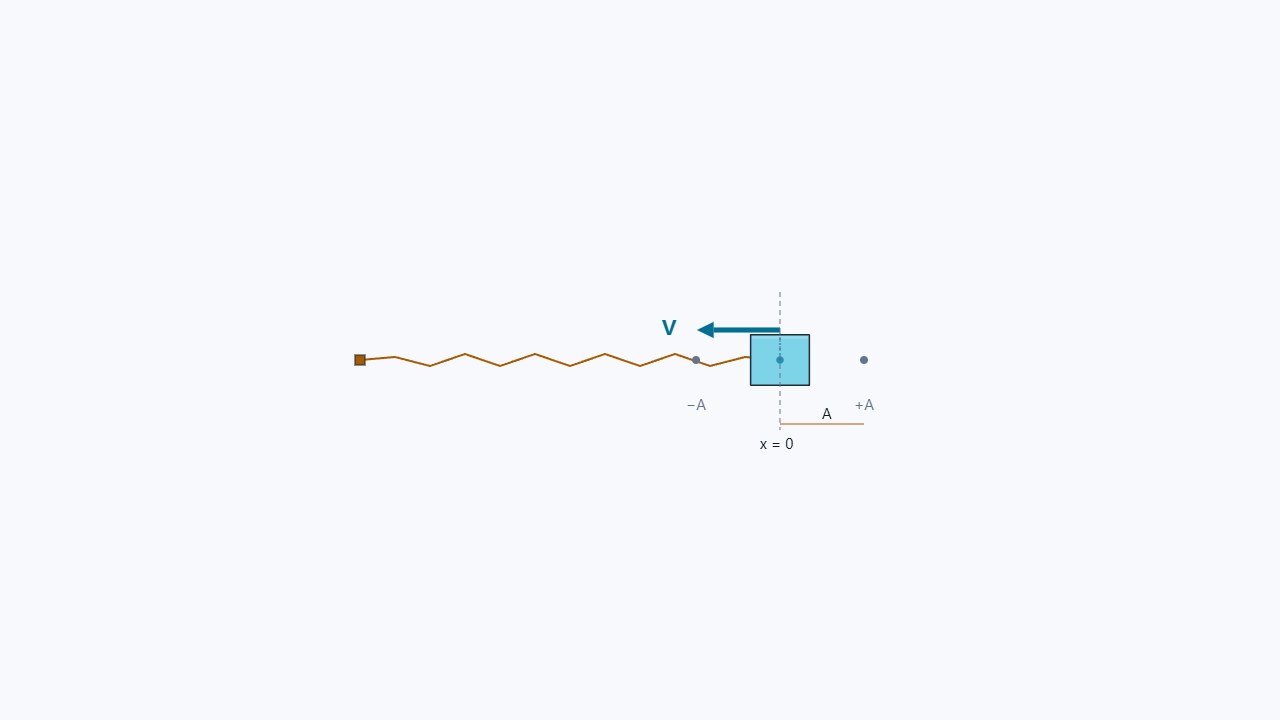
Simple Harmonic Motion and Energy
Follow a spring through exact center crossings and turning points, compare energy stores, and test a new amplitude. View lesson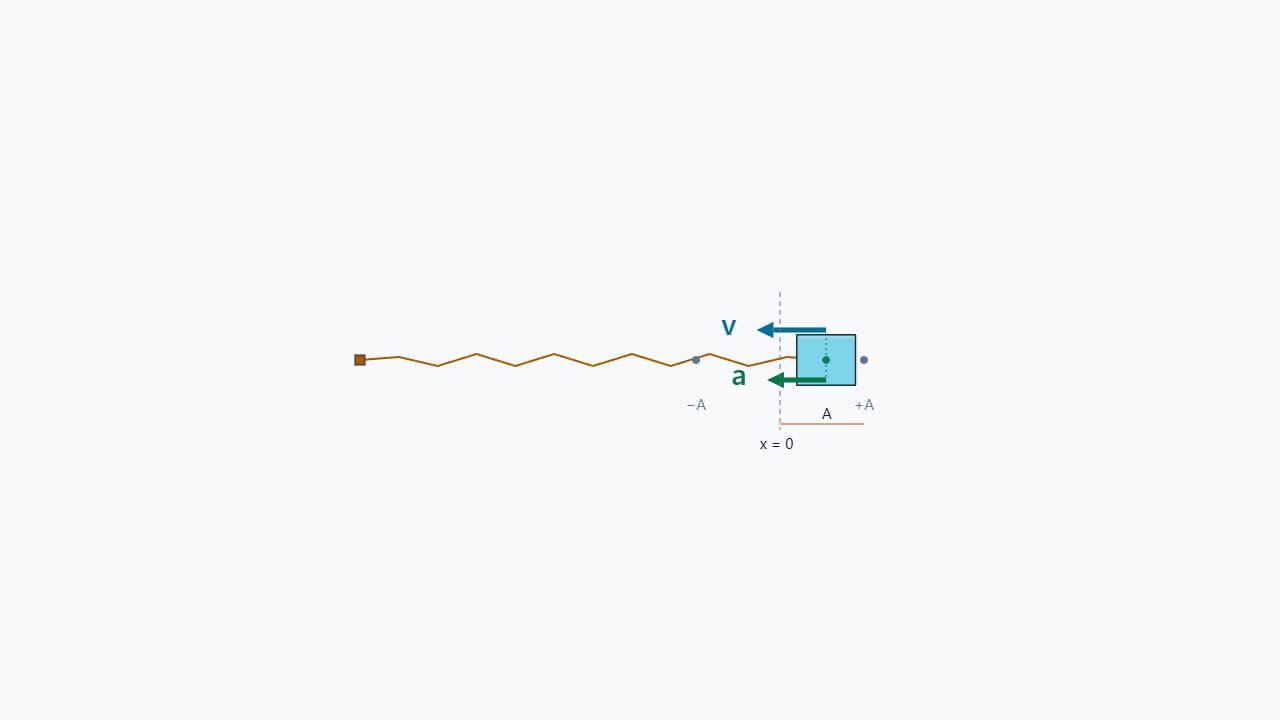
Unit 7 · Oscillations
Graphing Spring Simple Harmonic Motion
Connect spring motion to recorded displacement, velocity and acceleration graphs using slope, area and a shared time cursor. View lesson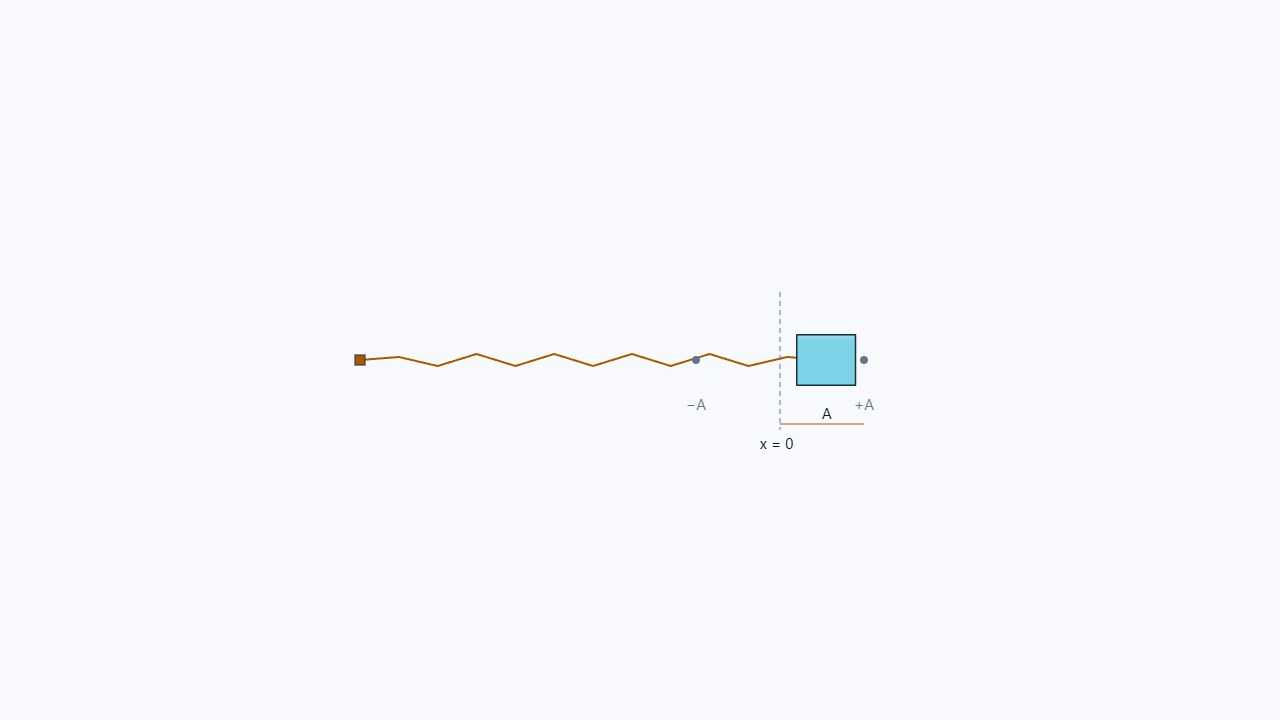
Unit 7 · Oscillations
Period of a Mass on a Spring
Measure complete cycles, vary mass, stiffness and amplitude, run two setups together, and calculate mass for a requested period. View lesson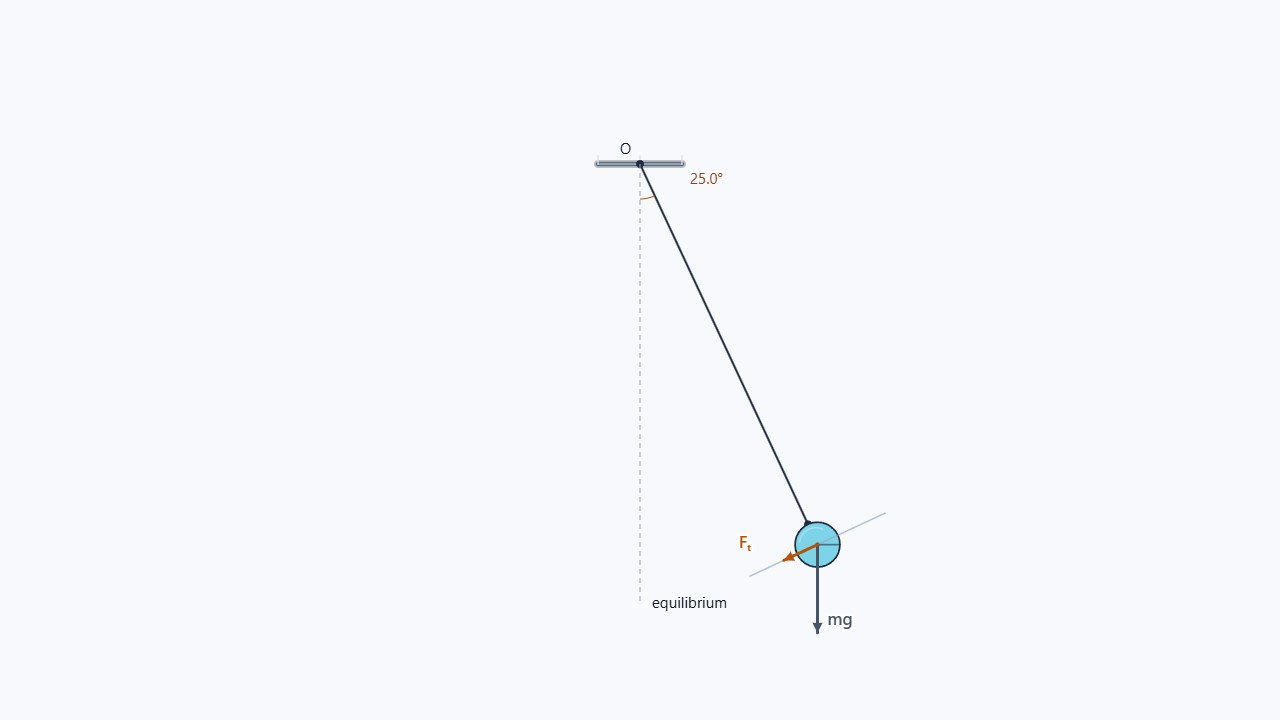
Unit 7 · Oscillations
Period of a Simple Pendulum
Measure pendulum cycles and investigate length, mass, angle and gravity using simultaneous comparisons, then calculate a length for a requested period. View lessonUnit 8
Fluids
Unit 8 · Fluids
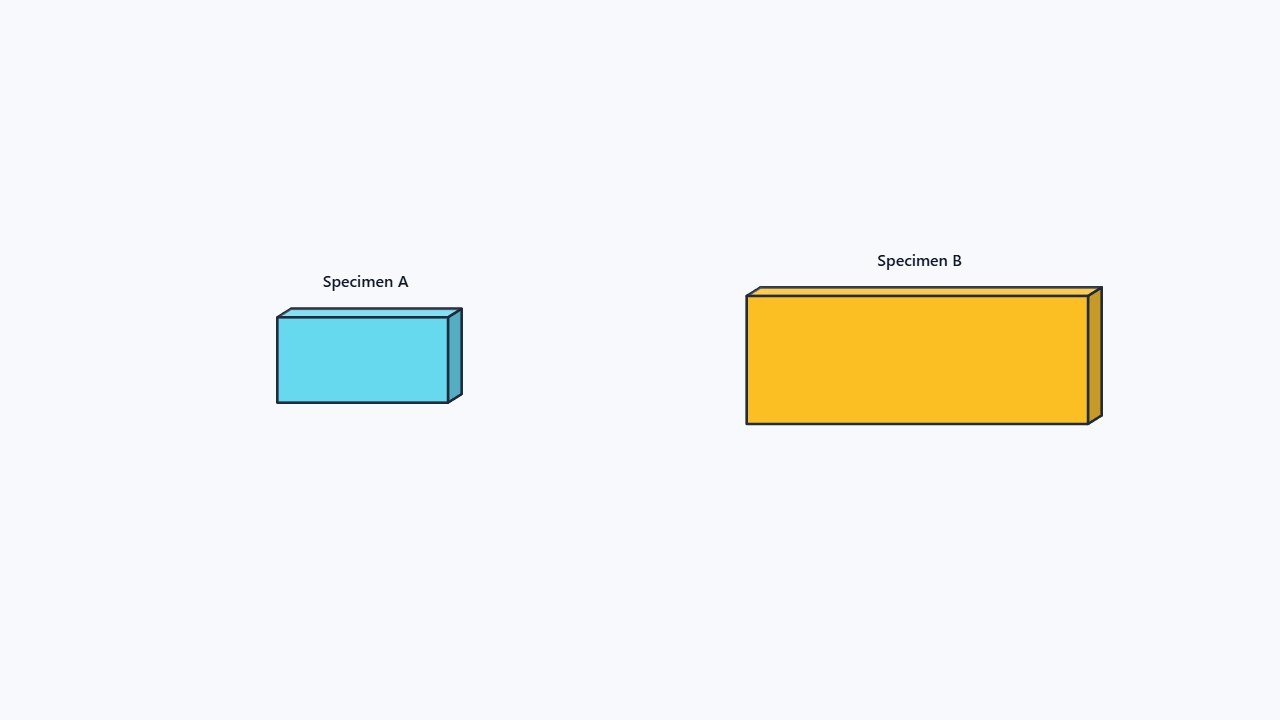
Density
Measure mass and occupied volume, compare specimens, and discover what density means from real measurements and graphs. View lesson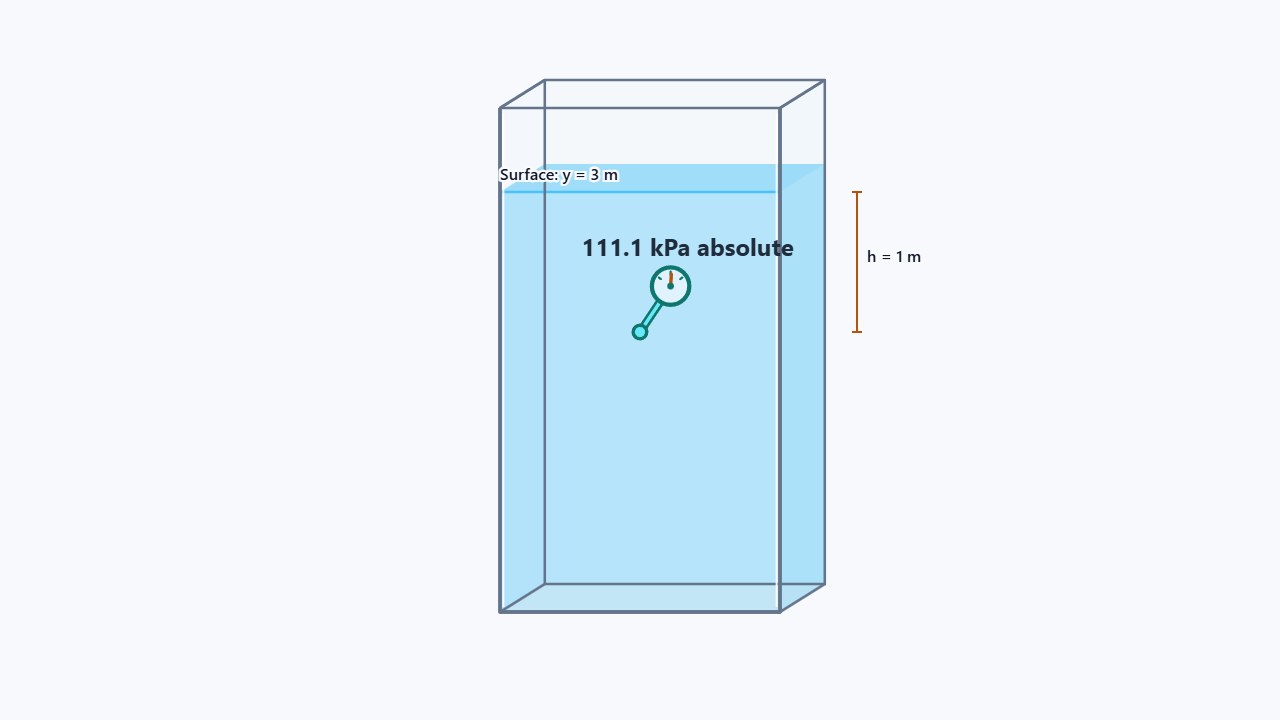
Unit 8 · Fluids
Pressure
Change force and area, measure pressure with depth, and connect atmospheric, absolute and gauge pressure using a movable sensor. View lesson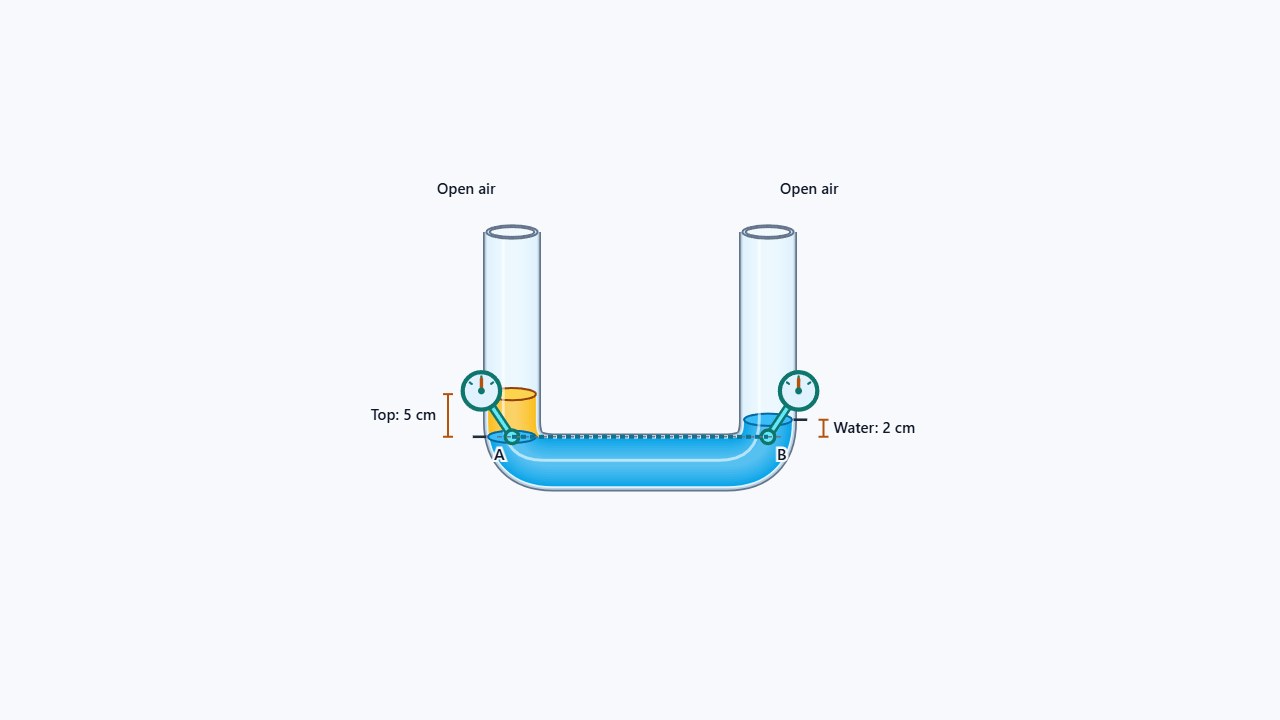
Unit 8 · Fluids
Hydrostatics
Compare connected liquid columns and use their measured levels to find an unknown gas pressure or liquid density. View lesson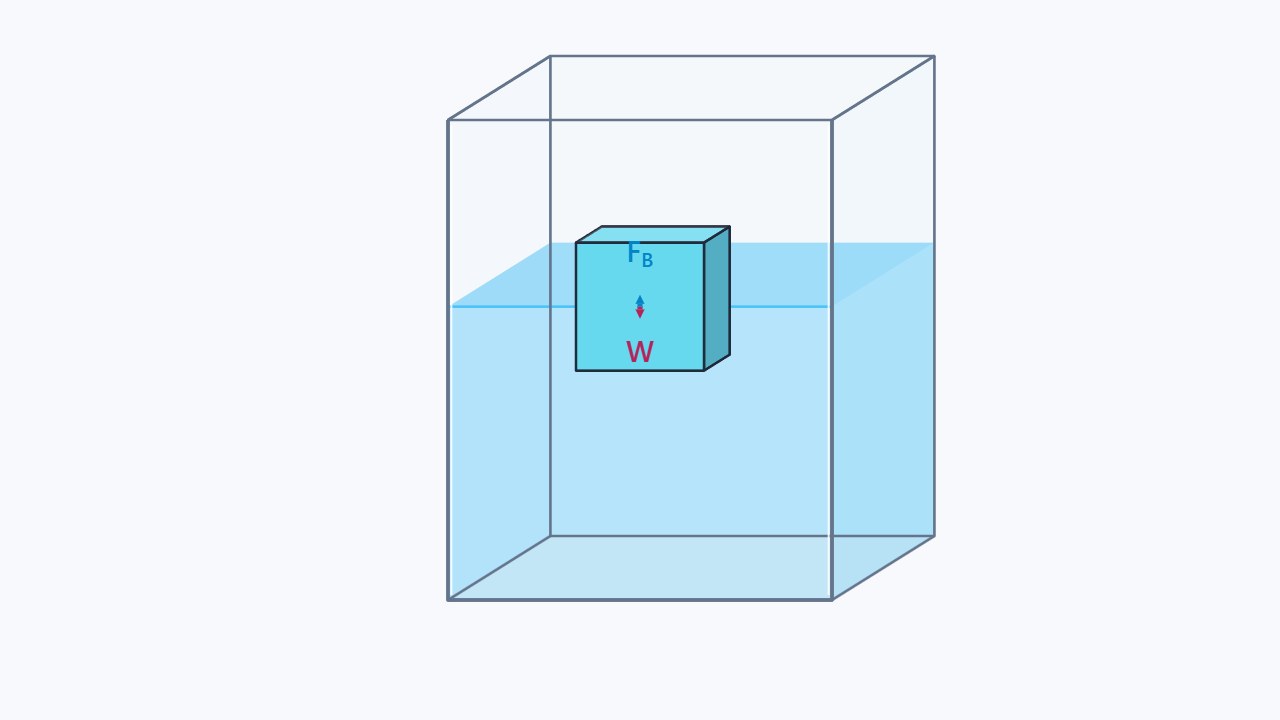
Unit 8 · Fluids
Buoyancy
Measure displaced fluid and connect buoyant force with floating, sinking, a loaded brass tube and a helium balloon. View lesson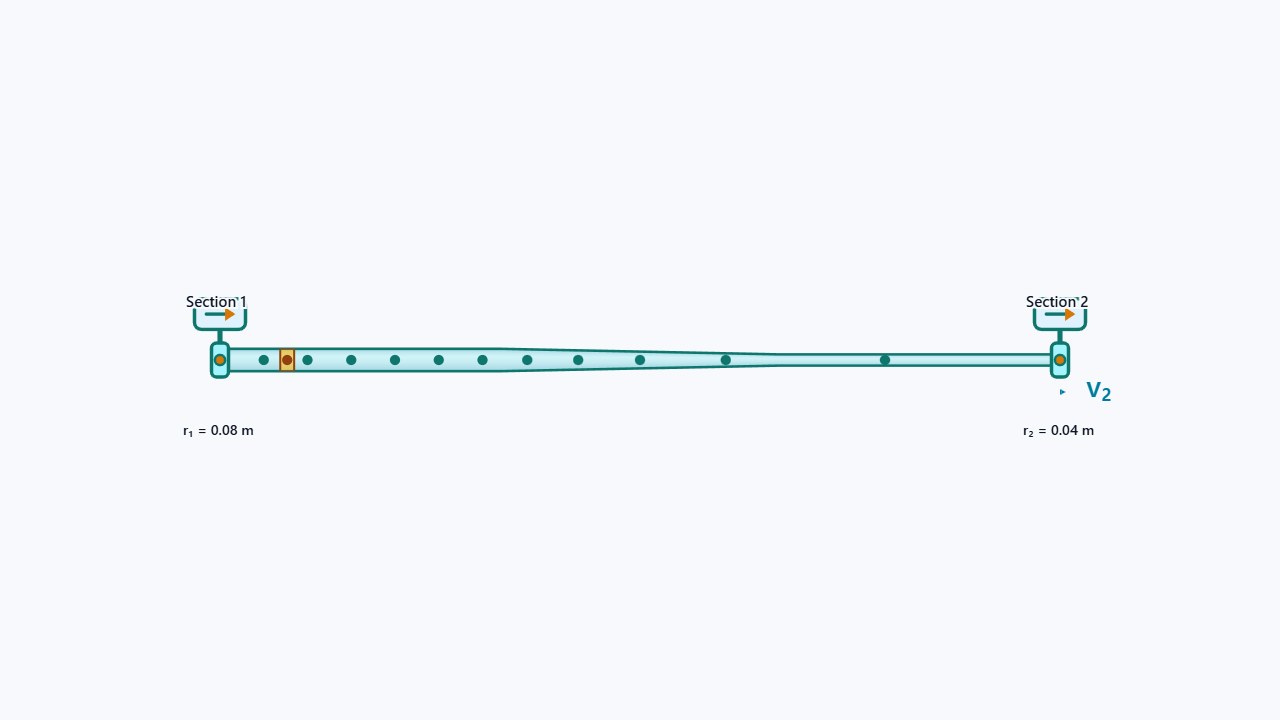
Unit 8 · Fluids
Continuity
Watch water move through changing pipe openings, develop the continuity equation, and connect volume flow with mass flow. View lesson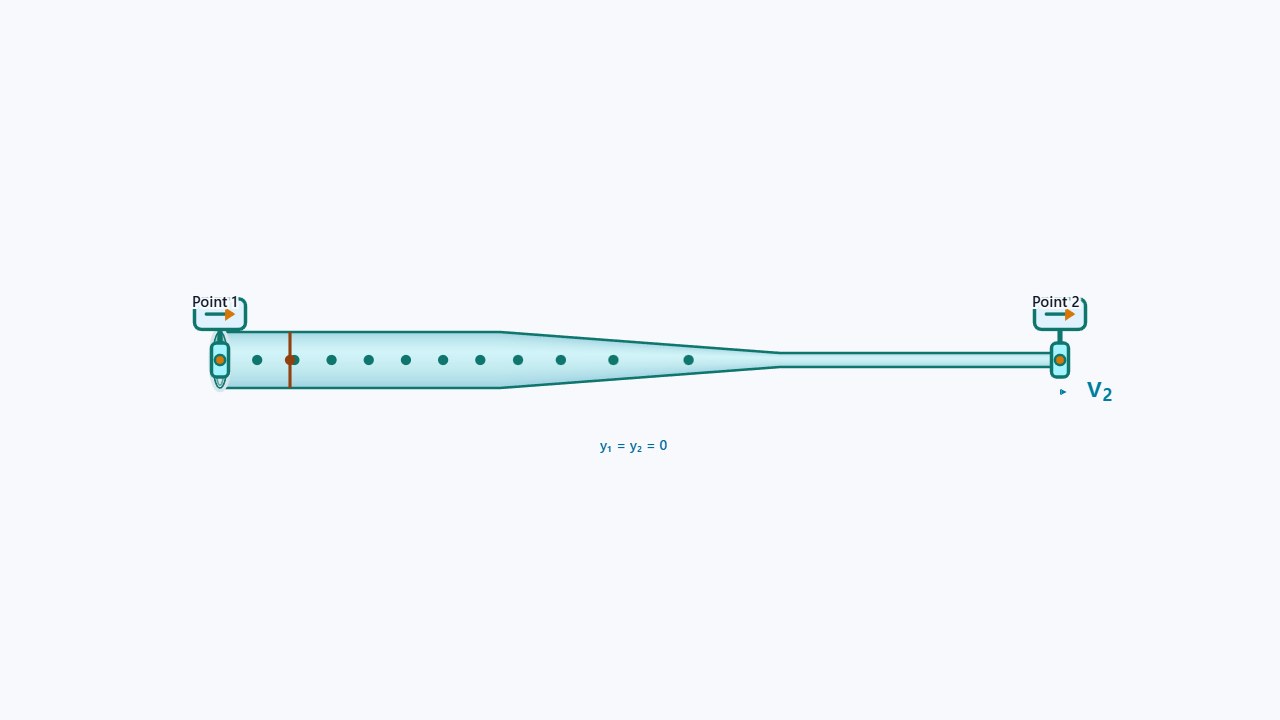
Unit 8 · Fluids
Bernoulli’s Principle
Observe pressure, speed and height in flowing water, develop Bernoulli’s equation from energy, and test the speed of a tank’s emerging jet. View lessonNo lessons found
Try another search or unit, or clear the filters to see all lessons.
Build your own model
Move from explanation to experiment
Add objects, forces, surfaces, springs, and measurements in the full Build Physics sandbox.