Solve the impact with both system totals
Keep velocity direction signs in momentum and squared speeds in kinetic energy. Predict when equal masses exchange velocities and when a lighter object rebounds.
 BuildPhysics
AP Physics 1 · Unit 4 · Momentum
Use momentum and energy together to follow an impact. Practice unequal-mass rebounds, moving targets, a slider that returns up a track and later flies off a table, and recoil stored in a spring.
12 questions6 conceptual · 6 calculation
Start practiceFree · No account required · Self-paced
 Open interactive practice
What you’ll practice
Keep velocity direction signs in momentum and squared speeds in kinetic energy. Predict when equal masses exchange velocities and when a lighter object rebounds.
Use track energy before and after an elastic collision, then use the table height to calculate flight time and landing range. Keep each event and height reference distinct.
At maximum compression, retain center-of-mass kinetic energy. For a rail launcher, conserve horizontal momentum during firing, then convert carriage recoil energy into spring extension.
A question from this set
Two carts collide with negligible outside horizontal impulse. Which condition identifies an elastic collision?
Try it in the practice setKey ideas
Two identical outgoing objects at half the incoming speed would have the correct total momentum but only half the initial kinetic energy. Both system conditions must be satisfied.
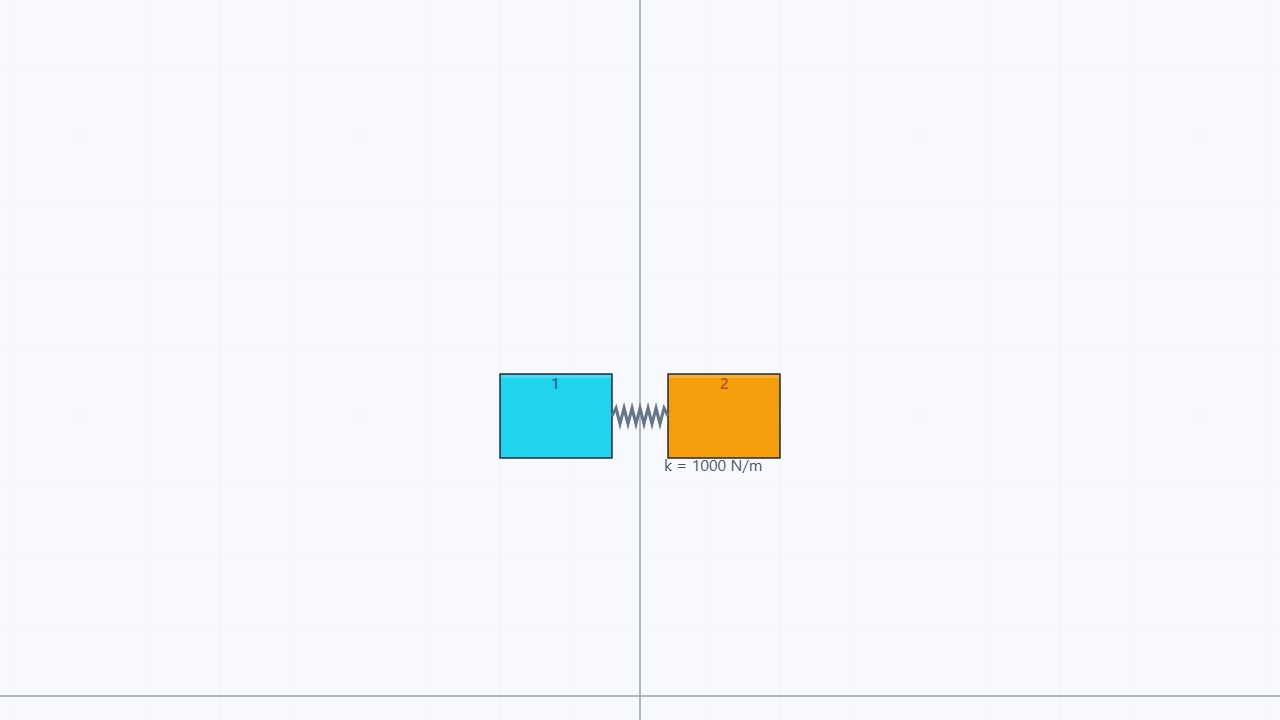
During a spring-mediated elastic interaction, kinetic energy becomes elastic potential energy before returning to motion. At maximum compression the objects share a velocity; they need not be at rest in the laboratory frame.
See the physics
After checking an answer or calculation parts, run the prepared scene. Compare before-and-after totals, inspect maximum spring compression, and read the measured collision, rebound, edge, and first-touchdown events for the track problem.
Use a hint for a starting point or open a worked solution to follow the reasoning. Your progress saves in this browser, so you can return to unfinished questions.
Begin with a conceptual question, then work through the calculations.