
Plan the investigation
What students will do
Compare the objects, change the walls, predict sinking, and calculate the displaced water.
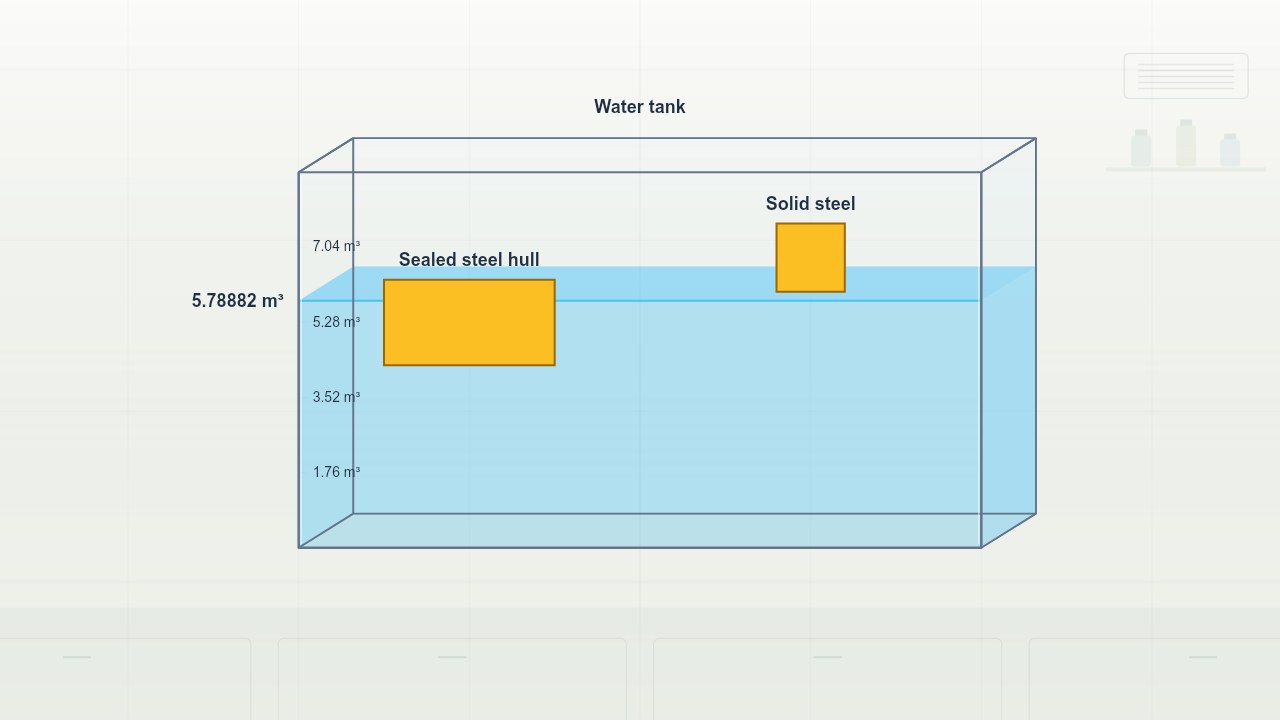
- Compare solid and hollow steel. Observe both prepared objects in water.
- Change wall thickness. Measure mass and submerged fraction while the hull’s outside volume stays fixed.
- Predict sinking. Calculate average density for thicker walls, then observe the result.
- Calculate displaced water. Use force balance to predict the floating hull’s submerged percentage.
What students will learn
- Distinguish steel material density from hull average density.
- Predict floating or sinking from mass and outside volume.
- Connect displaced water with floating force balance.
Common misconception
Must every object made of steel sink?
A sealed hull’s mass is spread over its full outside volume, including the enclosed space.