Separate radial and tangential effects
Distinguish a change in velocity direction from a change in speed. Predict the path after a tether is released.
 BuildPhysics
AP Physics 1 · Unit 2, Part 2 · Circular Motion and Gravity
Identify the real forces that turn an object. Compare horizontal tethers, flat road curves, rotating platforms, and conical pendulums.
12 questions6 conceptual · 6 calculation
Start practiceFree · No account required · Self-paced
 Open interactive practice
What you’ll practice
Distinguish a change in velocity direction from a change in speed. Predict the path after a tether is released.
Calculate inward acceleration, rope tension, revolution time, and limiting speed. Compare riders at different radii on one platform.
Find the horizontal circle radius and resolve the full rope tension into vertical and inward components.
A question from this set
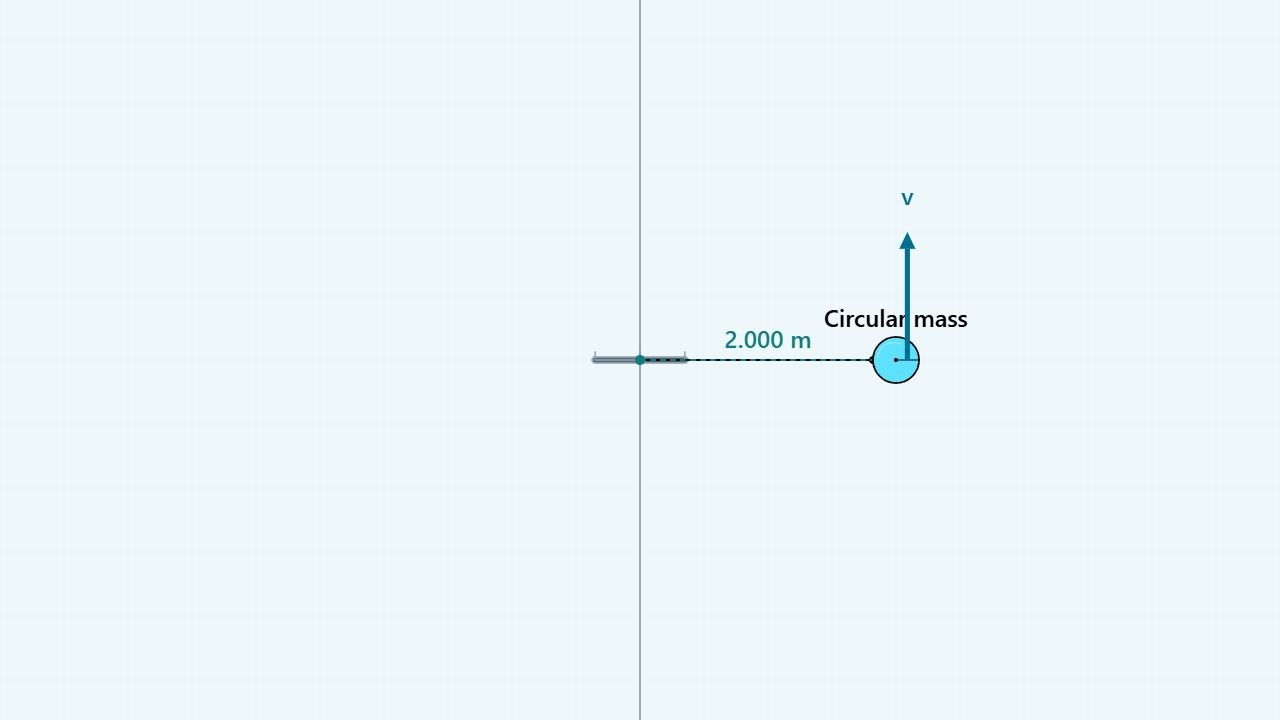
A small puck follows a horizontal circle at constant speed. How are its velocity and net horizontal force directed at any instant?
Try it in the practice setKey ideas
A rope, road friction, or another real interaction supplies the required inward net force. Do not add a separate centripetal-force arrow to those forces.
Velocity is tangent to the path. A perpendicular net force changes its direction; a tangential component changes its speed.
See the physics
After attempting a question, run the tether, curve, platform, or conical-pendulum trial. Compare the measured motion with the inward force and inspect the release or grip-limit comparisons.
Use a hint for a starting point or open a worked solution to follow the reasoning. Your progress saves in this browser, so you can return to unfinished questions.
Begin with a conceptual question, then work through the calculations.