Recognize balanced forces
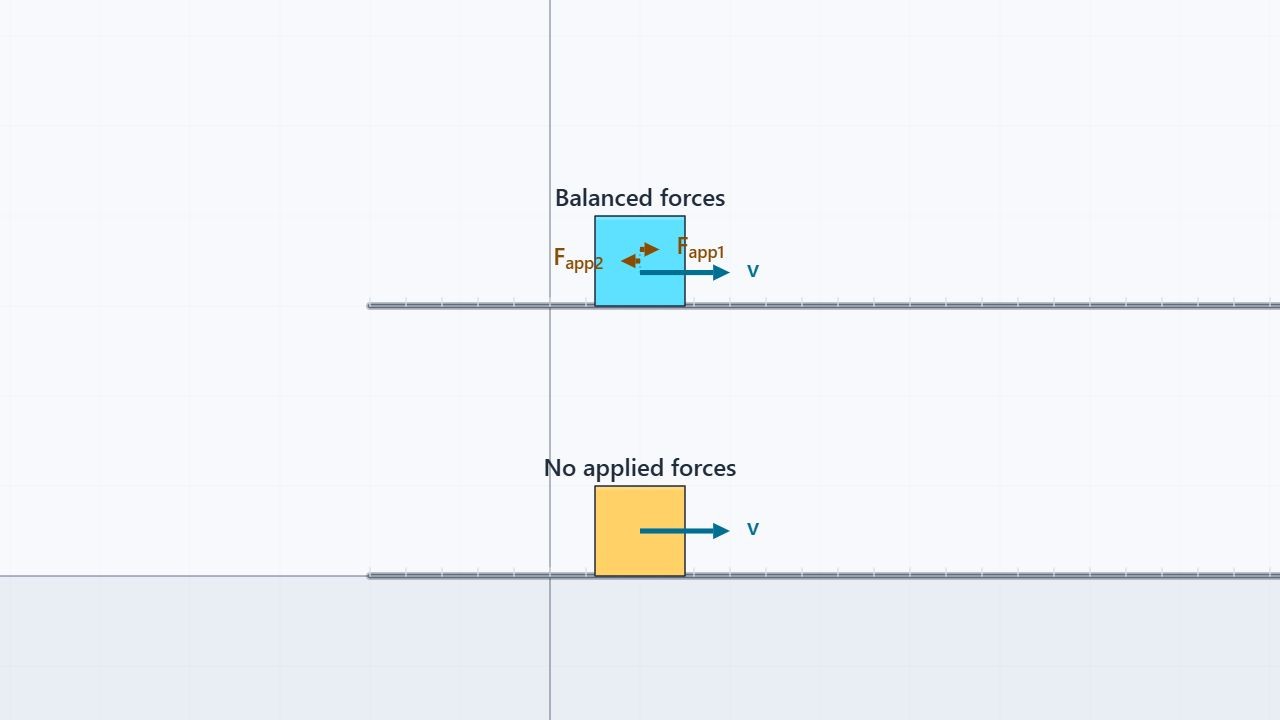
Use zero acceleration to identify a zero net force. Explain why an object can keep moving after its original push ends.
 BuildPhysics
AP Physics 1 · Unit 2, Part 1 · Forces
Explain inertia and solve balanced-force problems. Compare rest with constant velocity, then calculate supporting forces and tensions for shelves, cables, towing, and angled pulls.
11 questions5 conceptual · 6 calculation
Start practiceFree · No account required · Self-paced
 Open interactive practice
What you’ll practice
Use zero acceleration to identify a zero net force. Explain why an object can keep moving after its original push ends.
Balance horizontal and vertical components for steady towing and angled pulls. Account for how an upward pull changes the normal force.
Find normal forces and cable tensions for resting and steadily moving objects, including a suspended display held by two unequal cable angles.
A question from this set
A parcel rests on a level shelf. Its acceleration is zero. What can you conclude about the forces acting on the parcel?
Try it in the practice setKey ideas
Balanced external forces mean zero acceleration. An object can remain at rest or continue at constant velocity, depending on its initial motion.
For equilibrium, horizontal components sum to zero and vertical components sum to zero. Two angled tensions can support a weight even though neither tension equals that weight by itself.
See the physics
After checking your answer, watch a resting parcel or a steadily moving object. Compare force directions and reveal numerical values to check the normal force or tension you calculated.
Use a hint for a starting point or open a worked solution to follow the reasoning. Your progress saves in this browser, so you can return to unfinished questions.
Begin with a conceptual question, then work through the calculations.