
Plan the investigation
What students will do
Record individual components, calculate both system totals yourself, then check the app’s totals. Reset between the four trials.
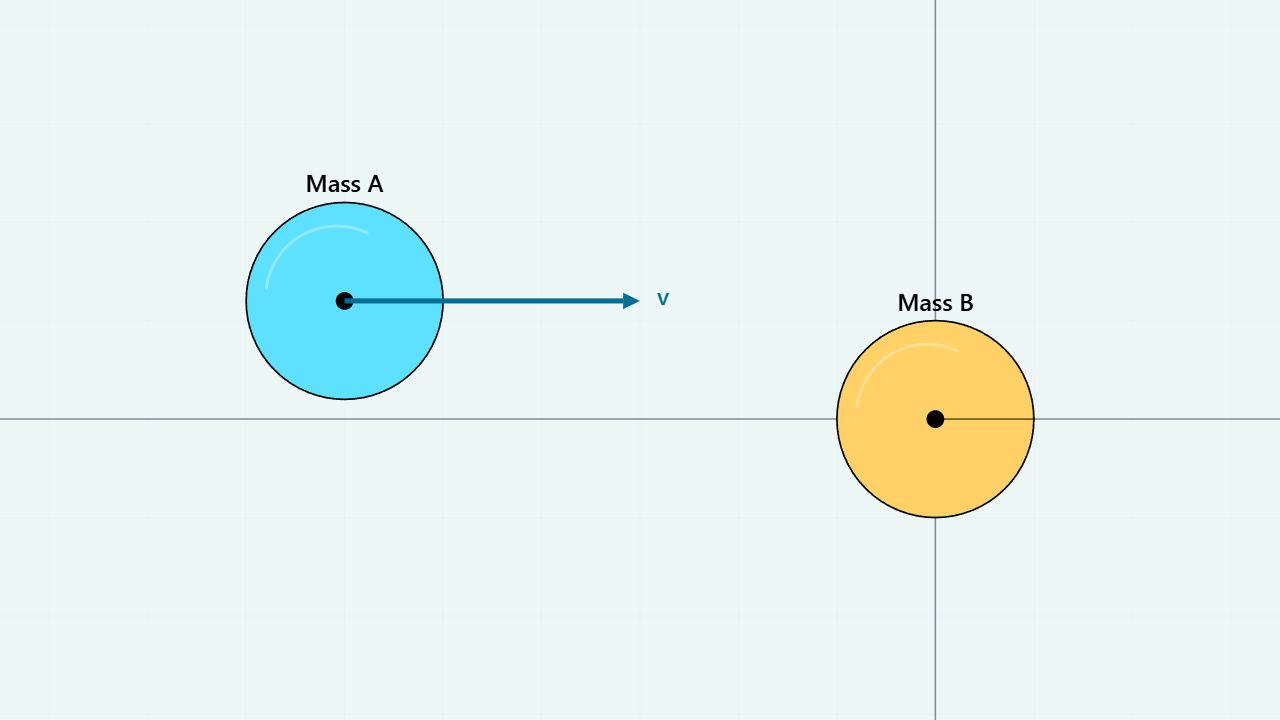
- Simple bounce with momentum vectors. Keep B stationary and let A approach with a small y offset. Read each disk’s momentum components, add them, and compare the before and after totals separately in x and y.
- Simple sticking collision with velocity vectors. Keep the same starting motion and choose Stick. Read velocity components, calculate each momentum component using p = mv, and check both totals.
- Advanced bounce with velocity vectors. Give both disks initial x and y velocity components. Use measured velocities and masses to calculate total momentum before and after bouncing.
- Advanced sticking collision with momentum vectors. Keep the advanced starting settings and choose Stick. Add the displayed momentum components directly and mark whether each total is conserved.
What students will learn
- Add signed momentum components for the two-disk system.
- Calculate momentum components from measured velocity components and mass.
- Check x and y momentum conservation separately for bounce and stick in both setup modes.
Common misconception
Does an offset collision create y momentum?
The disks can acquire opposite y momenta whose sum is still zero. Momentum conservation applies to each component of the system total, even when individual objects deflect.