
Plan the investigation
What students will do
Start with a guided comparison, then plan an investigation, analyze a graph, and check a prediction.
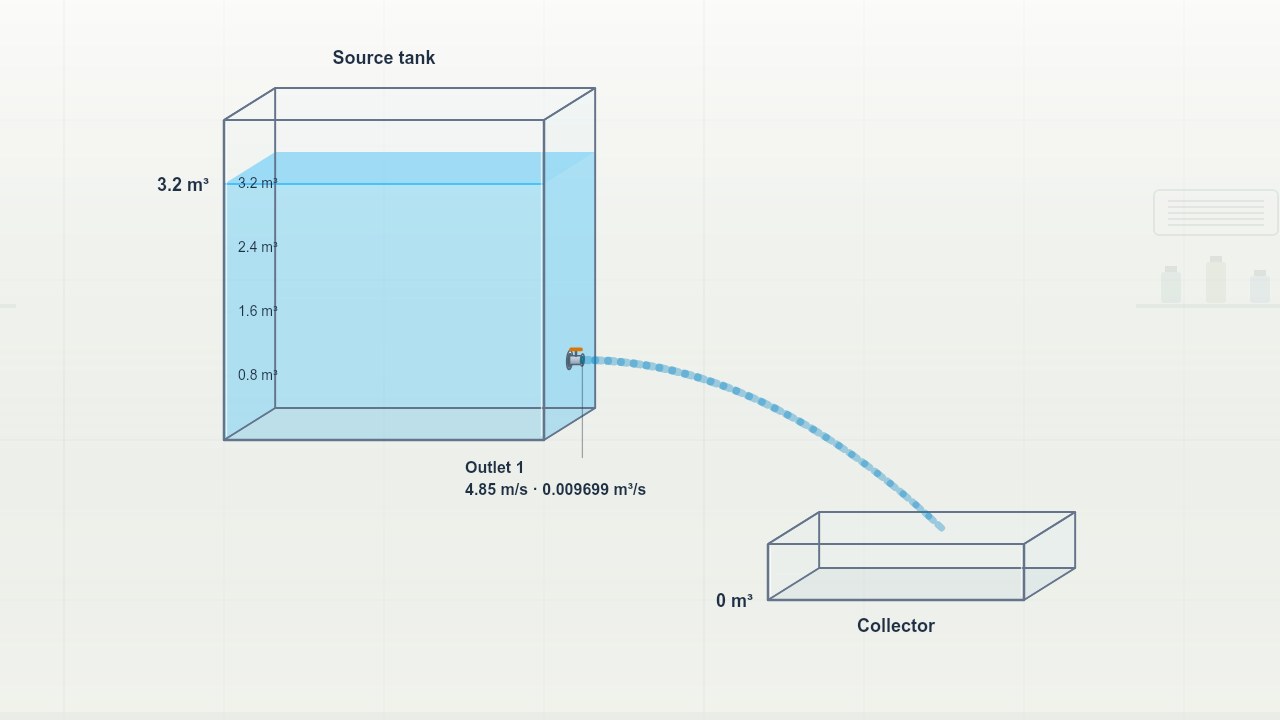
- Compare outlet areas. Measure exit speed, volume flow rate, and horizontal range for different opening areas at the same liquid level.
- Design and collect. Choose at least five source fill heights. Keep outlet height, opening area, and collector position fixed.
- Linearize the range data. Transform measured liquid height above the outlet and jet range to form a straight line. Determine the jet’s vertical drop.
- Explain and predict. Connect outflow energy with projectile motion, then predict and check range for an unused source fill height.
What students will learn
- Distinguish outlet area, exit speed, and volume flow rate.
- Connect liquid height with horizontal jet motion.
- Infer a vertical drop from a graph and test a range prediction.
Common misconception
Does doubling height above the outlet double the jet range?
Students use transformed range data to test the combined outflow and projectile-motion model.