Compare the two directions
Decide whether speed increases or decreases when velocity and acceleration point together or oppose each other. Follow a cart through a reversal.
 BuildPhysics
AP Physics 1 · Unit 1 · Kinematics
Connect the directions of velocity and acceleration to speeding up, slowing down, and reversing. Then calculate motion for accelerating carts, braking vehicles, and a reaction-time interval.
12 questions6 conceptual · 6 calculation
Start practiceFree · No account required · Self-paced
 Open interactive practice
What you’ll practice
Decide whether speed increases or decreases when velocity and acceleration point together or oppose each other. Follow a cart through a reversal.
Use initial velocity, elapsed time, displacement, and acceleration to find an unknown. Compare trials with doubled time, acceleration, or travel distance.
Separate motion during a driver’s reaction time from braking. Read acceleration from a velocity–time slope and keep track of the positive direction.
A question from this set
A cart is moving left and has a constant leftward acceleration. What happens to its speed?
Try it in the practice setKey ideas
For constant acceleration, v = v₀ + at. Velocity changes by equal amounts in equal time intervals. Its value may pass through zero while acceleration continues.
Use v² = v₀² + 2aΔx when time is not supplied. A reaction interval adds distance before braking starts, so the complete stopping distance includes both stages.
See the physics
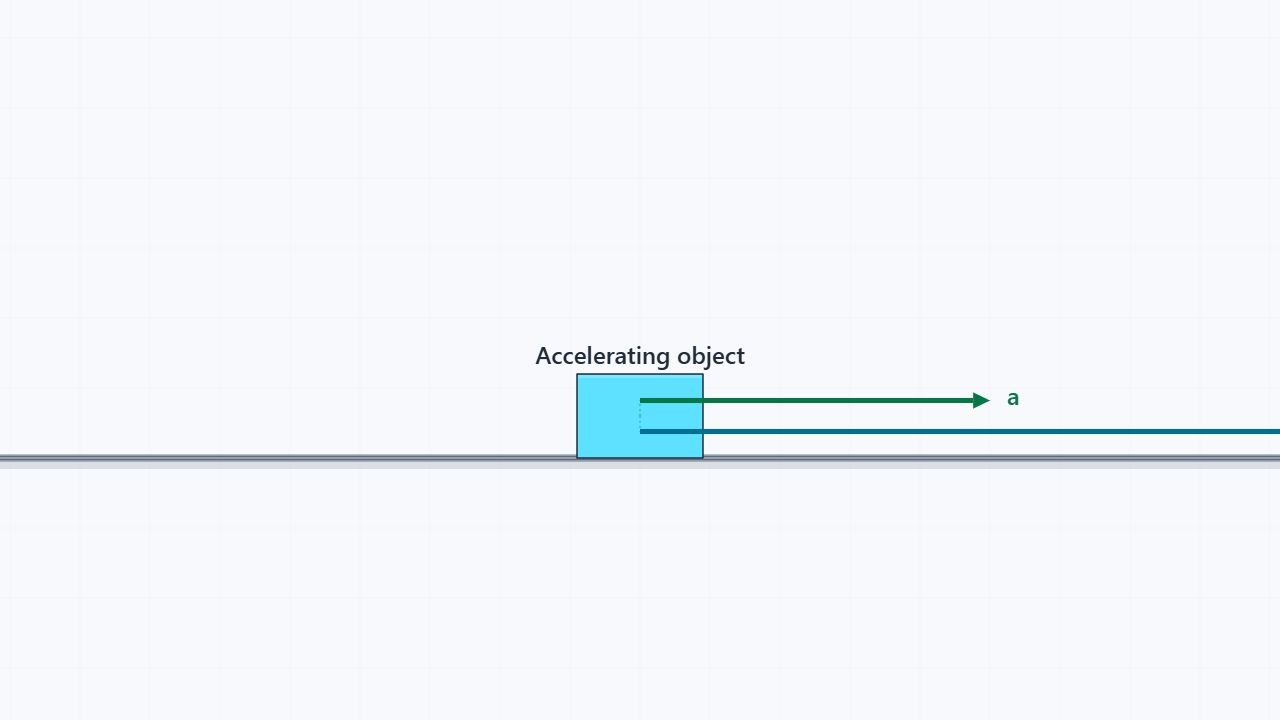
Check an answer, then compare velocity and acceleration arrows with the spacing of equal-time motion dots. In braking and reversal trials, inspect when velocity reaches zero and what happens afterward.
Use a hint for a starting point or open a worked solution to follow the reasoning. Your progress saves in this browser, so you can return to unfinished questions.
Begin with a conceptual question, then work through the calculations.