Interpret a position graph
Use slope to find velocity. Distinguish a cart’s location from its direction, and recognize a stop from a horizontal trace.
 BuildPhysics
AP Physics 1 · Unit 1 · Kinematics
Turn position–time and velocity–time graphs into descriptions of motion. Work through straight-line traces, stops, return journeys, and two carts sharing a track coordinate.
12 questions6 conceptual · 6 calculation
Start practiceFree · No account required · Self-paced
 Open interactive practice
What you’ll practice
Use slope to find velocity. Distinguish a cart’s location from its direction, and recognize a stop from a horizontal trace.
Read constant positive or negative velocity and calculate displacement from the area over a selected time interval.
Analyze routes with pauses and reversals. Find when two carts occupy the same position and explain what a graph intersection means.
A question from this set
Which description matches the straight rising line on this position–time graph?
Try it in the practice setKey ideas
On a position–time graph, velocity is the change in position divided by the elapsed time. A straight line has constant slope, even when its plotted positions increase.
A higher position trace means a larger coordinate. A steeper position trace means a larger velocity magnitude. On a velocity–time graph, the height itself gives velocity.
See the physics
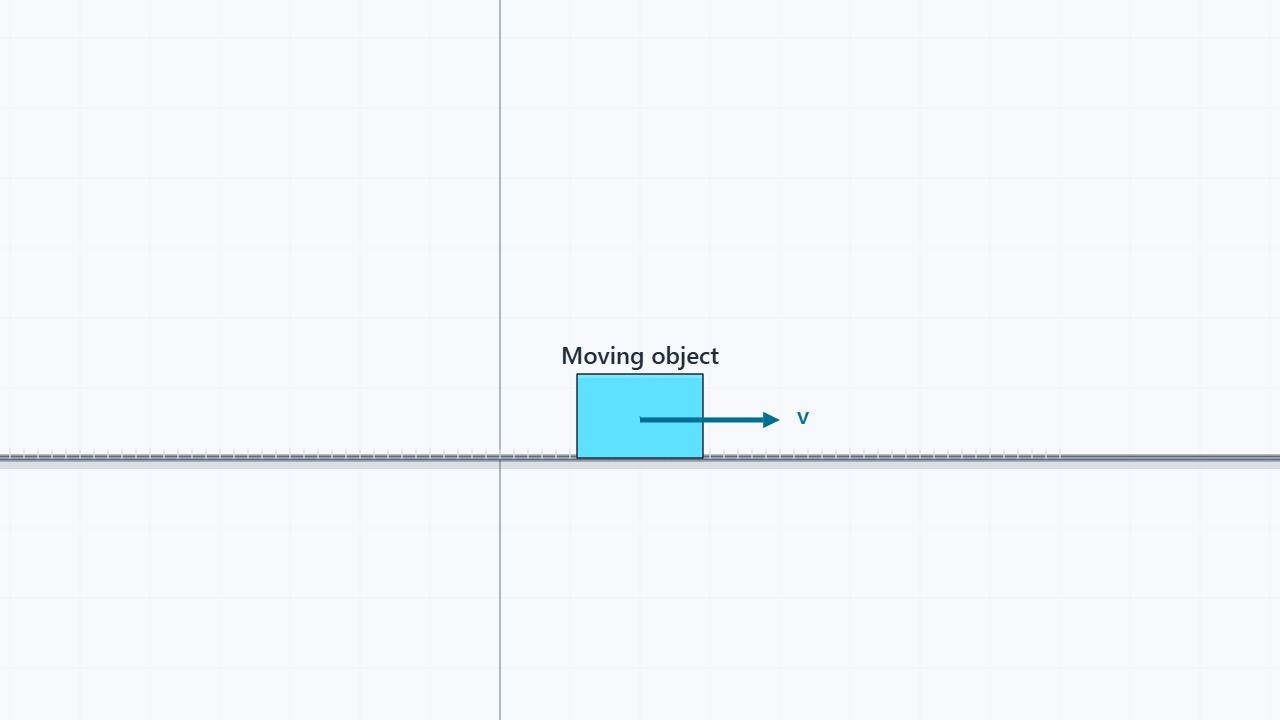
After checking a response, run the prepared trip. Compare the cart’s position and direction with the given graph and recorded motion. Later questions use stops, negative velocity, and two-cart comparisons.
Use a hint for a starting point or open a worked solution to follow the reasoning. Your progress saves in this browser, so you can return to unfinished questions.
Begin with a conceptual question, then work through the calculations.