Separate velocity and acceleration
Run trials with matching and opposing directions to explain speeding up and slowing down.
 BuildPhysics
AP Physics 1 · Unit 1 · Kinematics
Change velocity and acceleration, observe a reversal, and connect motion graphs with the constant-acceleration equations.
Start lesson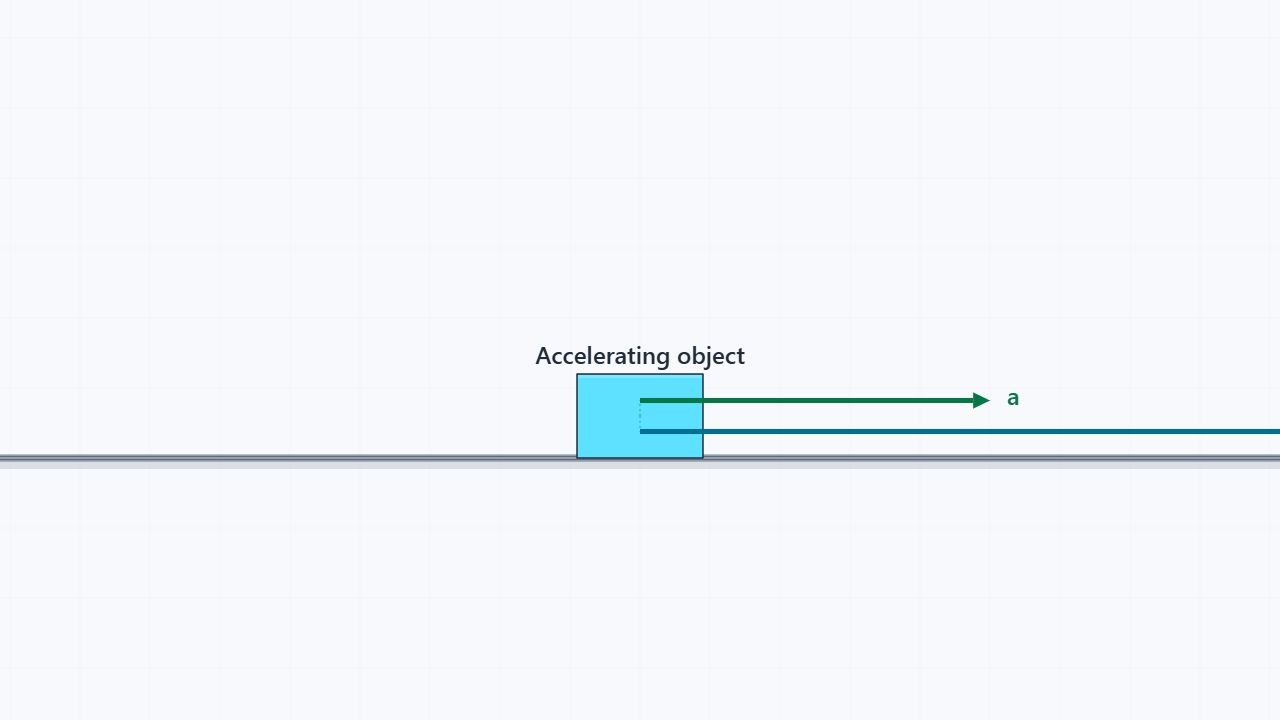 Start guided lesson
Learn by doing
Run trials with matching and opposing directions to explain speeding up and slowing down.
Measure velocity–time slope and area, then compare the position graph.
Use the kinematics relationships to predict a motion and check it against the simulation.
The big idea
Constant acceleration means velocity changes at a steady rate: vf = vi + aΔt. Constant velocity is a different condition.
Use Δx = viΔt + ½a(Δt)2. The velocity–time area represents that same displacement.
A quick comparison
Keep initial velocity fixed and compare two constant accelerations.
Larger acceleration → steeper velocity graph
The first scene is set up. Start the lesson and explore.