Resolve and combine vectors
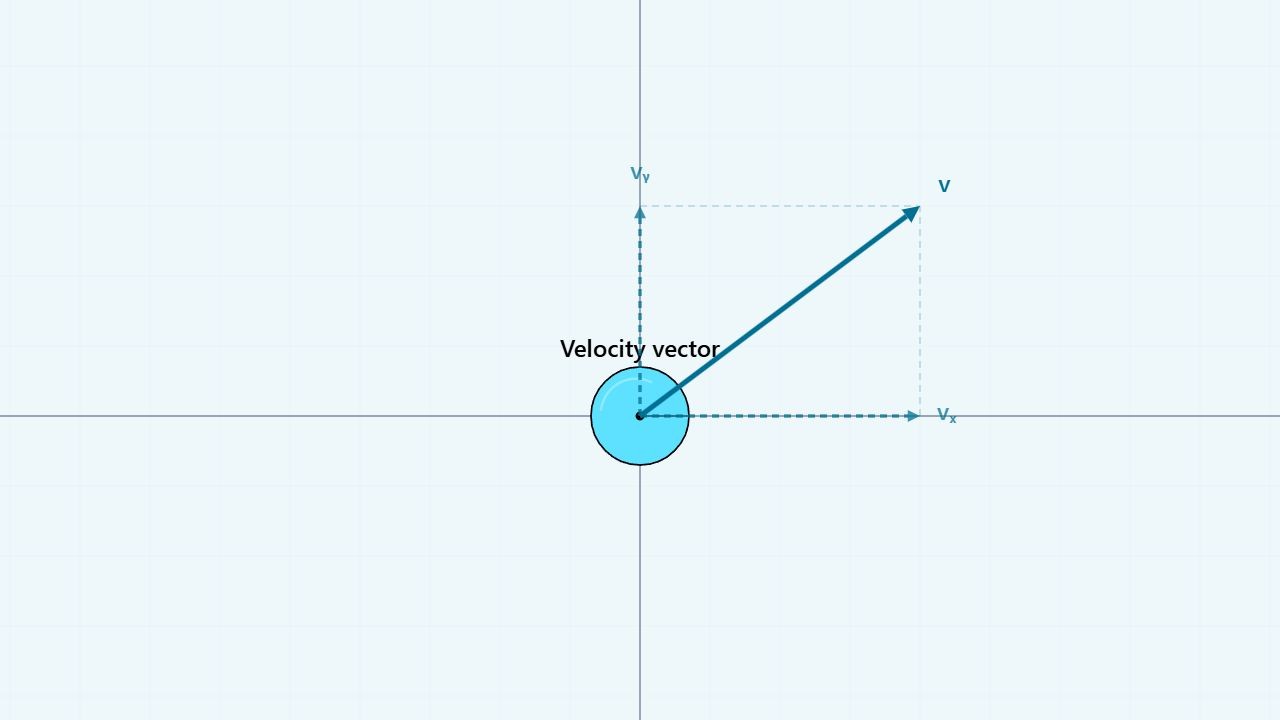
Use horizontal and vertical components to add several displacements or reconstruct an unknown vector. Interpret angles measured from north as well as from east.
 BuildPhysics
AP Physics 1 · Unit 1 · Kinematics
Add displacements in two dimensions and describe motion from different reference frames. Work with survey routes, a moving train, and river crossings with and without downstream drift.
13 questions6 conceptual · 7 calculation
Start practiceFree · No account required · Self-paced
 Open interactive practice
What you’ll practice
Use horizontal and vertical components to add several displacements or reconstruct an unknown vector. Interpret angles measured from north as well as from east.
Combine a person’s velocity relative to a train with the train’s velocity relative to the ground. Name the reference frame for each quantity.
Find crossing time and downstream drift when aiming across the water. Compare that route with an upstream heading chosen to reach the opposite bank directly.
A question from this set
Two displacement vectors are placed head to tail. If their order is reversed, with each vector’s magnitude and direction unchanged, what happens to the resultant?
Try it in the practice setKey ideas
Horizontal components add to give the horizontal resultant; vertical components give the vertical resultant. Reversing addition order changes the route but leaves the vector sum unchanged.
For river motion, boat velocity relative to the ground is boat velocity relative to the water plus water velocity relative to the ground. Crossing time depends on the across-river component.
See the physics
After checking your work, switch the order of a displacement route or compare train and river trials. Use the recorded paths and component arrows to relate the motion in each reference frame.
Use a hint for a starting point or open a worked solution to follow the reasoning. Your progress saves in this browser, so you can return to unfinished questions.
Begin with a conceptual question, then work through the calculations.