
Plan the investigation
What students will do
Start with a guided comparison, then plan an investigation, analyze a graph, and check a prediction.
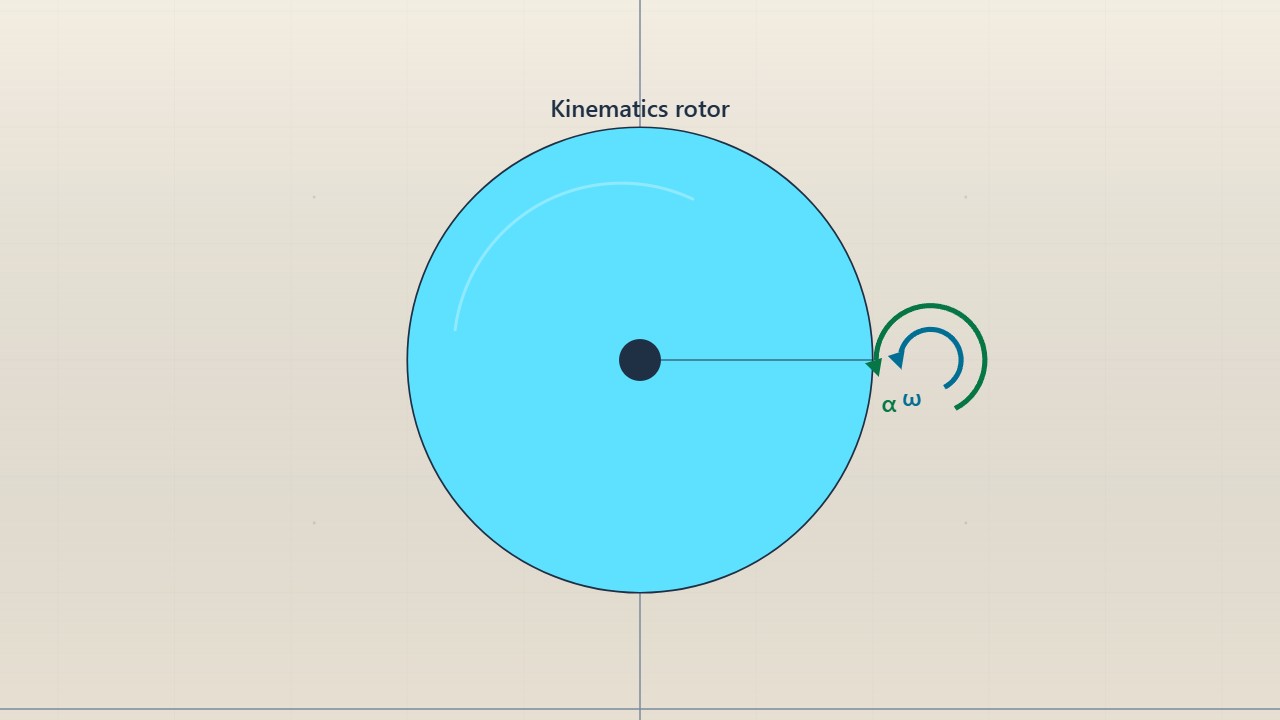
- Compare accelerations. Measure angular displacement and angular velocity after the same time for several angular accelerations.
- Design and collect. Keep angular acceleration fixed and start from rest. Choose at least five times and plan consistent displacement readings.
- Linearize the data. Transform angular displacement and elapsed time to form a straight line. Infer angular acceleration from its slope.
- Explain and predict. Evaluate the displacement pattern, then predict and test the angular displacement at an unused time.
What students will learn
- Distinguish angular displacement, velocity, and acceleration.
- Recognize quadratic displacement during constant angular acceleration from rest.
- Determine angular acceleration from a transformed graph.
Common misconception
Does constant angular acceleration mean equal angles in equal times?
Students compare how angular velocity and angular displacement change over time.