
Plan the investigation
What students will do
Use the student handout to organize predictions, measurements, and explanations.
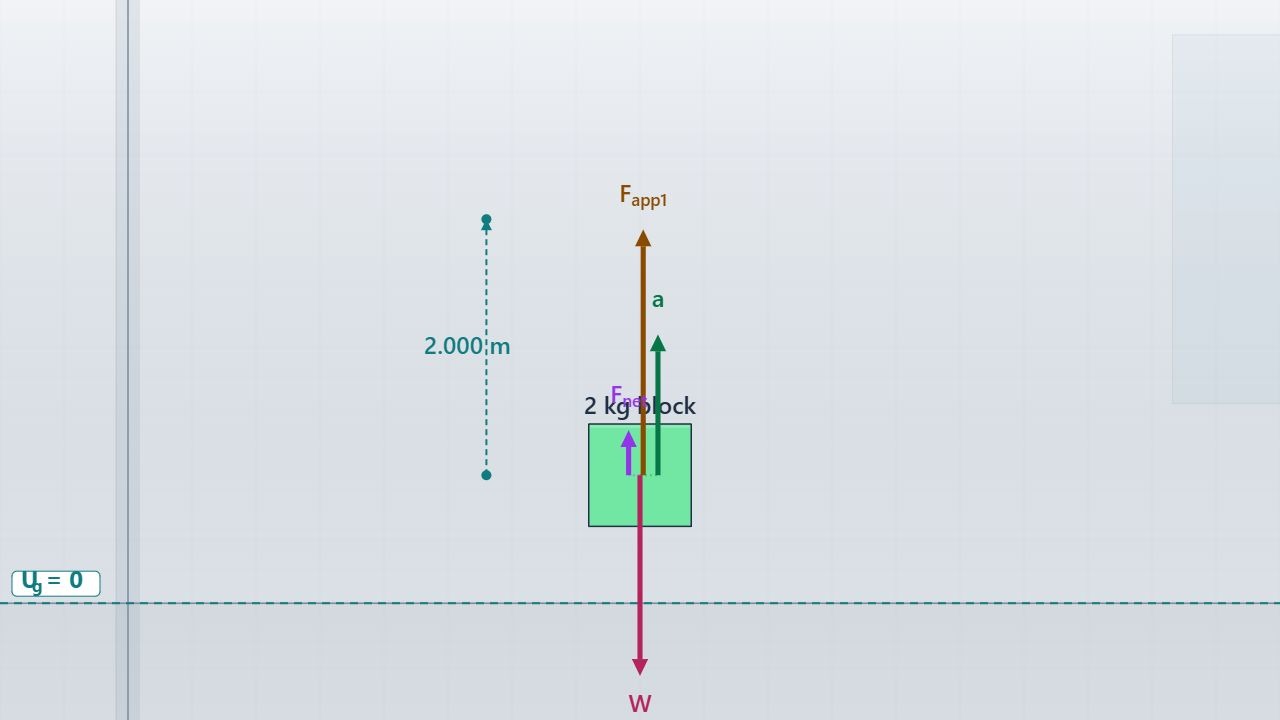
- Predict the energy changes. Calculate applied work, gravity’s work, potential energy change, and final speed for the handout’s vertical rise.
- Run to the target height. Measure the actual rise and speed. Compare the kinetic and potential energy changes with the applied work.
- Lift at constant speed. Choose a force that balances weight and start the block moving upward. Predict and test another rise.
- Explain the energy balance. Use both trials to distinguish applied work from net work and explain when kinetic energy stays constant.
What students will learn
- Distinguish applied work from net work.
- Account for kinetic and gravitational potential energy changes.
- Explain positive applied work during constant-speed lifting.
Common misconception
Does positive applied work always increase kinetic energy?
Gravity also does work, so applied work and net work can differ.