BuildPhysics

AP Physics 1 · Unit 3 · Work, Energy, and Power

Power and Energy Transfer

Compare how quickly work is done, then connect force, speed, and energy-transfer rate in a guided simulation.

Start lesson
  • Free
  • No account required
  • Self-paced
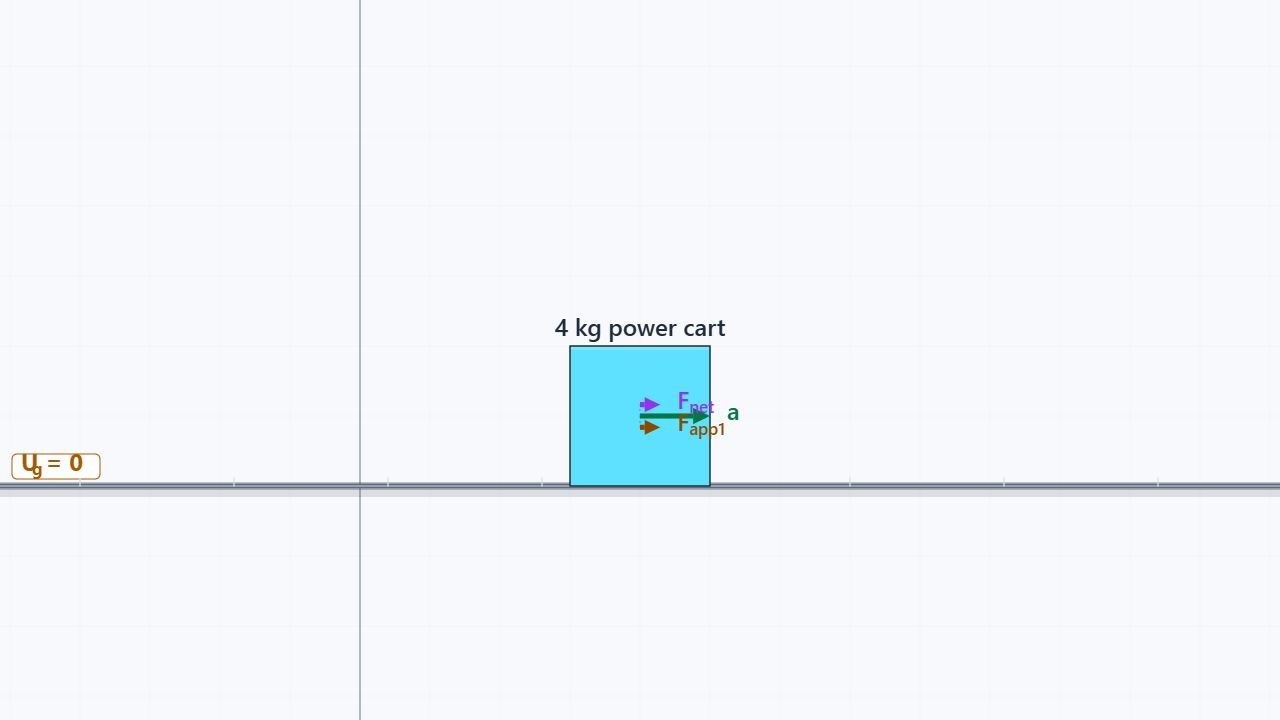
Power and Energy Transfer guided lesson preview Start guided lesson
Explore the model. Make predictions. Check your thinking.

Learn by doing

Three ideas you’ll put into motion

Compare rates

Observe equal amounts of work completed over different elapsed times.

Calculate average power

Use energy transfer and total time to compare two processes.

Connect force and speed

Explain how motion affects the rate of work by a force.

The big idea

The key ideas, at a glance.

Power measures a rate

Average power is Pavg = ΔE/Δt for the energy transferred. For work, use W/Δt. A watt is one joule per second.

Instantaneous power follows motion

For a force acting on a moving object, power depends on the component of force along velocity. For parallel force and motion, P = Fv.

A quick comparison

Complete the same work in half the time.

The average power is twice as large.

time Δttime ½ΔtSame work → twice the average power
Teaching this topic?Classroom fit, AP connections, and support
Classroom fit
Use for a concept introduction, guided independent practice, or a projected class discussion.
Before students begin
Work, energy, elapsed time, and basic division.
Built-in support
Prepared scenes, guided prompts, and feedback on lesson questions.
AP Physics 1 connections
Unit 3: power and rates of energy transfer.
Check for understanding
Ask why knowing the total work alone is not enough to determine average power.
Meet the educator behind Build Physics

Ready to test your thinking?

The first scene is set up. Start the lesson and explore.

Start lesson