Separate two conditions
Compare zero net torque with zero net force and identify what each condition means.
 BuildPhysics
AP Physics 1 · Unit 5 · Torque and Rotational Dynamics
Balance loads on a beam, compare rotating and static systems, and use force and torque equations to predict equilibrium.
Start lesson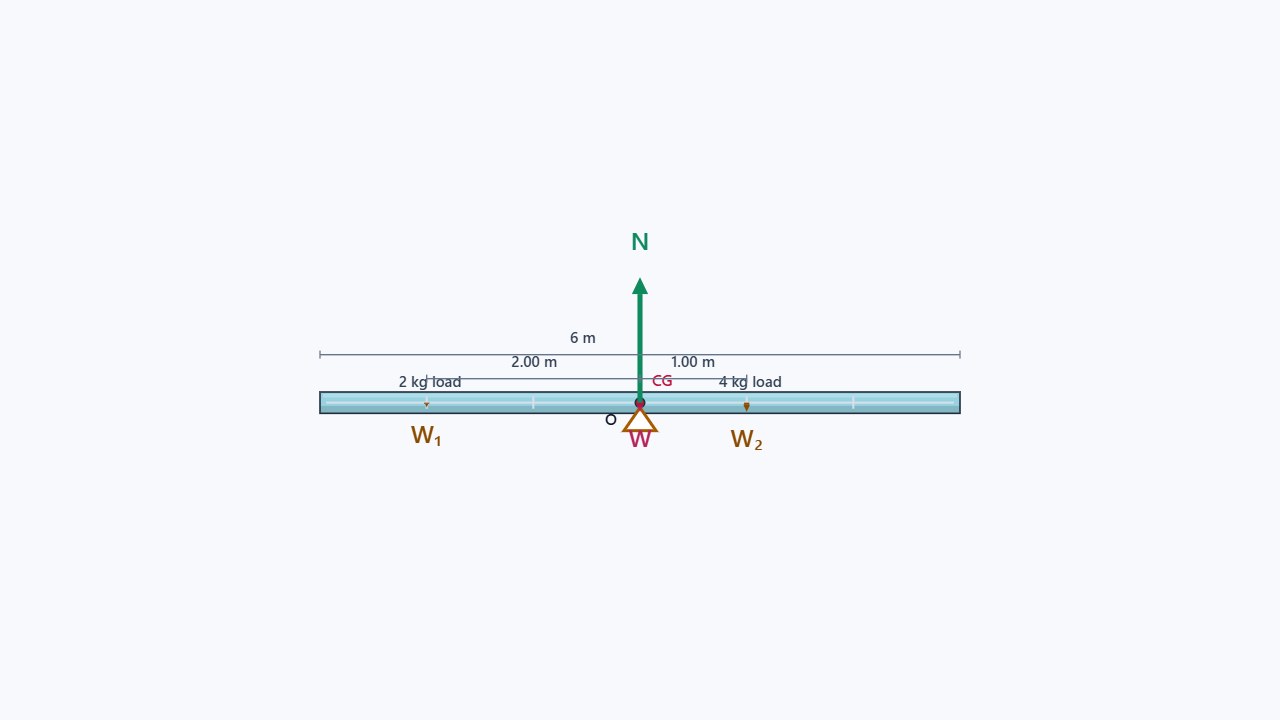 Start guided lesson
Learn by doing
Compare zero net torque with zero net force and identify what each condition means.
Change load positions and use signed torques about a useful pivot.
Include beam weight, a supporting rope, and hinge forces in a complete equilibrium model.
The big idea
For fixed rotational inertia, zero net external torque means constant angular velocity. The object can already be rotating.
A system at rest remains in static equilibrium when net force and net torque are both zero. Beam weight acts at its center of gravity in uniform gravity.
A quick comparison
Balance two perpendicular downward loads on opposite sides of a pivot.
Equal opposing torques require F1d1 = F2d2.
The first scene is set up. Start the lesson and explore.