
Plan the investigation
What students will do
Use the student handout to organize predictions, measurements, and explanations.
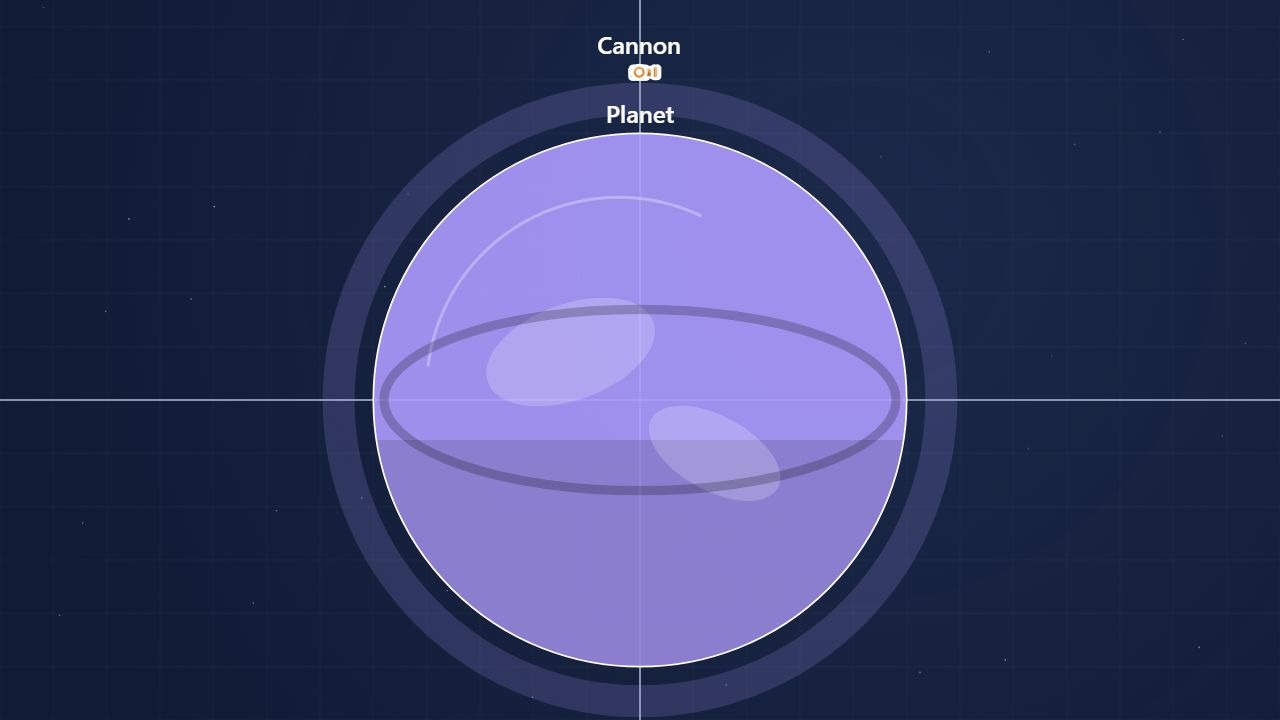
- Predict the path. Keep the cannon aimed horizontally and predict how a larger launch speed changes the flight.
- Increase speed one trial at a time. Fire, observe, and clear each projectile. Find a shot that completes a full trip around the planet.
- Narrow the transition. Identify a speed that hits the planet and one that orbits. Test an intermediate speed.
- Explain the orbit. Sketch velocity and gravity arrows at two positions and compare circular paths with other successful orbits.
What students will learn
- Explain orbiting as continuous free fall.
- Distinguish tangential velocity from inward gravitational force.
- Use successive trials to narrow a transition.
Common misconception
Does gravity become zero in orbit?
Gravity changes the cannonball’s velocity direction throughout the orbit.