
Unit 1 · Kinematics
AP Physics 1 · Interactive mechanics
Learn physics by testing the model
Choose a topic for a concise concept guide, essential equations, and a guided lesson. Prepared experiments are included where a setup directly fits the topic.
v
Unit 1
Kinematics
Unit 1 · Kinematics
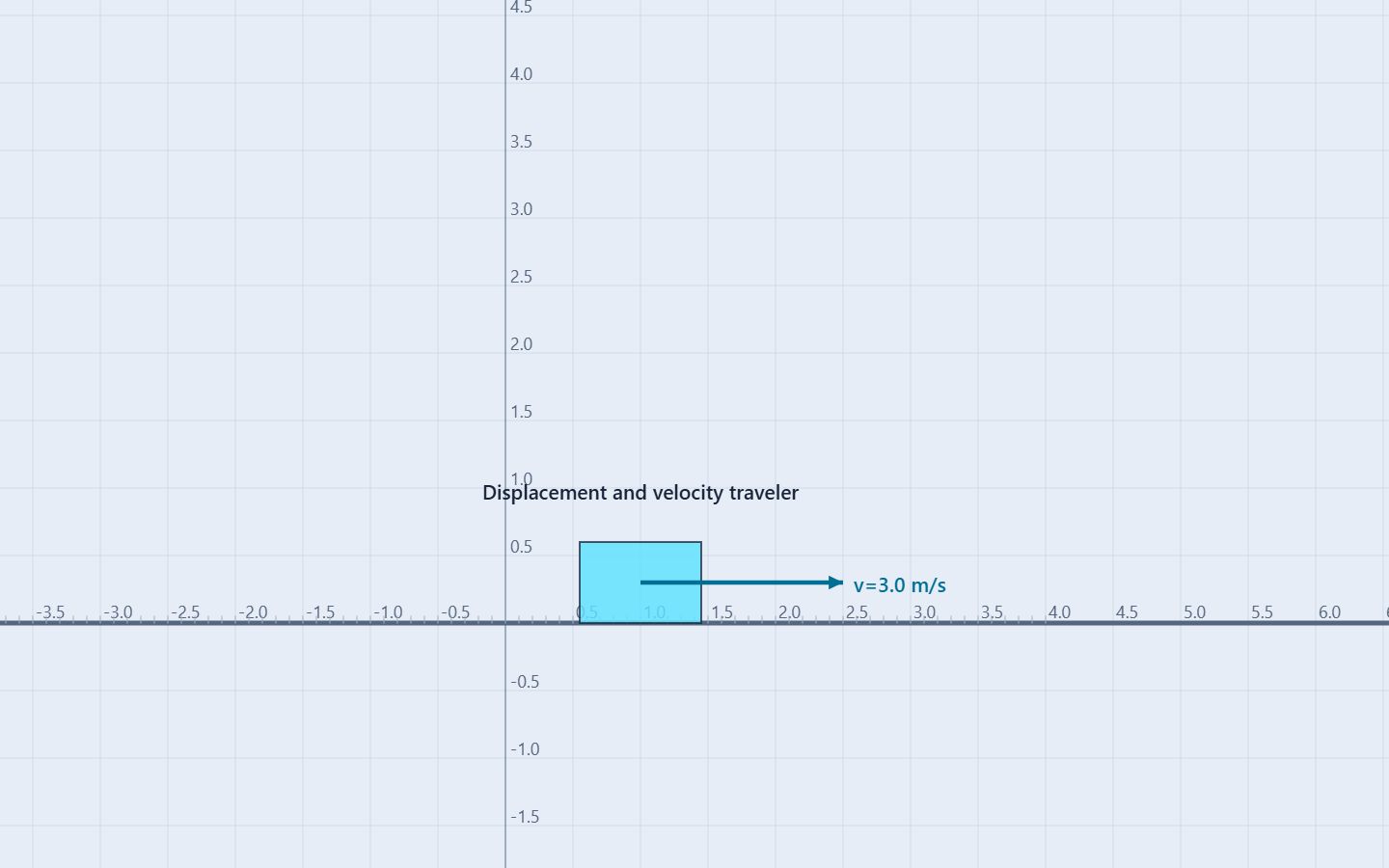
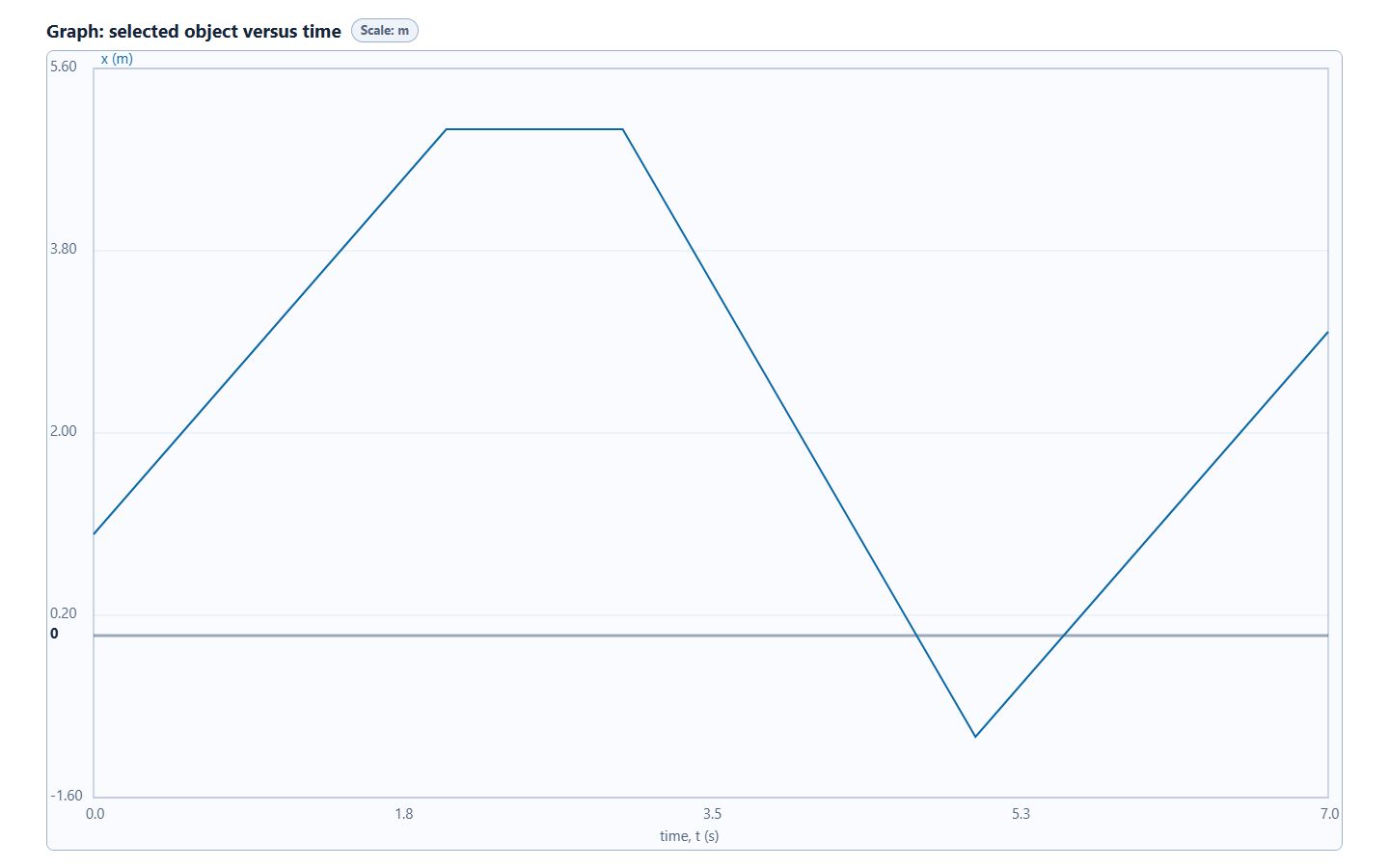
Position and Velocity Graphs
Translate between motion and graphs by connecting position–time slope with velocity and velocity–time area under the curve with displacement. Explore Position and Velocity Graphs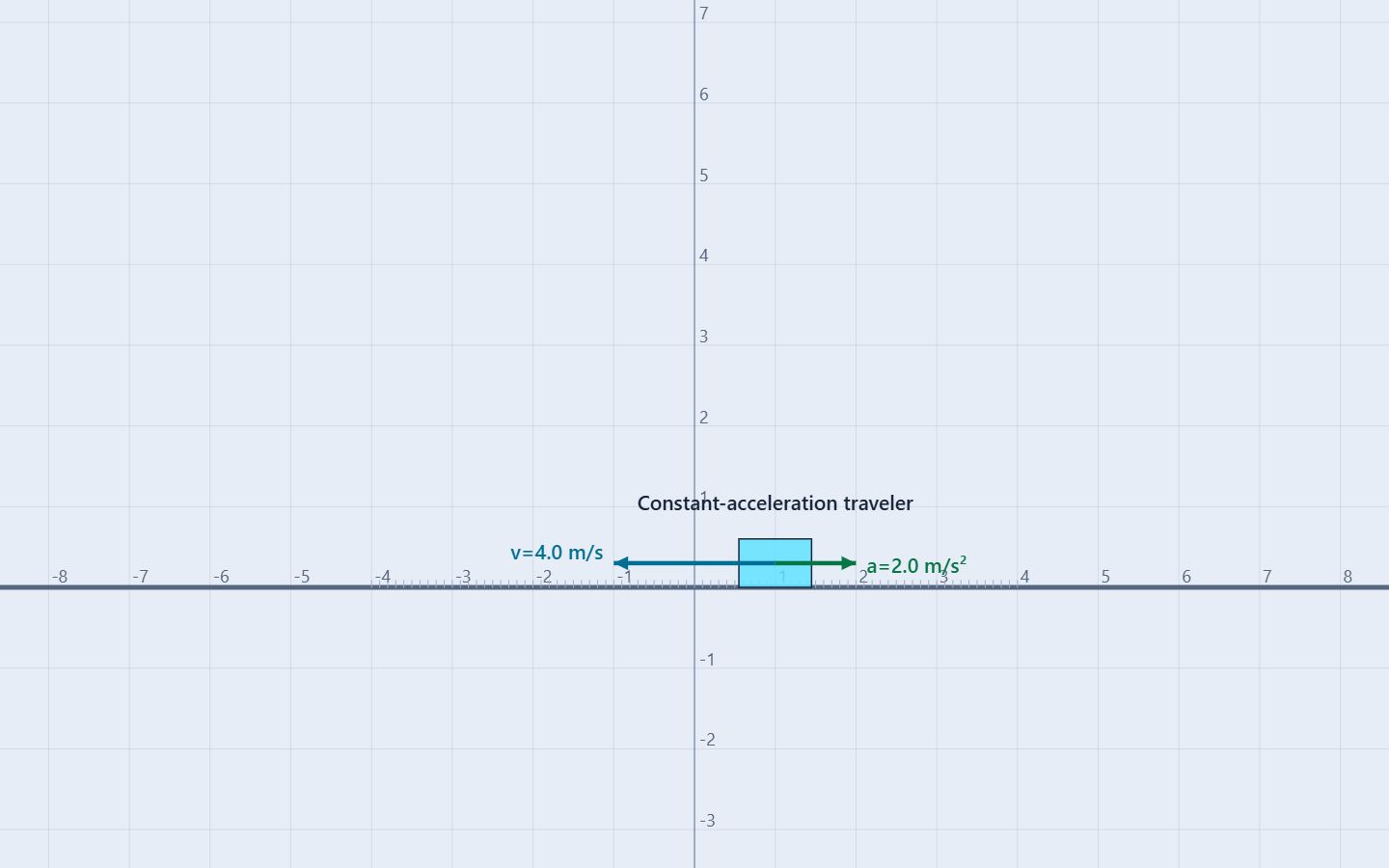
Unit 1 · Kinematics
Constant Acceleration
Connect constant acceleration with uniform velocity changes, curved position graphs, and the standard kinematics relationships. Explore Constant Acceleration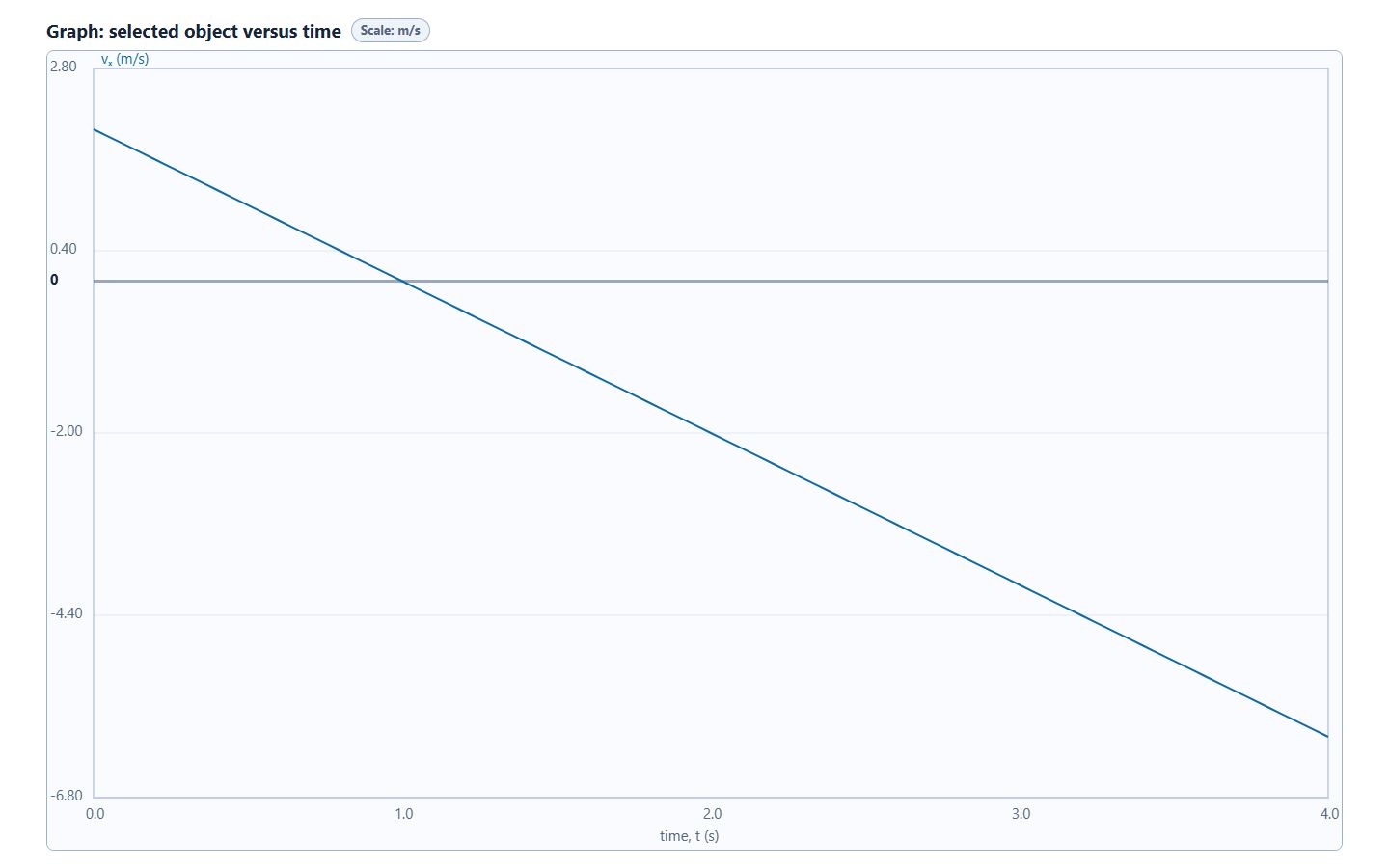
Unit 1 · Kinematics
Acceleration Graphs
Translate motion among position, velocity, and acceleration graphs using slope and area-under-the-curve relationships. Explore Acceleration Graphs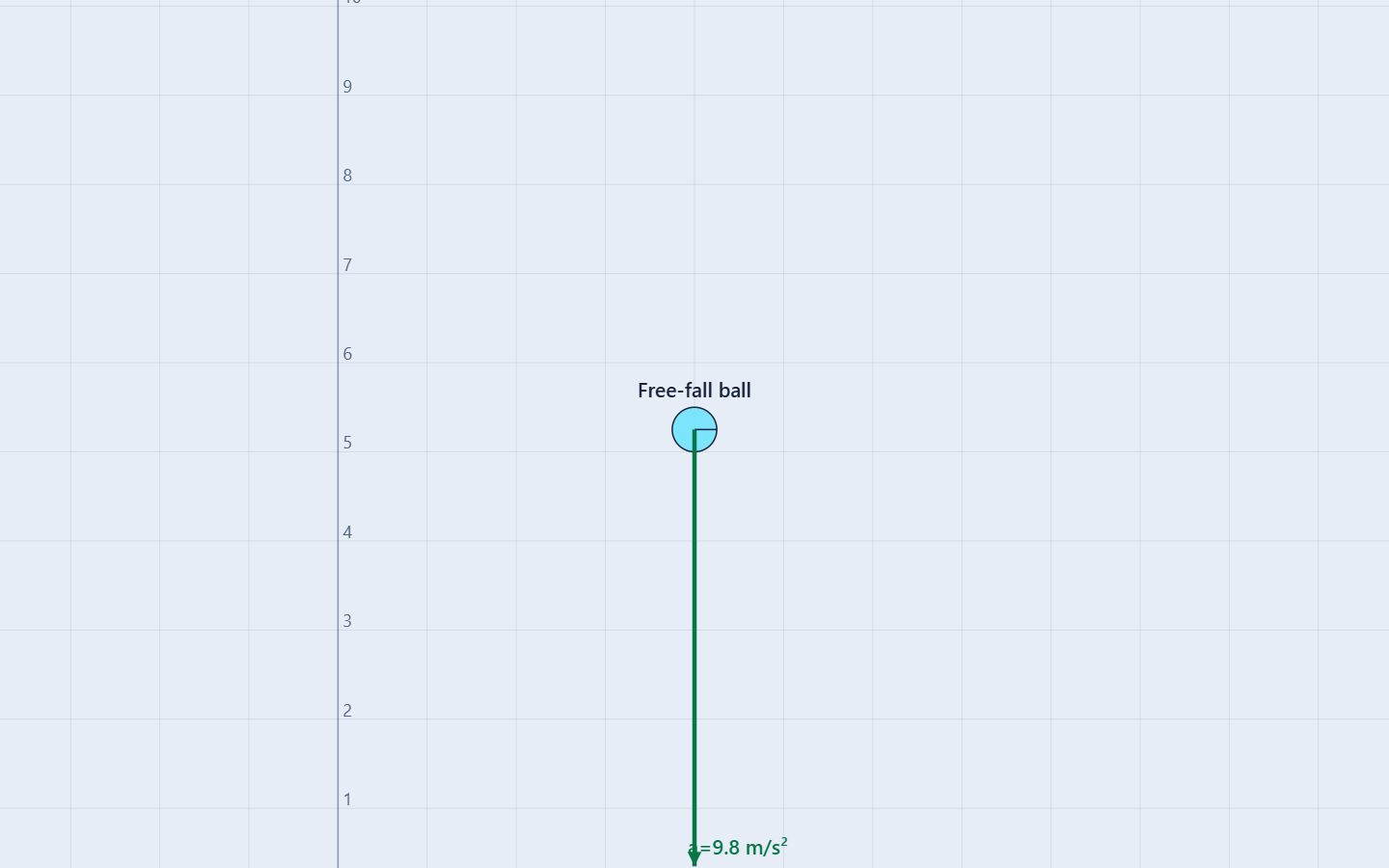
Unit 1 · Kinematics
Free Fall Motion
Apply constant vertical acceleration to falling and upward-launched objects while keeping signs and motion direction distinct. Explore Free Fall Motion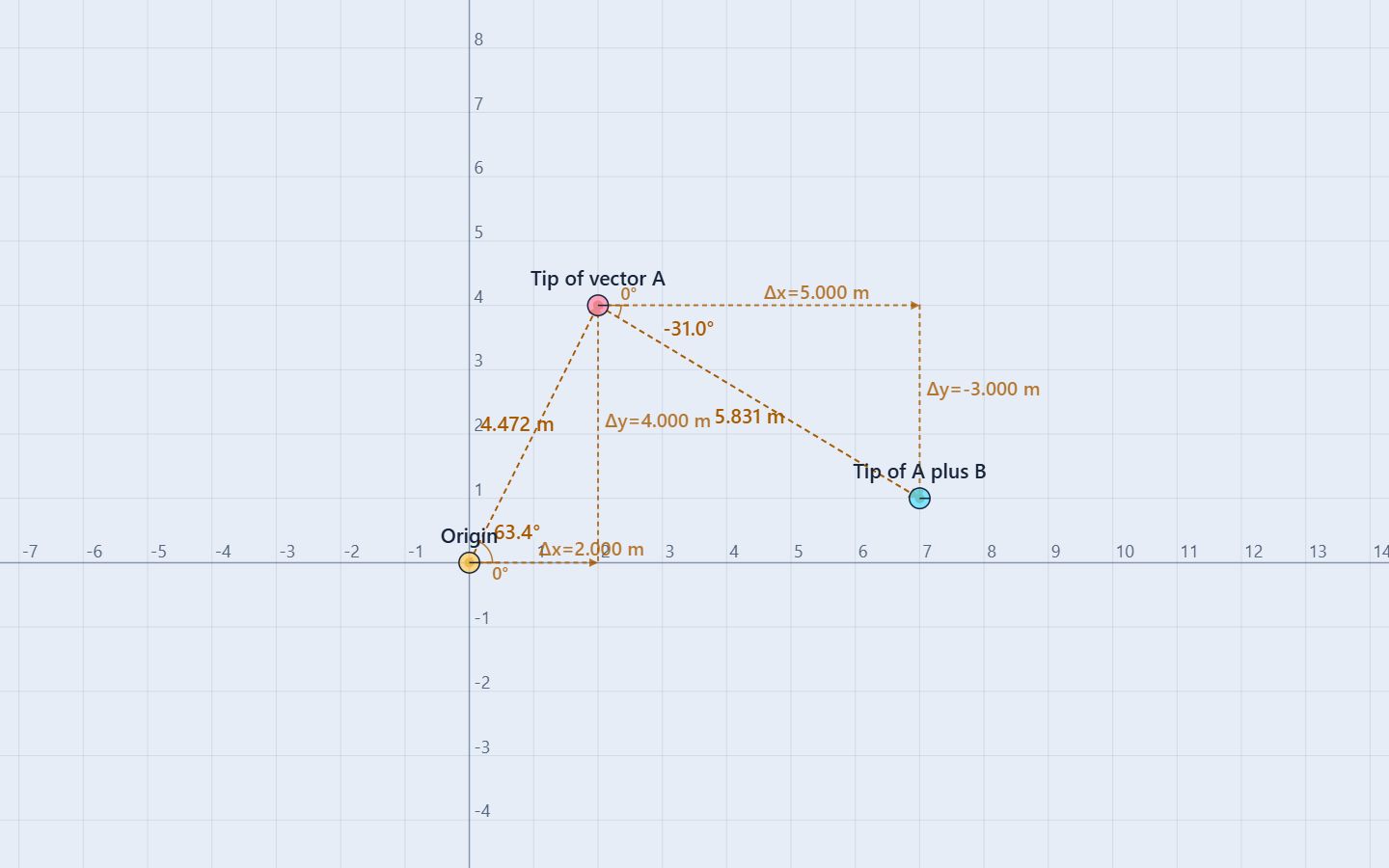
Unit 1 · Kinematics
2D Vectors and Relative Motion
Resolve vectors into perpendicular components, add them tip to tail, and use reference frames to predict a boat’s ground-relative motion. Explore 2D Vectors and Relative Motion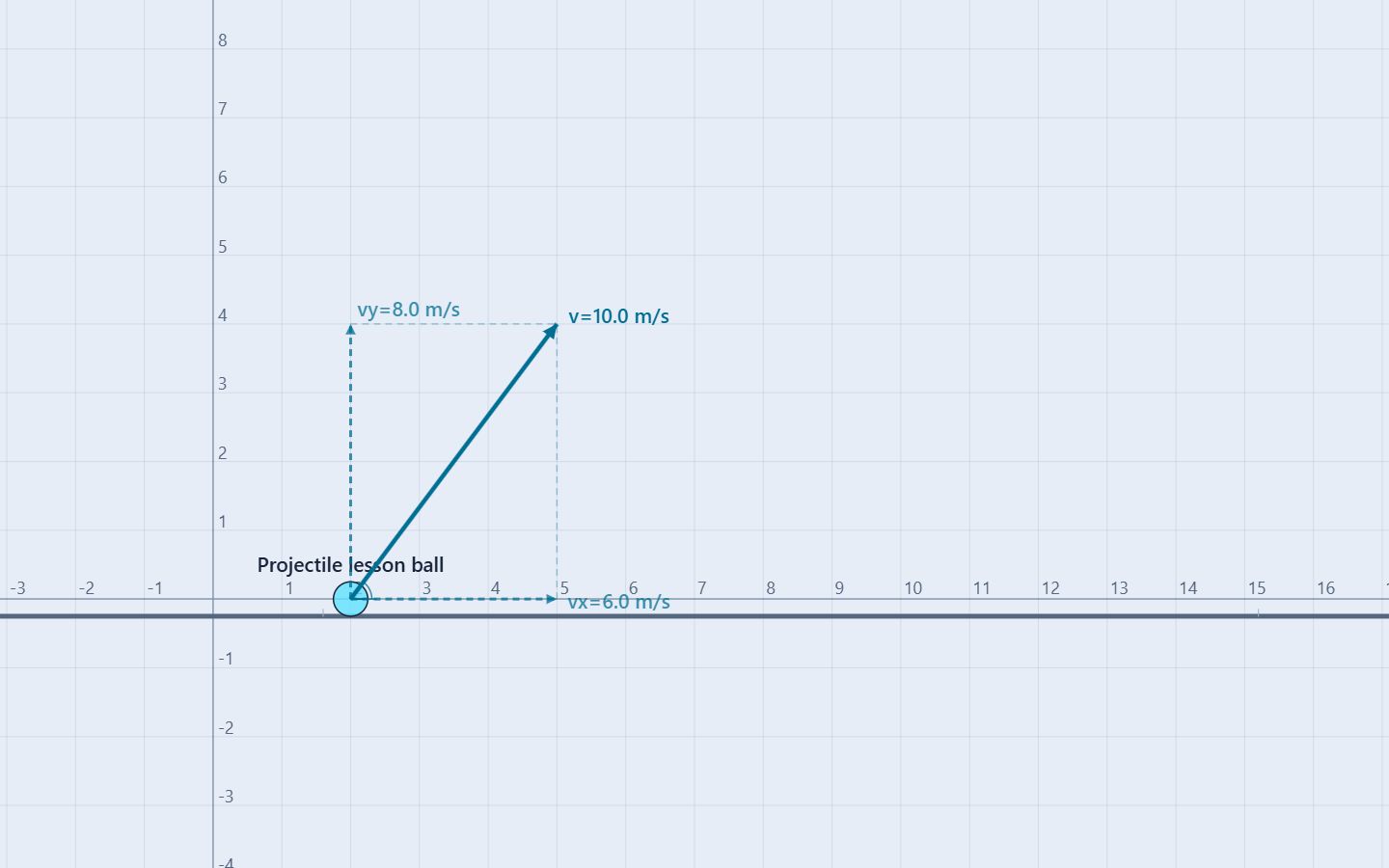
Unit 1 · Kinematics
Projectile Motion
Use one shared clock to connect constant horizontal velocity, downward acceleration, apex conditions, graphs, and landing predictions. Explore Projectile Motion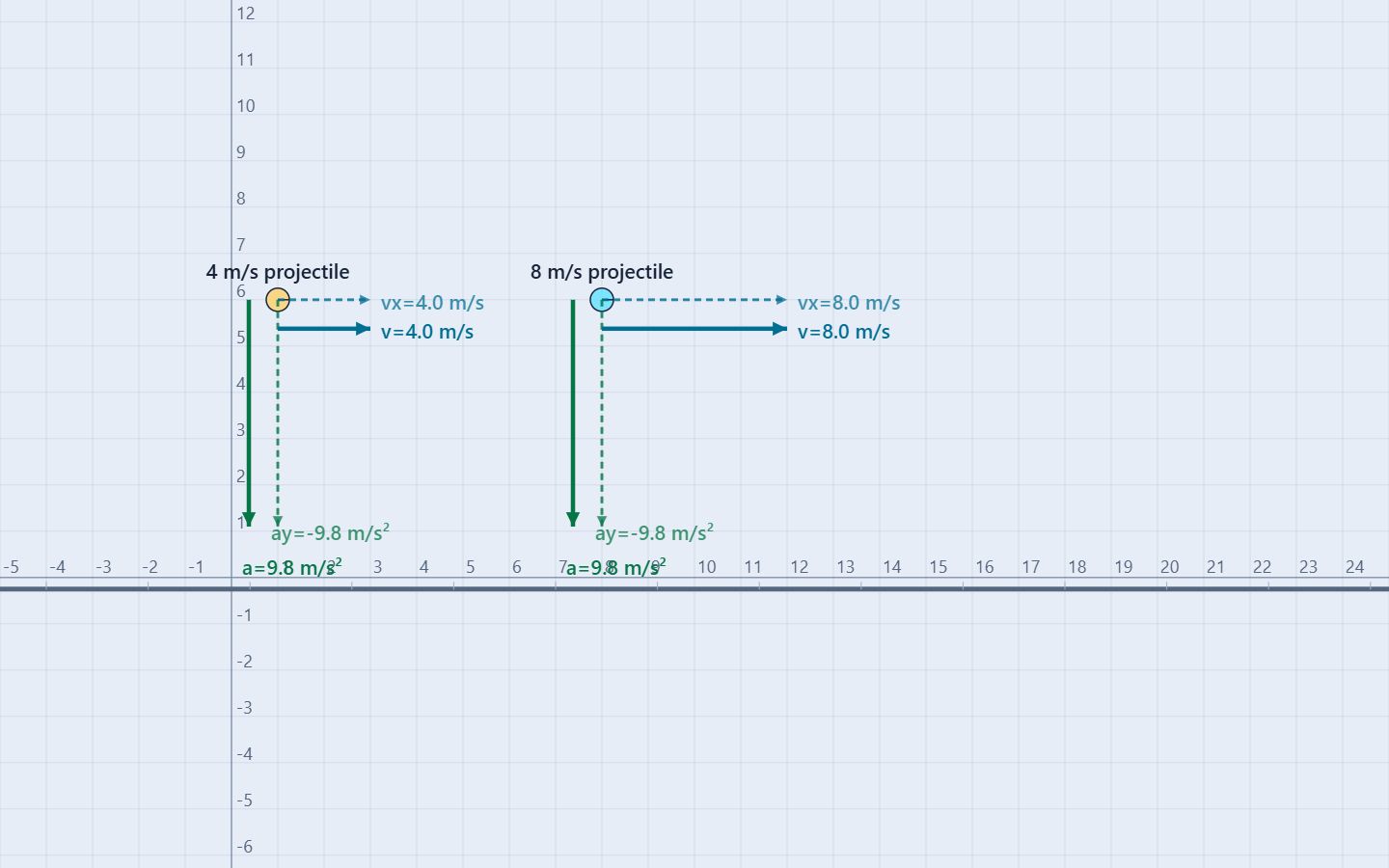
Unit 1 · Kinematics
Unit 1 Kinematics Concept Review
Choose the right diagram, graph, component model, or kinematics equation for each motion problem, then use scaling relationships to check the result. Explore Unit 1 Kinematics Concept ReviewUnit 2
Force and Translational Dynamics
Unit 2 · Force and Translational Dynamics
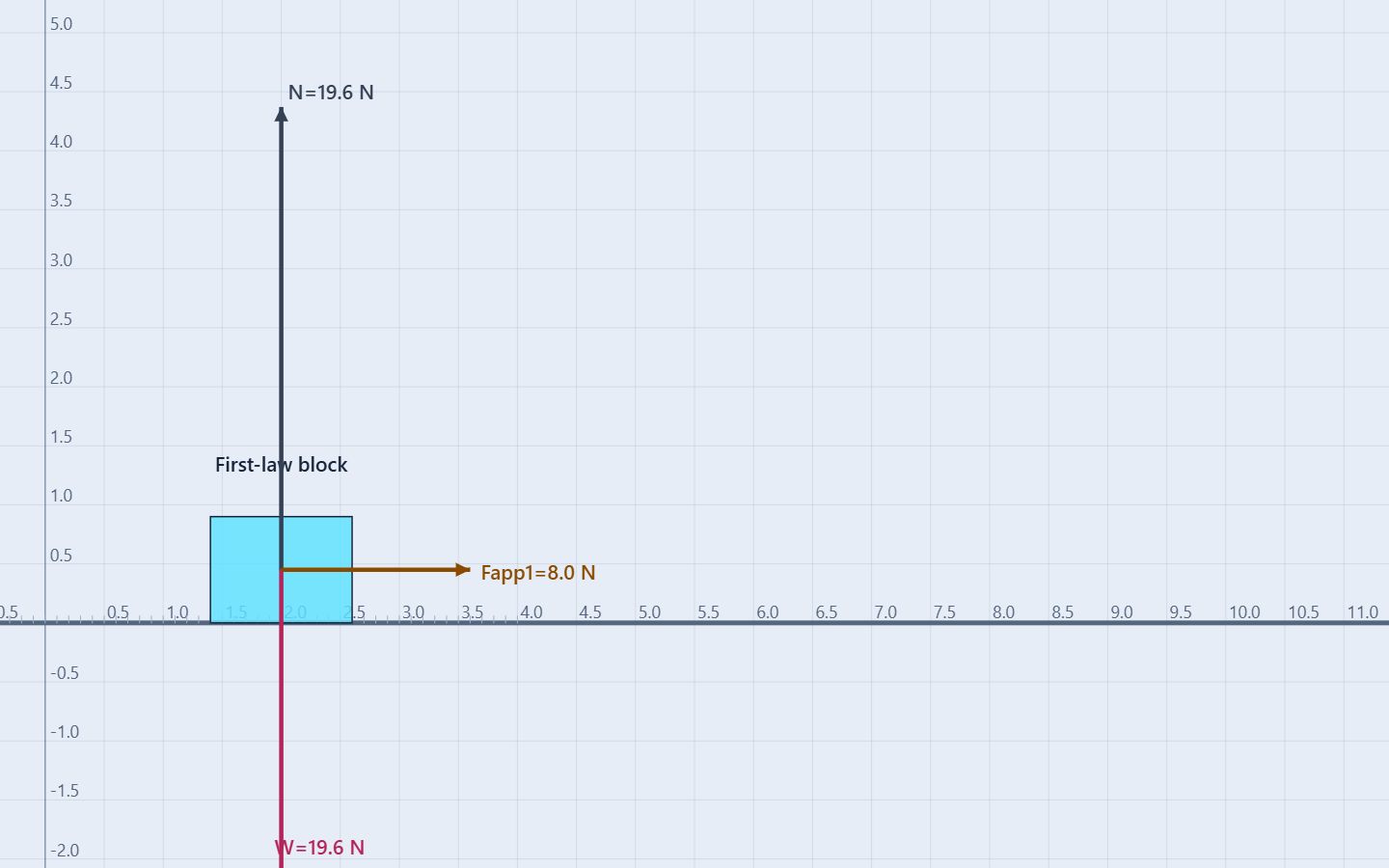
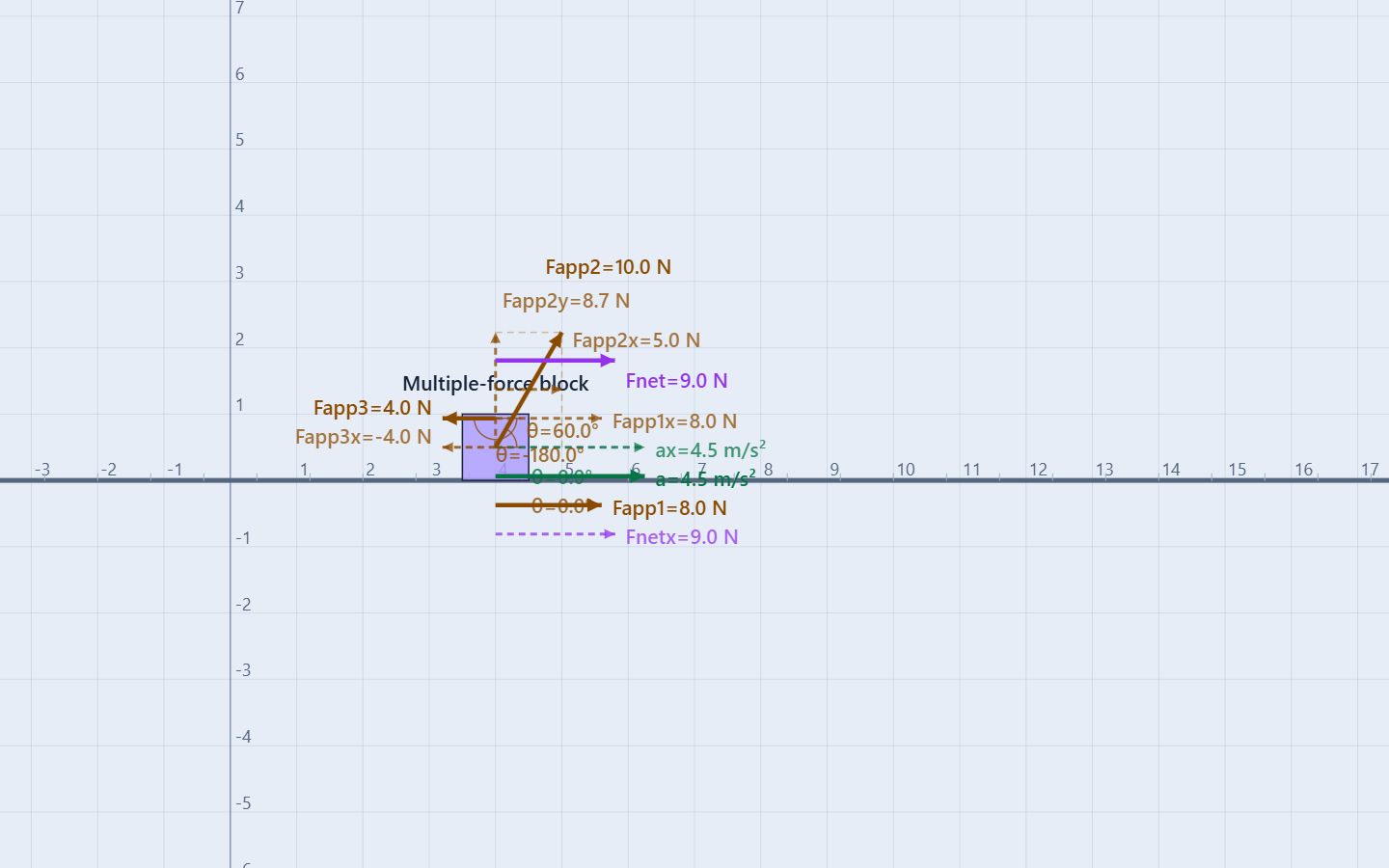
Free-Body Diagrams
Choose the system first, draw only the external forces acting on it, and use components to connect a complete free-body diagram to net force and acceleration. Explore Free-Body Diagrams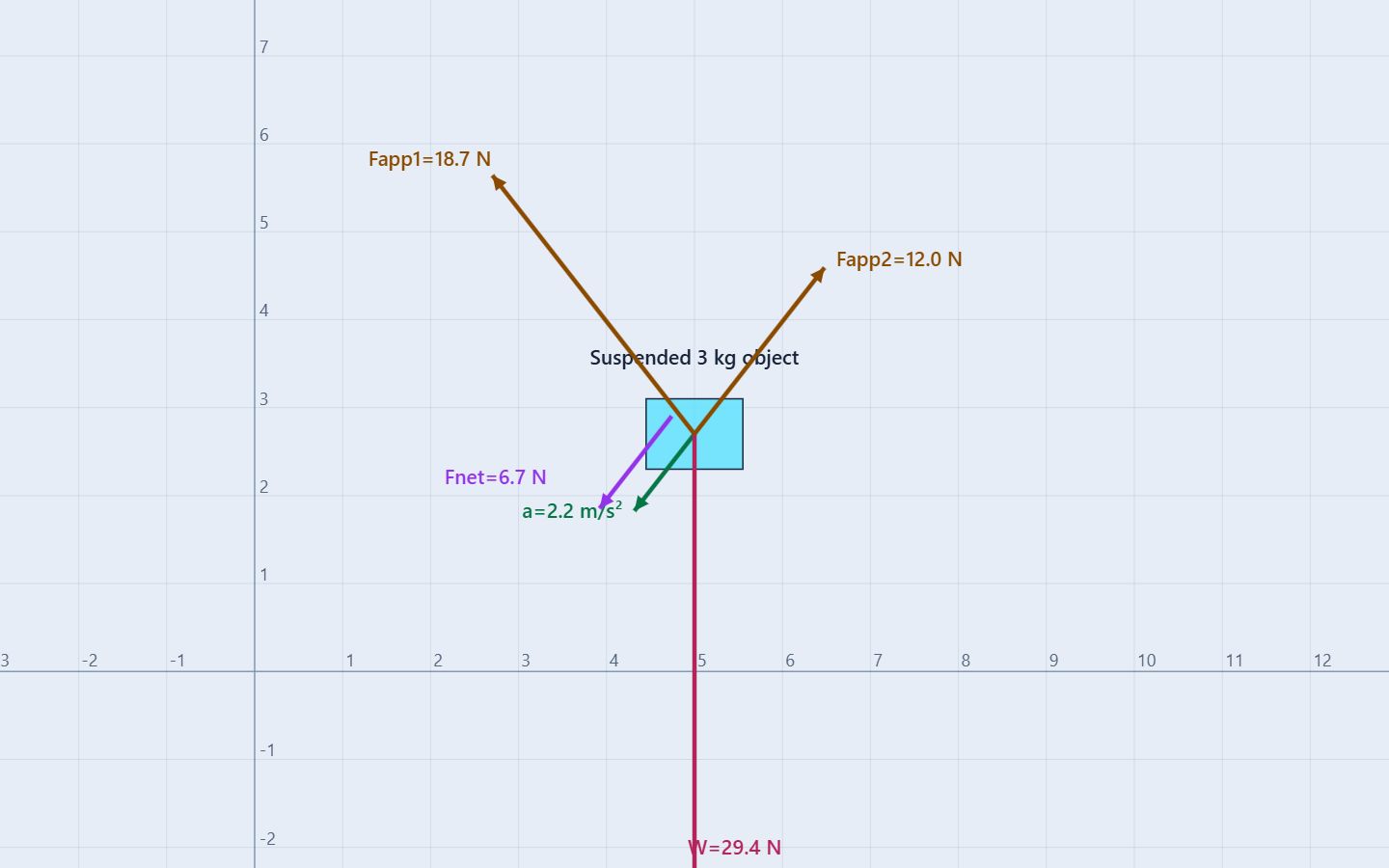
Unit 2 · Force and Translational Dynamics
Newton’s First Law and Equilibrium
Use net force and acceleration evidence to distinguish rest from constant-velocity motion, then test static and dynamic equilibrium in one and two dimensions. Explore Newton’s First Law and Equilibrium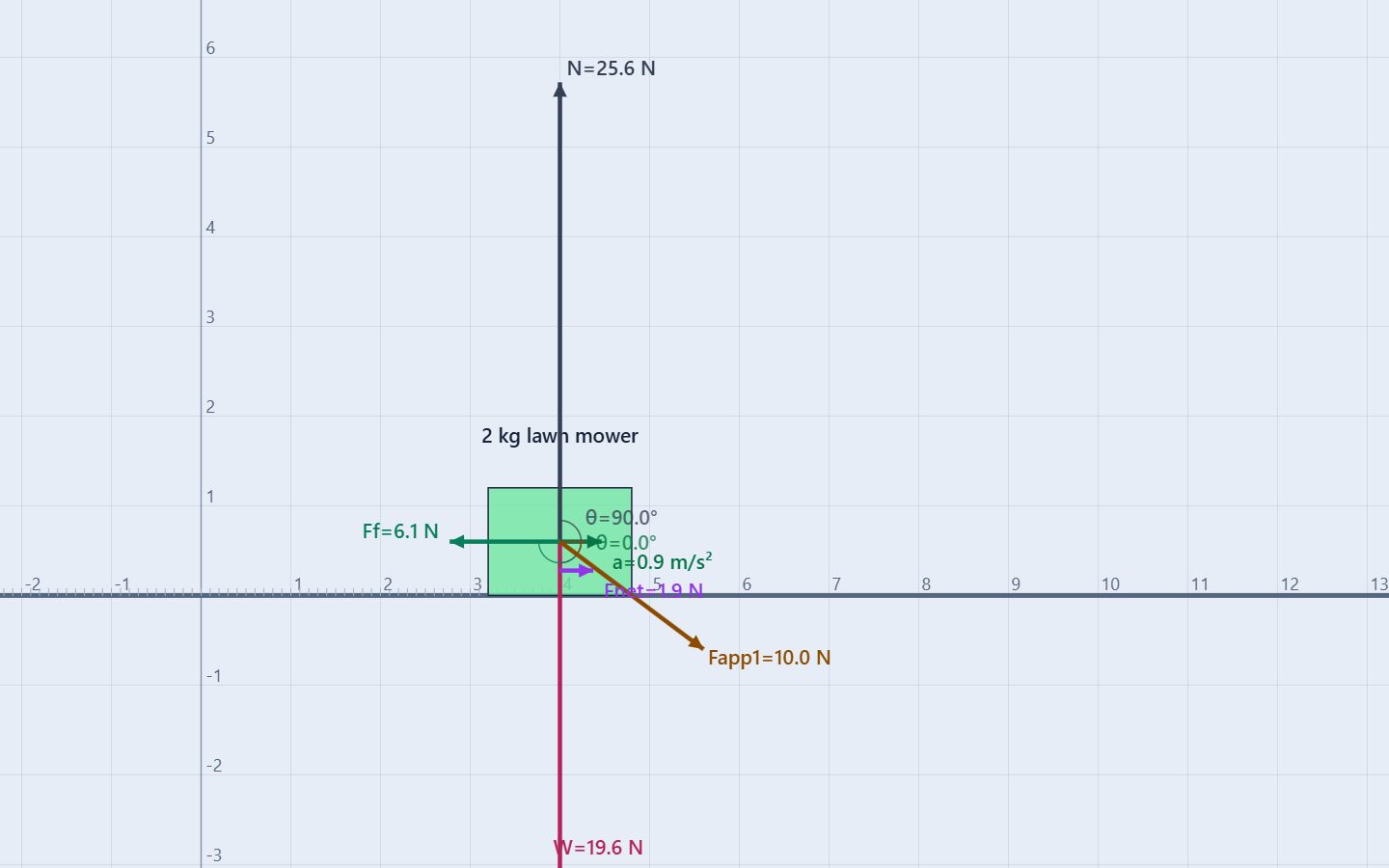
Unit 2 · Force and Translational Dynamics
Newton’s Second Law
Test how the magnitude and direction of net external force and the system mass determine acceleration. Explore Newton’s Second Law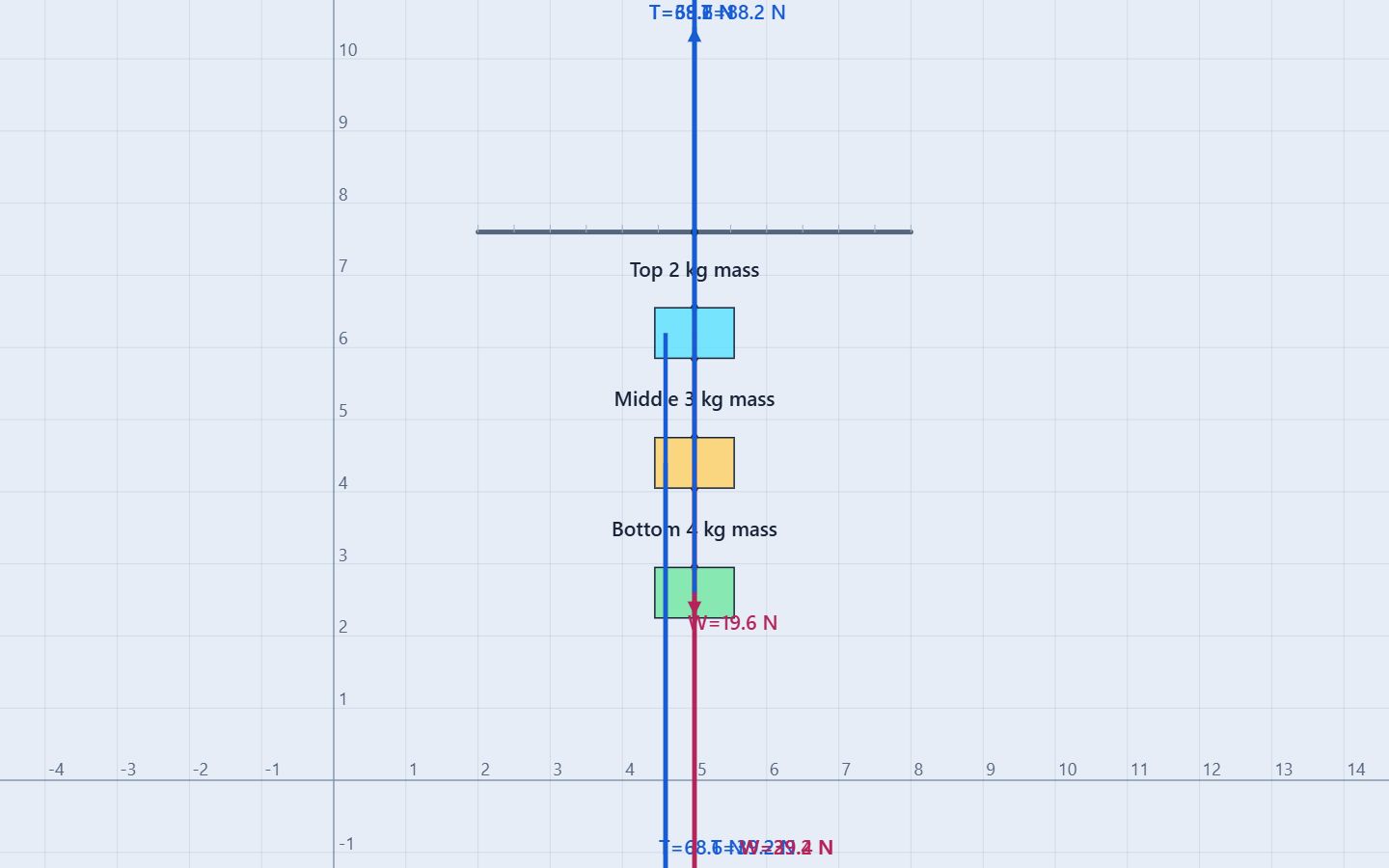
Unit 2 · Force and Translational Dynamics
Elevator Forces and Apparent Weight
Use the direction of elevator acceleration to predict how the normal force and apparent weight compare with gravitational force. Explore Elevator Forces and Apparent Weight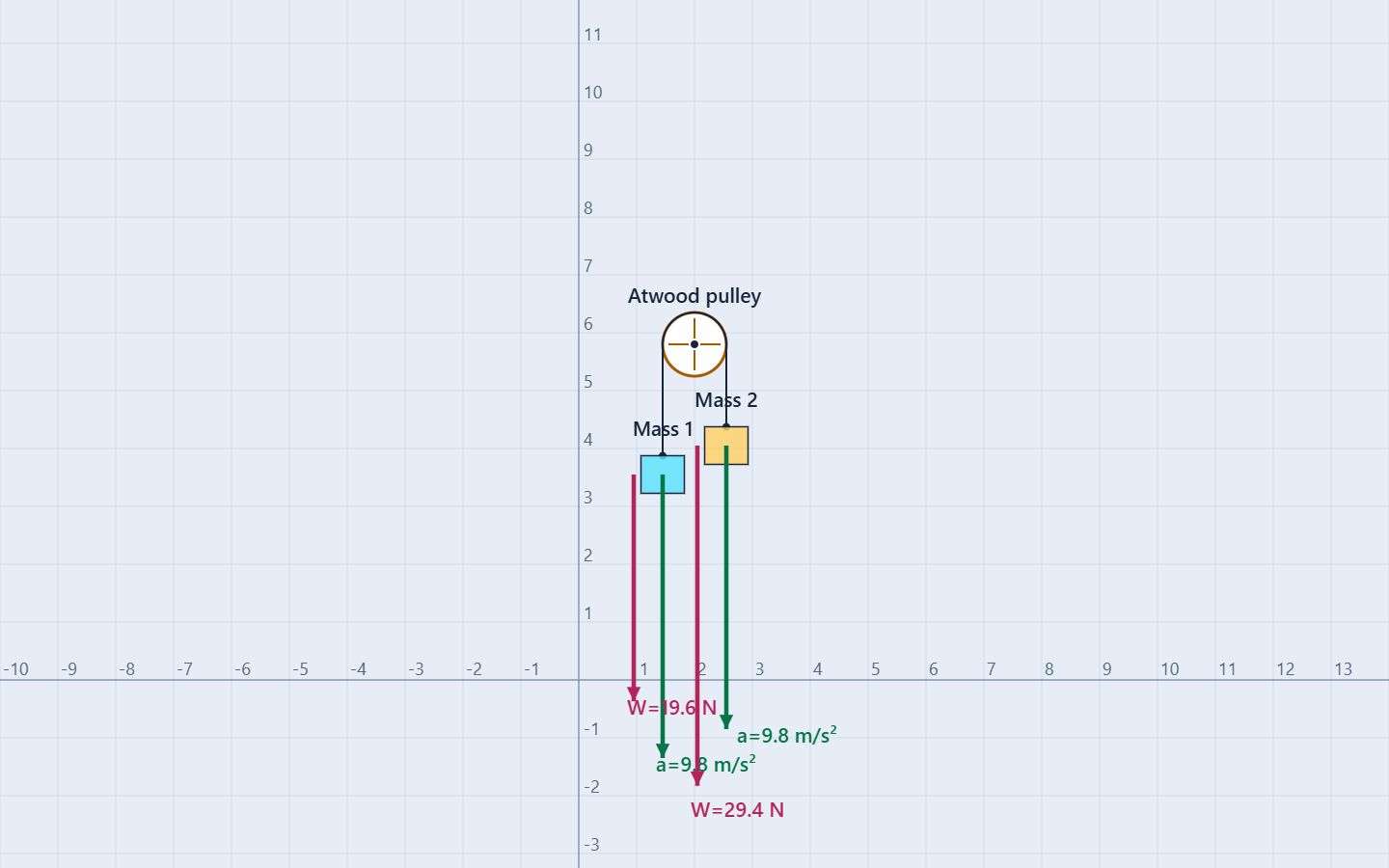
Unit 2 · Force and Translational Dynamics
Atwood Machines and Two-Body Systems
Compare object and system models for two connected masses sharing one acceleration magnitude. Explore Atwood Machines and Two-Body Systems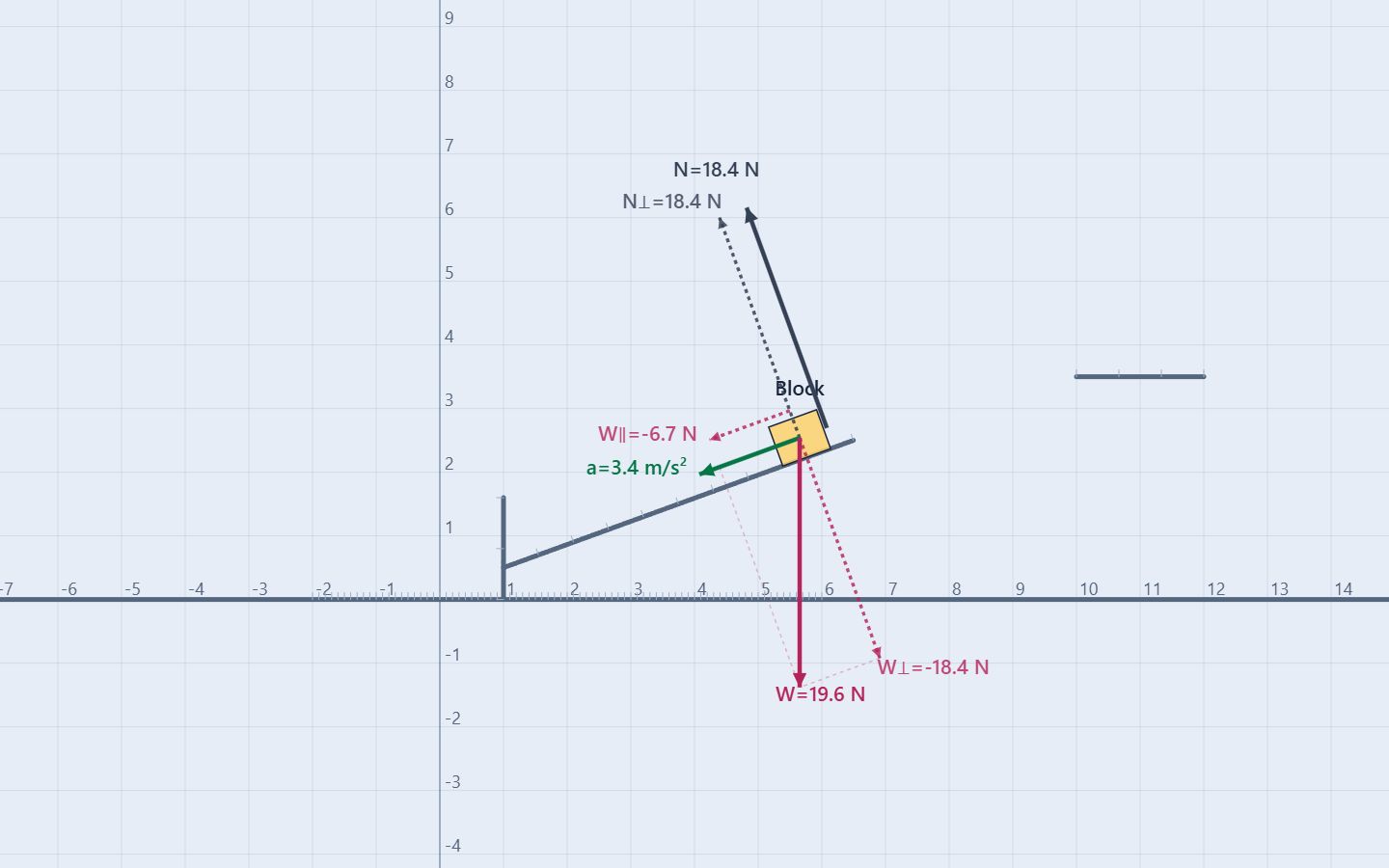
Unit 2 · Force and Translational Dynamics
Inclined Planes
Resolve weight into components parallel and perpendicular to a ramp and connect those components to equilibrium or acceleration. Explore Inclined Planes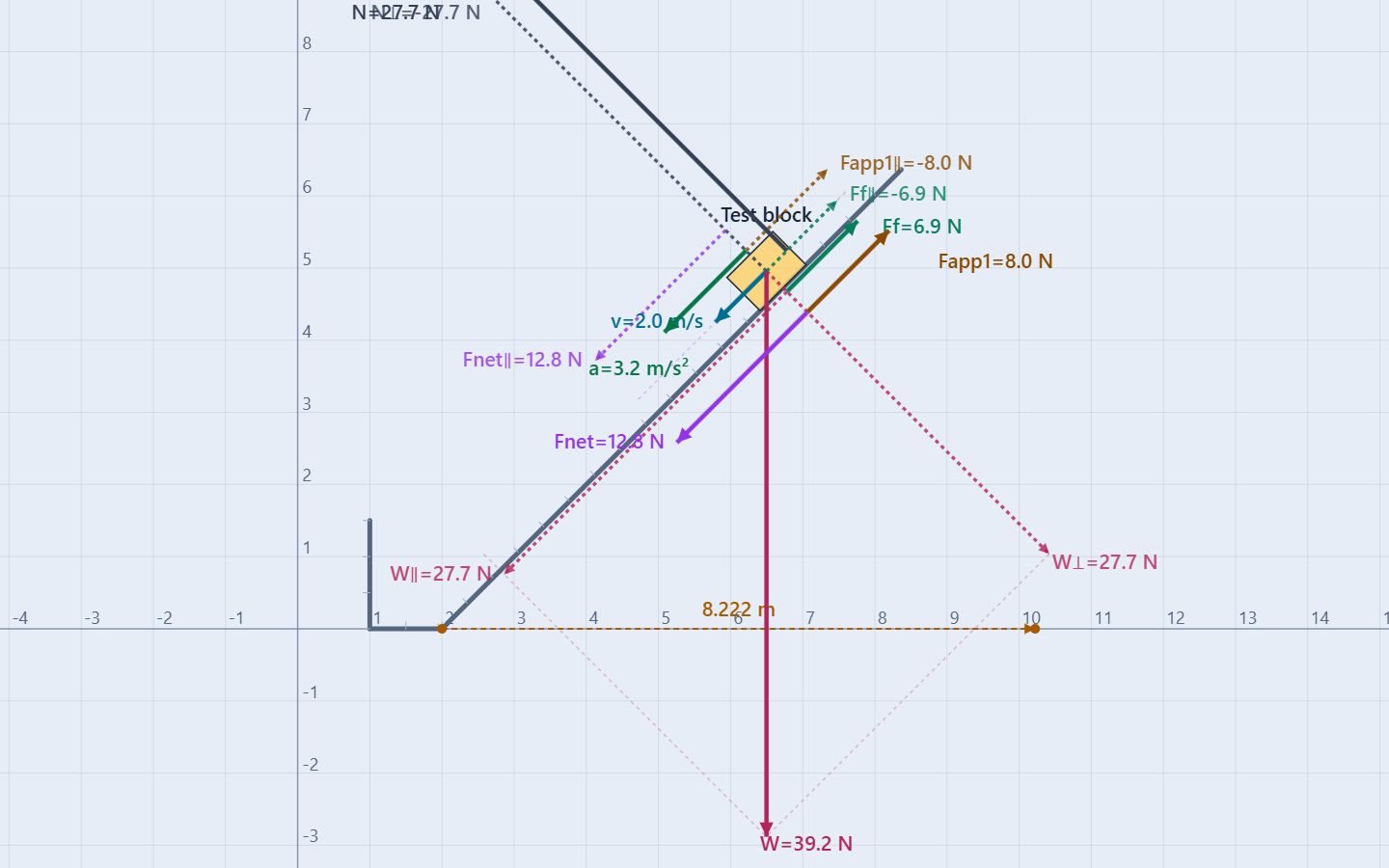
Unit 2 · Force and Translational Dynamics
Static and Kinetic Friction
Determine when static friction adjusts to prevent slipping and when kinetic friction acts during sliding. Explore Static and Kinetic Friction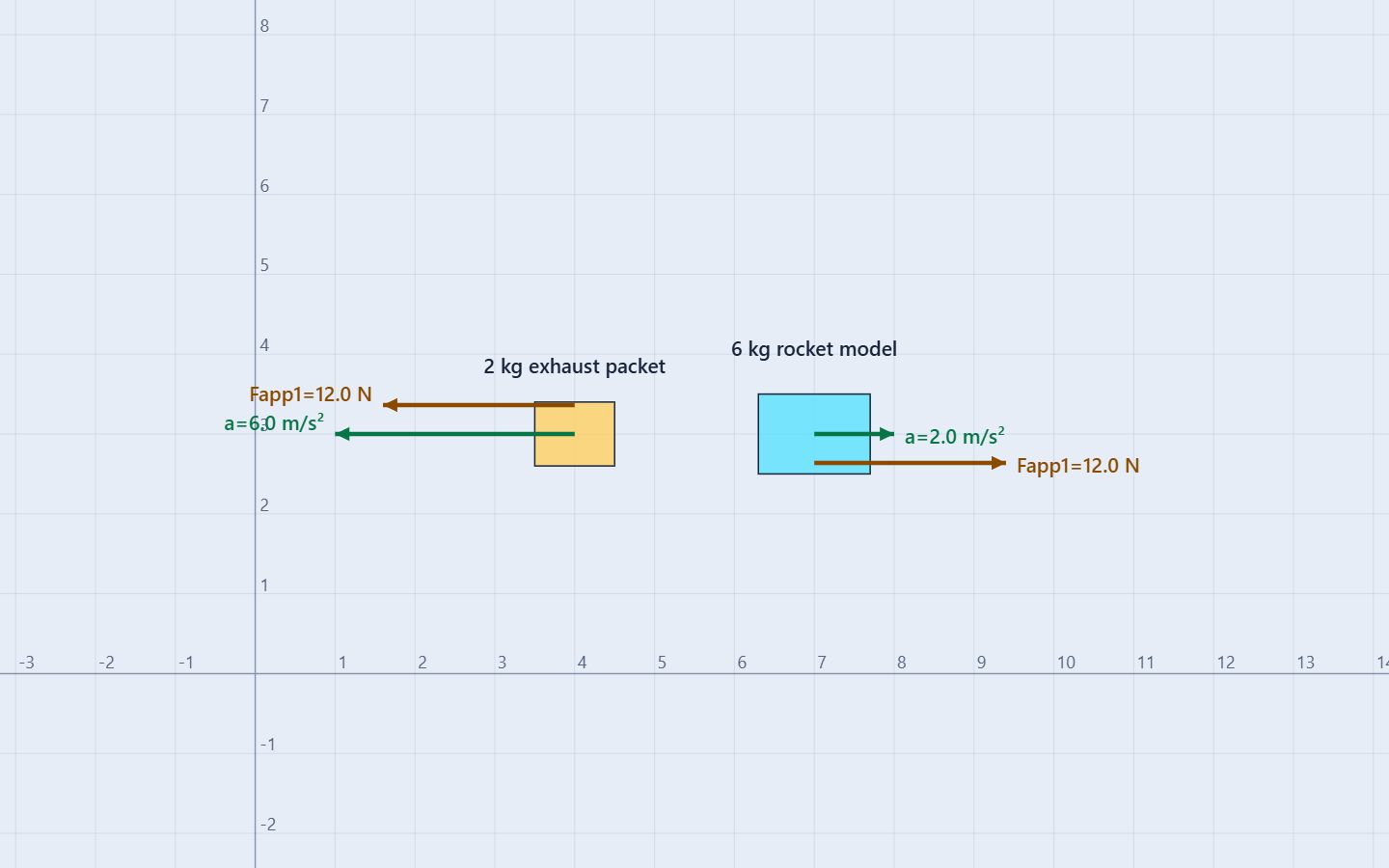
Unit 2 · Force and Translational Dynamics
Newton’s Third Law
Identify equal-magnitude, opposite-direction forces exerted by two interacting objects on one another. Explore Newton’s Third Law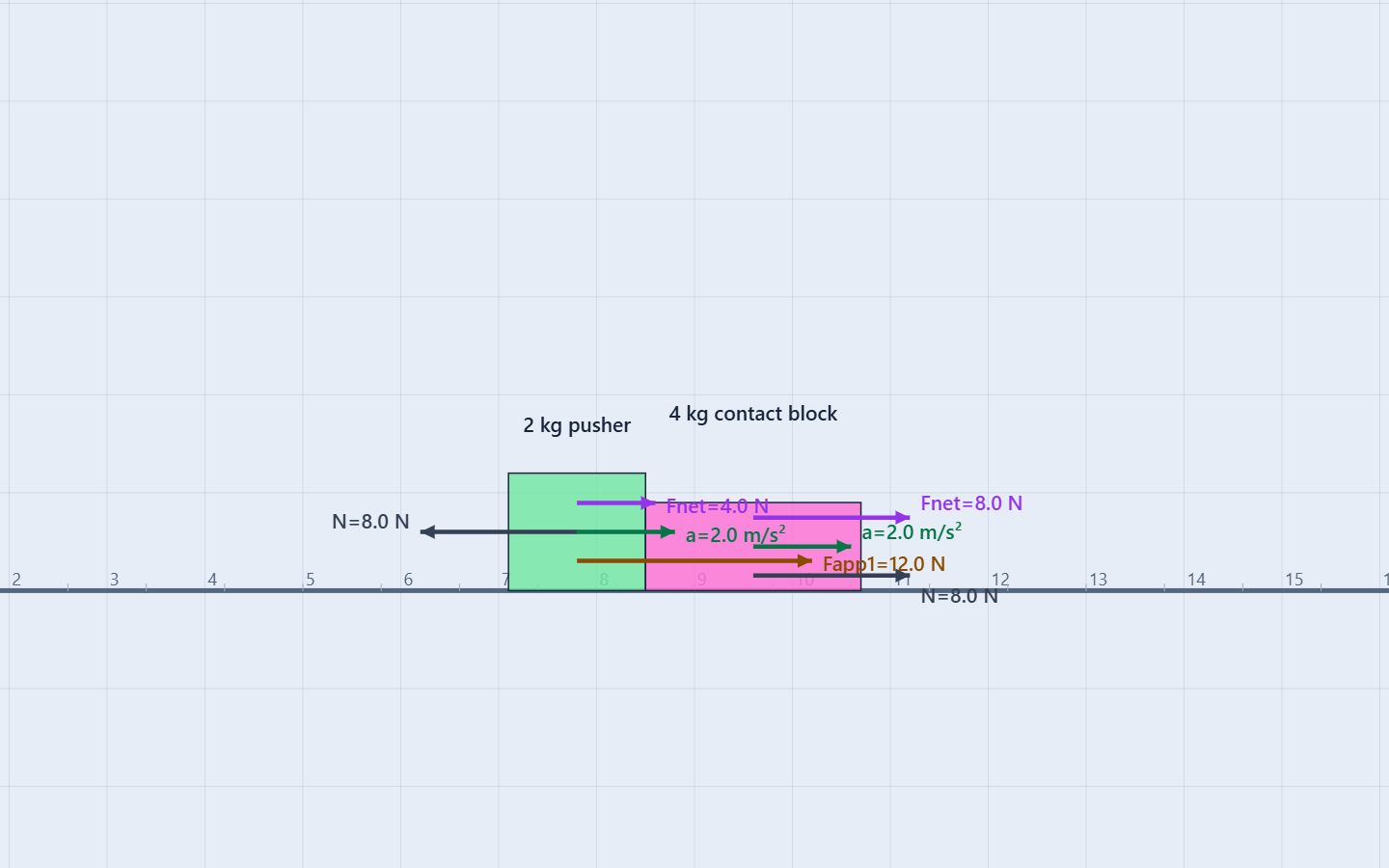
Unit 2 · Force and Translational Dynamics
Unit 2 Force and Dynamics Concept Review
Connect force diagrams, Newton’s laws, friction, ramps, elevators, and connected systems in a cumulative Unit 2 review. Explore Unit 2 Force and Dynamics Concept ReviewUnit 3
Work, Energy, and Power
Unit 3 · Work, Energy, and Power
Work and Kinetic Energy
Relate the work done by the net force to a system’s change in translational and rotational kinetic energy. Explore Work and Kinetic Energy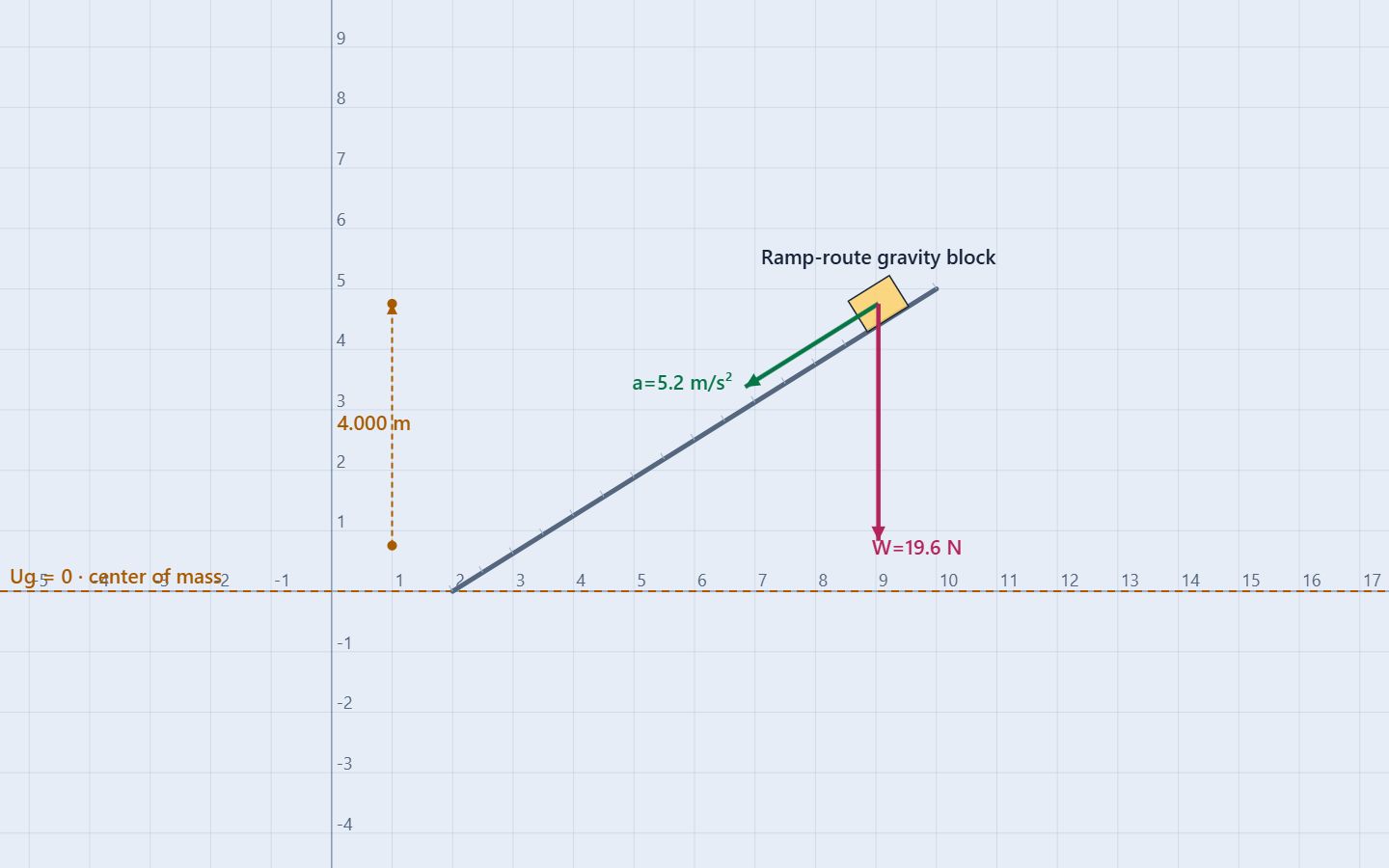
Unit 3 · Work, Energy, and Power
Conservative Forces and Gravitational Potential Energy
Relate work done by gravity to changes in gravitational potential energy and understand why only height change matters. Explore Conservative Forces and Gravitational Potential Energy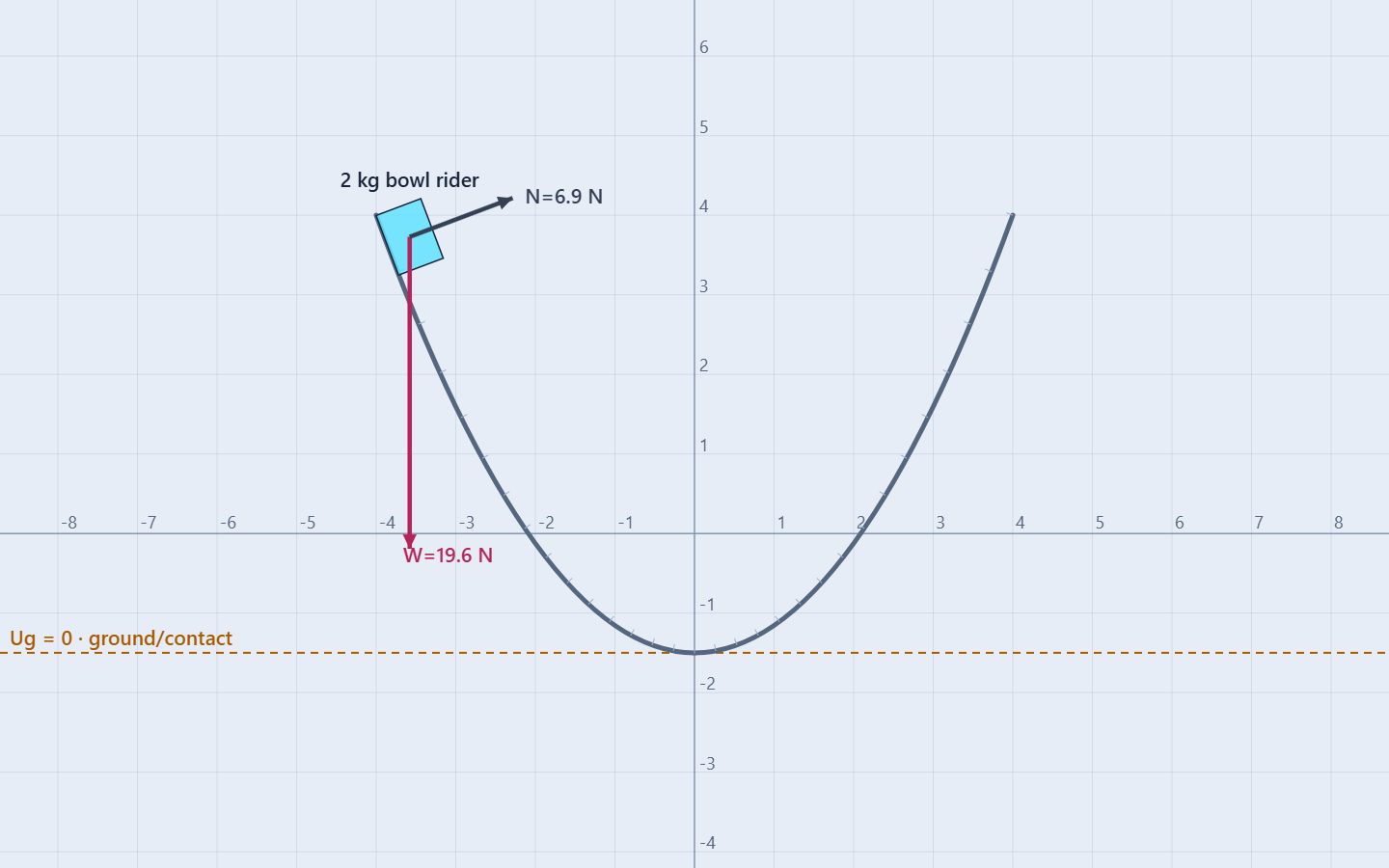
Unit 3 · Work, Energy, and Power
Conservation of Mechanical Energy
Track energy transformations and use system boundaries to decide when mechanical energy remains constant. Explore Conservation of Mechanical Energy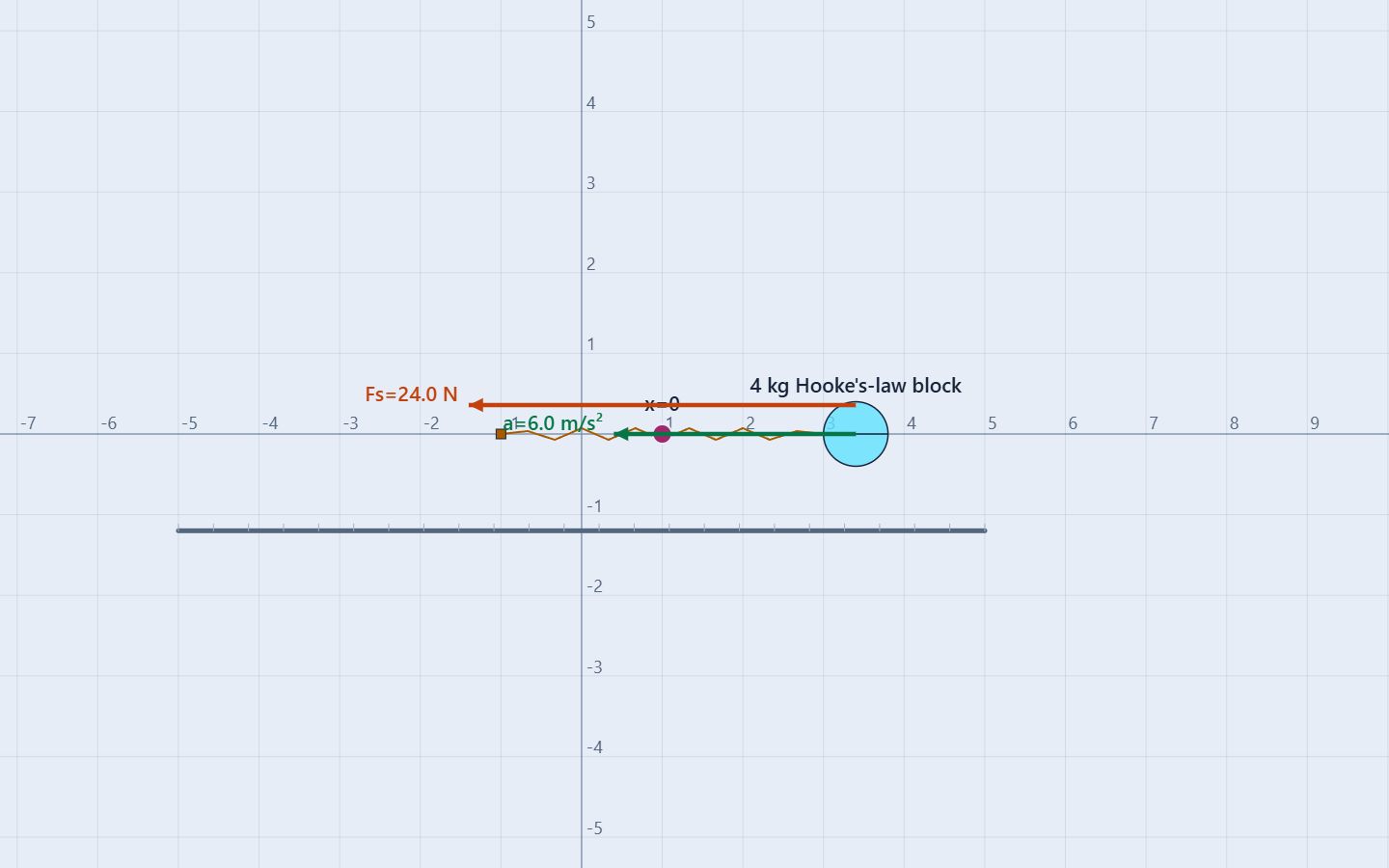
Unit 3 · Work, Energy, and Power
Hooke’s Law and Elastic Potential Energy
Connect spring displacement to restoring force, elastic potential energy, and oscillatory motion. Explore Hooke’s Law and Elastic Potential Energy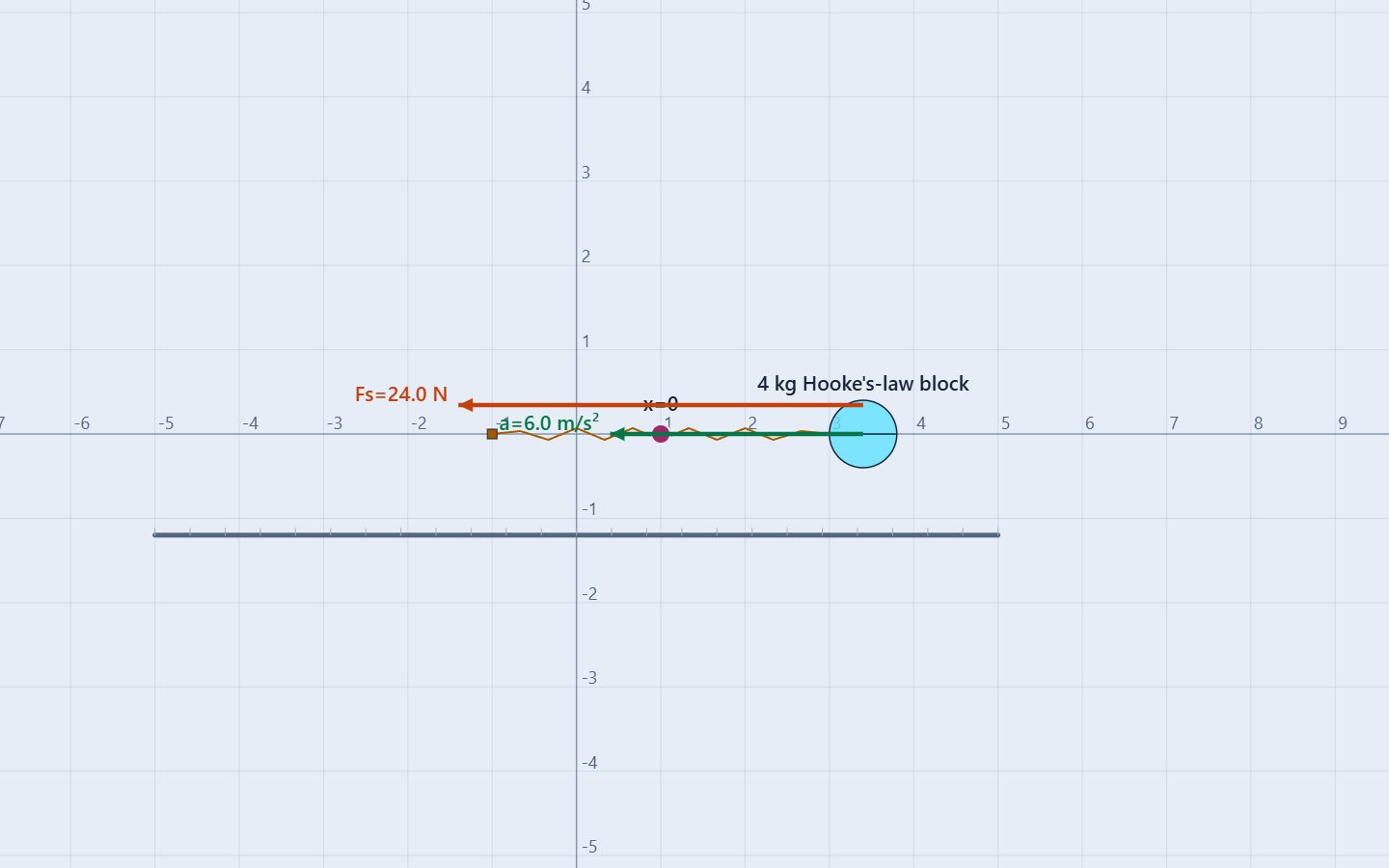
Unit 3 · Work, Energy, and Power
Conservation of Energy with External Work
Use system boundaries and energy accounting to connect external work, friction, and changes in a system’s mechanical energy. Explore Conservation of Energy with External Work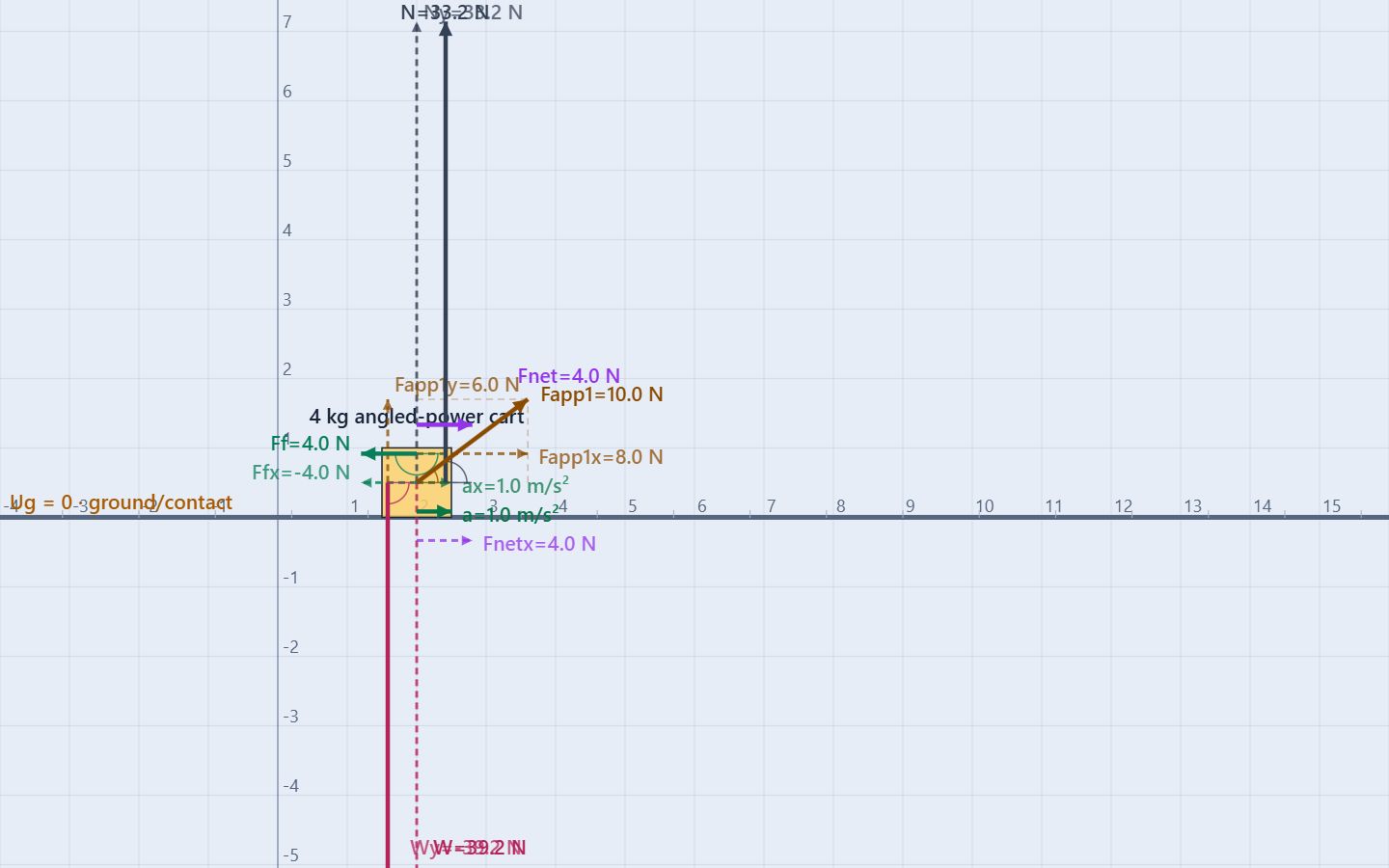
Unit 3 · Work, Energy, and Power
Power and Energy Transfer
Compare average and instantaneous rates of doing work and transferring energy. Explore Power and Energy Transfer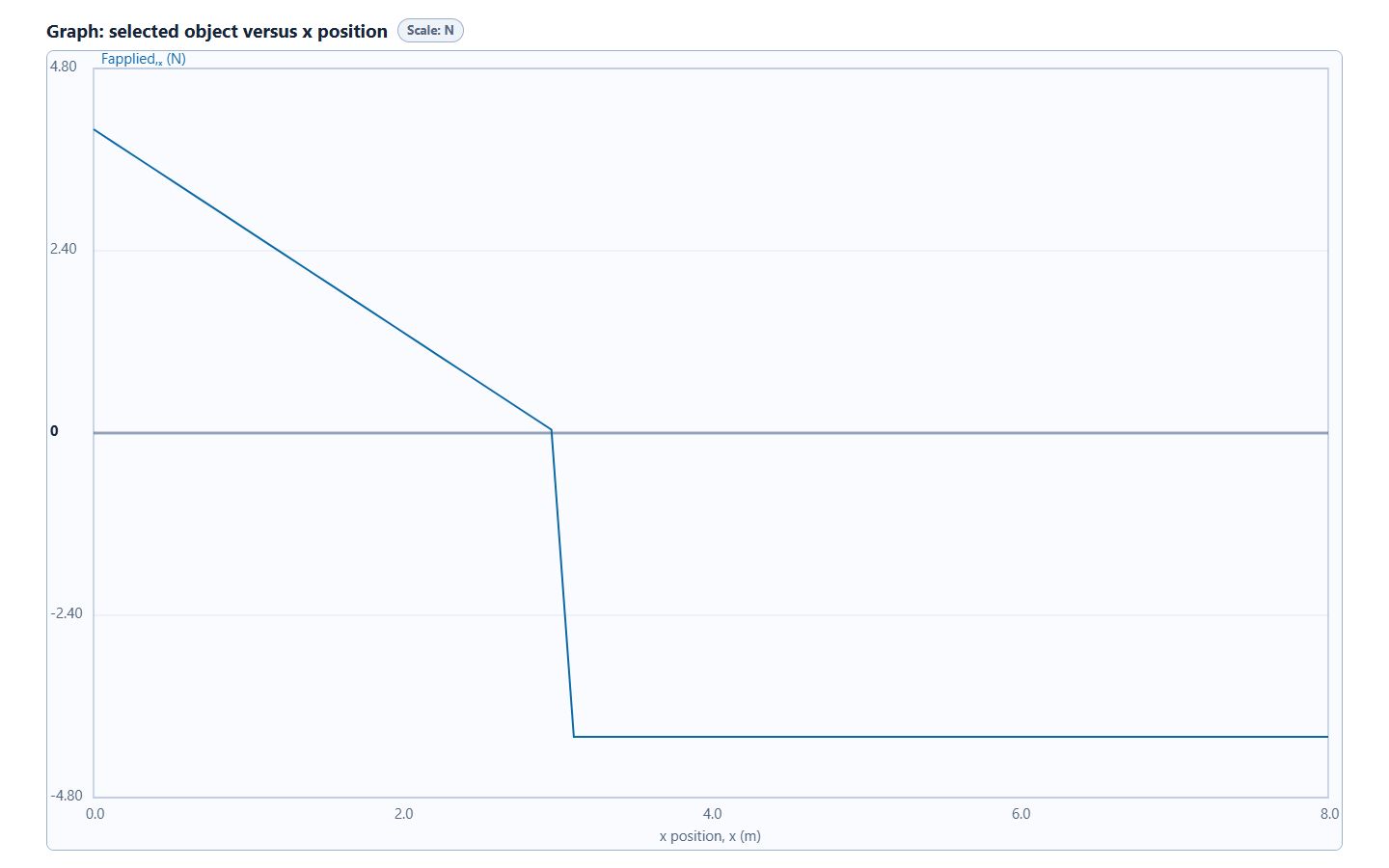
Unit 3 · Work, Energy, and Power
Work Done by Varying Forces
Use the area under a force–position curve, keeping above- and below-axis contributions, to calculate work when force changes with position. Explore Work Done by Varying ForcesBuild your own model
Move from explanation to experiment
Add objects, forces, surfaces, springs, and measurements in the full Build Physics sandbox.